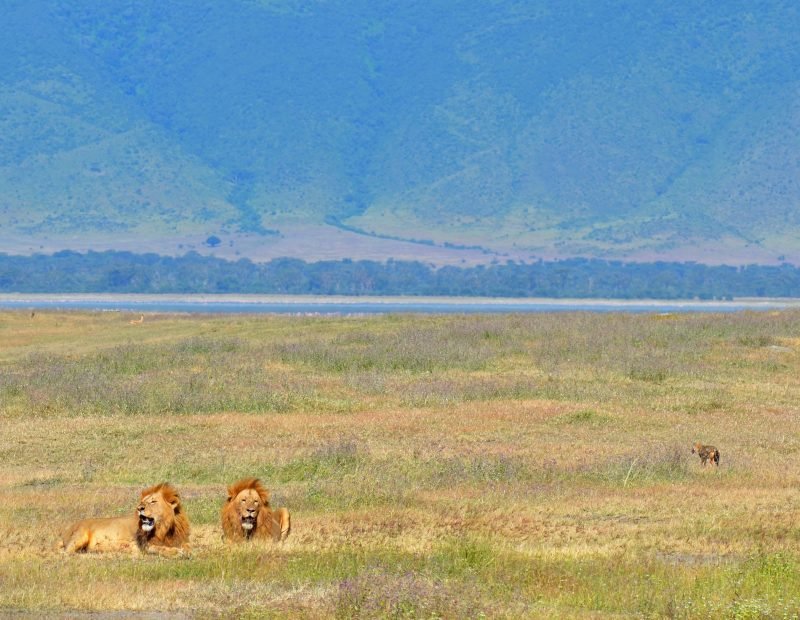
Ngorongoro in northern Tanzania is built around the largest unbroken volcanic caldera in the world, a bowl roughly nineteen kilometres across with walls rising some six hundred metres and a floor of about 260 square kilometres. Around 25,000 large animals live inside it, including a relict population of black rhino, and the crater holds the highest density of mammalian predators in Africa. It is properly the Ngorongoro Conservation Area rather than a national park, covering about 8,300 square kilometres, and it was listed as a UNESCO World Heritage Site in 1979.
That distinction matters. Ngorongoro was separated from the Serengeti in 1959 as a multiple land use area, where Maasai pastoralists graze cattle alongside wildlife. It is one of very few protected areas anywhere set up on that principle, and it shapes what you see on the drive in.
Game Drive Safaris on the Ngorongoro Crater Floor
A crater game drive is unlike anything else in East Africa, and the reason is containment. The walls form a natural enclosure, so most of the animals inside are resident year round rather than migratory, and the floor is small enough to work thoroughly in a single day.
Descent is by a designated road, usually in the early morning, and vehicles must be out by mid afternoon. Time on the floor is capped, which is worth planning around: an early start buys you the best light and the most active animals within the permitted window.
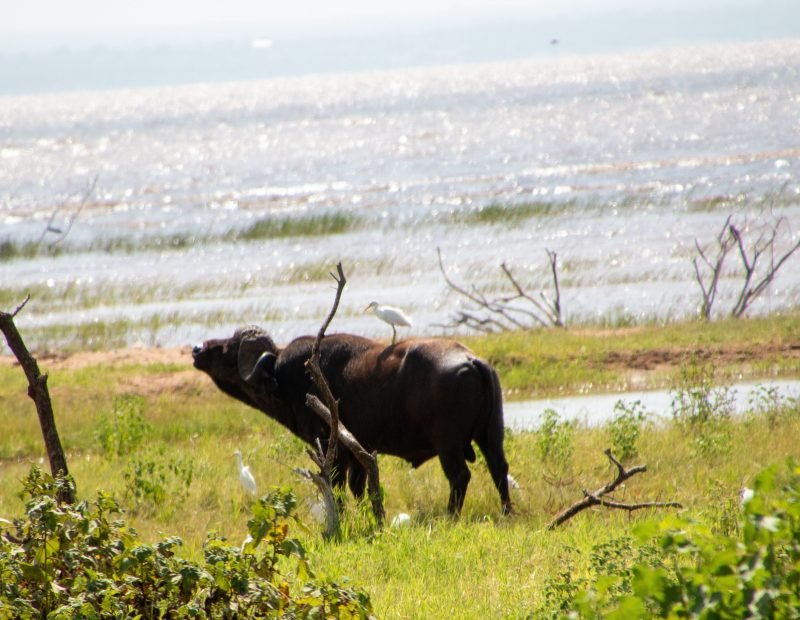
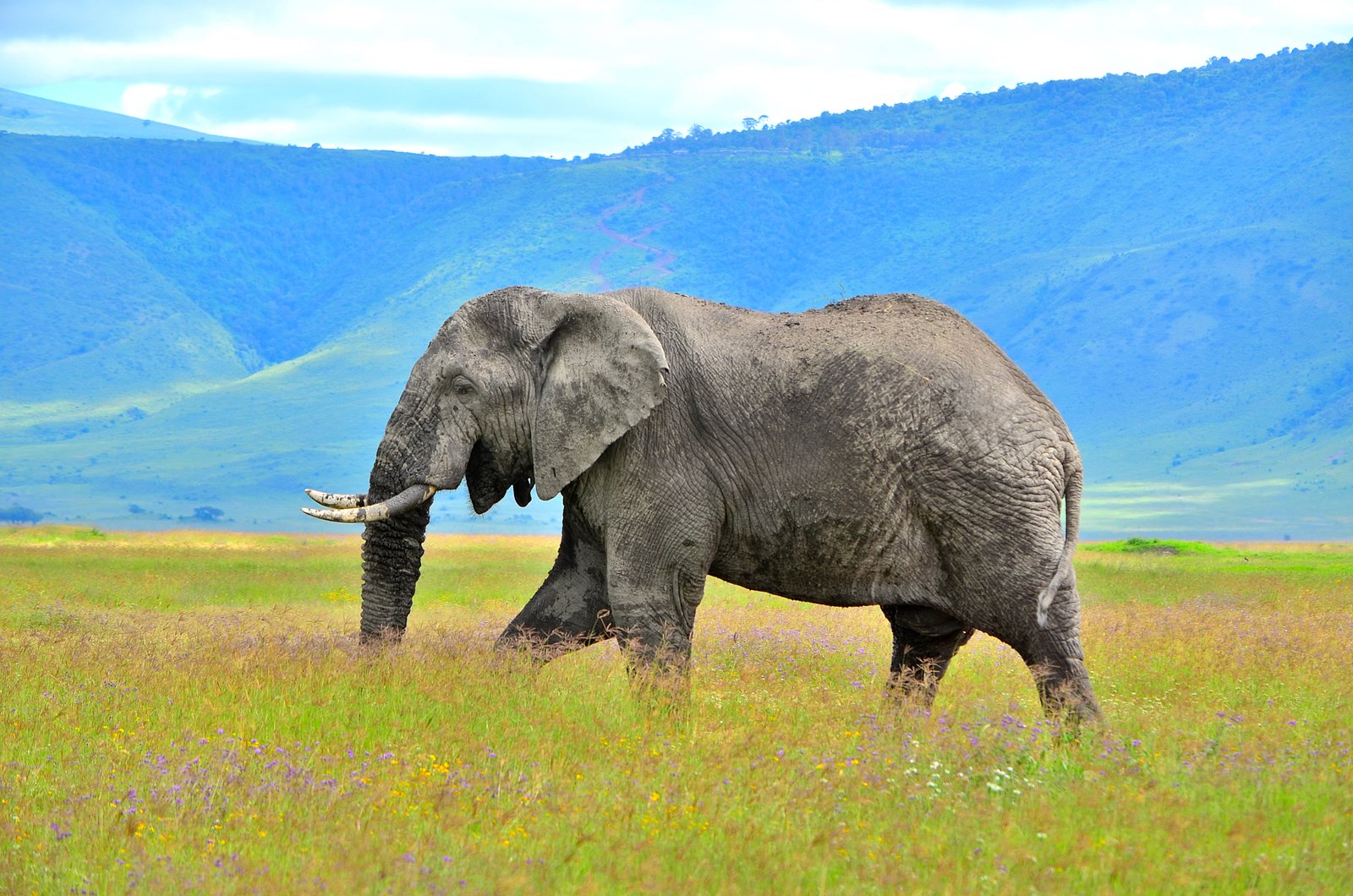
What you find is density unlike anywhere else. Lion prides in the open grass, spotted hyena in large clans, cheetah on the short grass, elephant bulls carrying heavy ivory, buffalo herds, zebra, wildebeest, eland, Grant’s and Thomson’s gazelle, warthog and jackal, all within a few kilometres of each other.
Serval hunt the grass and are seen more often here than almost anywhere. Leopard exist along the forest margins and stay difficult.
Vehicle numbers on the floor are high in peak season and off road driving is not permitted, so sightings do attract a crowd. Going down early is the single best mitigation.
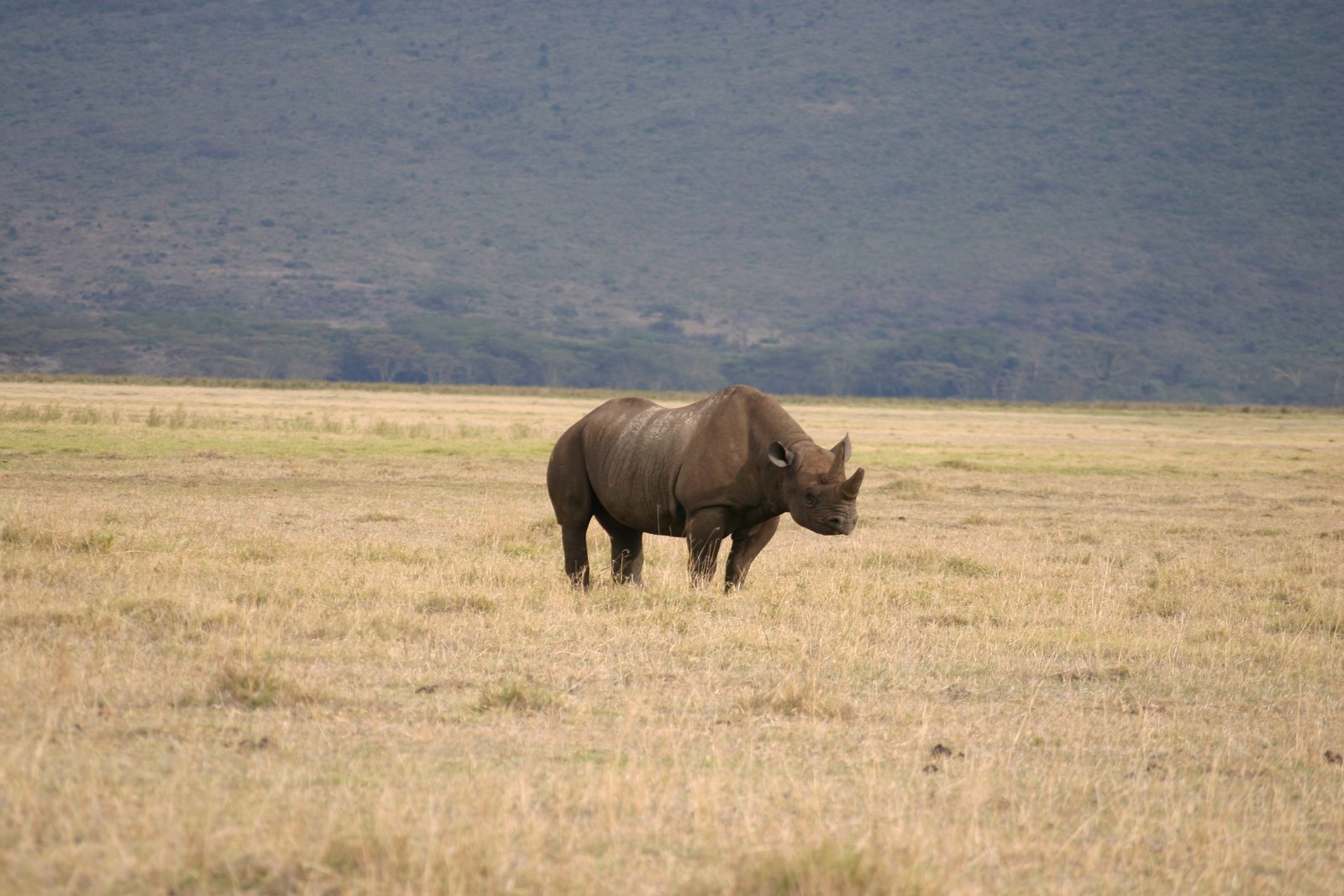
Ngorongoro is where most visitors to northern Tanzania complete the Big Five, because black rhino are seen here more reliably than anywhere else on the circuit. Everything else on the list is straightforward inside the crater; the rhino is the reason people book it.
Safari packages visiting Ngorongoro Crater
10 Day Tanzania Northern Circuit Fly-In Safari
Ten days across Tanzania with four Serengeti nights reached by light aircraft, plus Tarangire, Lake Manyara and a full day on the…
Tanzania · Arusha, Tarangire, Lake Manyara, Ngorongoro Crater & the Serengeti
View itinerary 10 Day Tanzania Northern Circuit Fly-In Safari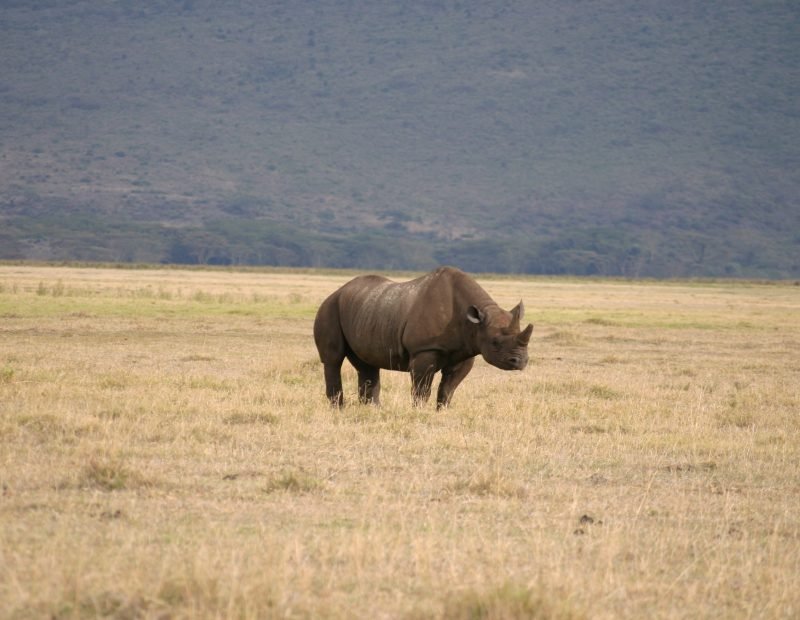
4 Day Tarangire, Ngorongoro And Lake Manyara Safari
Four days on Tanzania's northern circuit: elephant herds and baobabs in Tarangire, the Ngorongoro Crater floor, and Lake Manyara's groundwater forest and…
Tanzania · Tarangire National Park, Ngorongoro Crater & Lake Manyara National Park
View itinerary 4 Day Tarangire, Ngorongoro And Lake Manyara Safari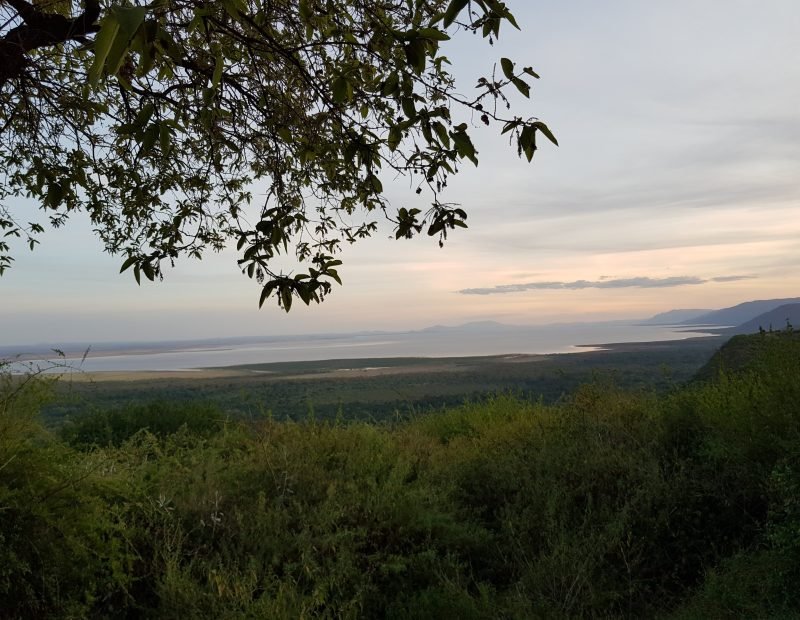
6 Day Tanzania Northern Circuit Safari
Six days across Tanzania's northern circuit: Tarangire elephants, Lake Manyara, two days in the Serengeti and the Ngorongoro Crater floor, with Olduvai…
Tanzania · Tarangire, Lake Manyara, Serengeti National Park & the Ngorongoro Crater
View itinerary 6 Day Tanzania Northern Circuit Safari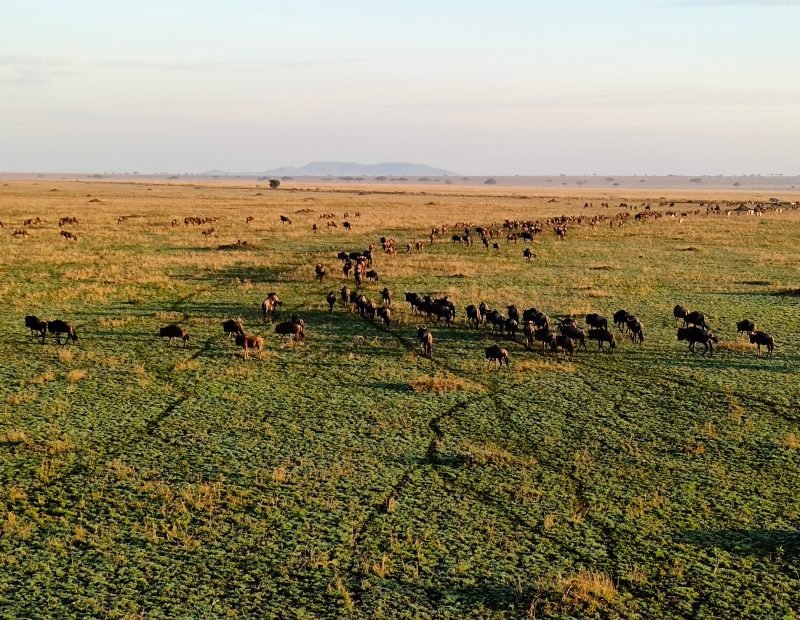
8 Day Serengeti Migration And Ngorongoro Safari
Eight days on Tanzania's northern circuit with three Serengeti nights positioned for the Great Migration, plus Tarangire, Lake Manyara and the Ngorongoro…
Tanzania · Tarangire, Lake Manyara, Serengeti National Park & the Ngorongoro Crater
View itinerary 8 Day Serengeti Migration And Ngorongoro SafariBlack Rhino in the Crater
The crater holds one of the last free ranging black rhino populations in East Africa, and it is the single best place on the northern circuit to look for them.
The population is small, closely monitored and heavily protected, and it survived the poaching decades that emptied most of the region because the crater walls make the animals easier to guard. Numbers have been recovering slowly.
Sightings usually happen at distance rather than close range. Rhino favour the Lerai Forest and the open grass near it in the early morning, moving into cover as the day warms, which is another argument for descending at first light. Guides carry binoculars for good reason, and a long lens matters if photographs are the goal.
Nobody should promise you a rhino. On a good morning several are visible from the road; on others none show at all. What can be said is that if you want black rhino in Tanzania, this is where you come.
The Lerai Forest, Lake Magadi and Ngoitokitok Springs
Three features on the crater floor define the drive and each holds different animals.
Lerai Forest. A stand of yellow barked fever trees in the southern part of the floor, named for the Maasai word for the tree. Elephant bulls shelter here, some of them very old with heavy tusks, and rhino use the margins. Baboon, waterbuck and bushbuck are common in the shade.
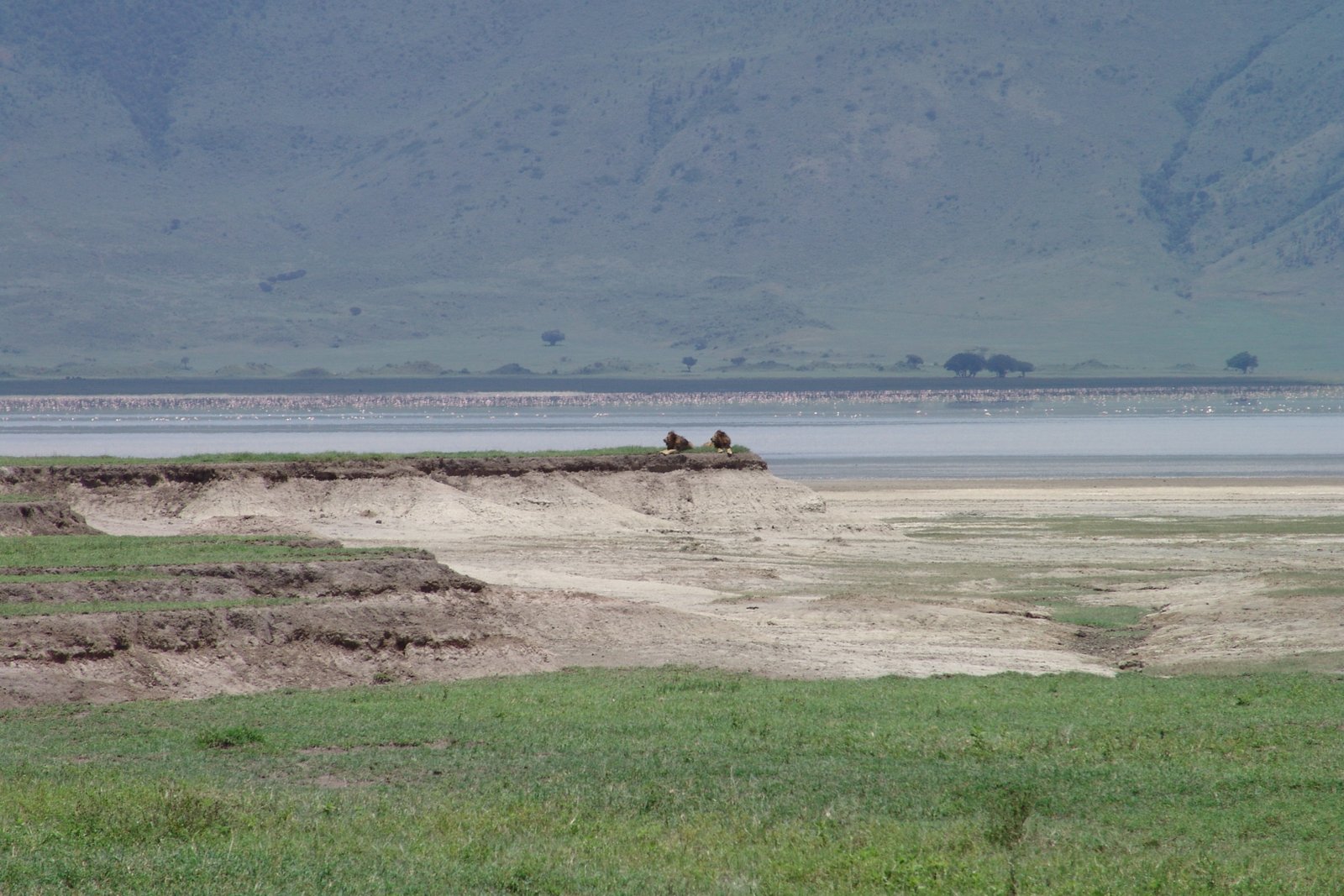
Lake Magadi. A shallow soda lake in the centre of the floor, fed by the Munge stream. Flamingos gather here in numbers that shift with water level and salinity, along with pelicans, avocets and stilts. Its pale expanse is what gives the crater floor its characteristic look from the rim.
Ngoitokitok Springs. A permanent spring fed pool in the east holding hippo, with a picnic site beside it where visitors can leave the vehicle. Black kites here have learned to snatch food from hands, so eat under cover of the vehicle door.
The Gorigor Swamp and Mandusi. Wetland areas holding hippo, waterbuck and large buffalo herds, and productive for both predators and birds through the dry months.
Olduvai Gorge and the Laetoli Footprints
Ngorongoro’s other claim is archaeological rather than zoological, and it is one of the most important sites in the world for the study of human origins.
Oldupai Gorge, more commonly written Olduvai, cuts through the plains between the crater and the Serengeti and exposes layers of sediment spanning close to two million years. Excavations here by Louis and Mary Leakey and their successors produced Homo habilis and a long sequence of stone tools that rewrote the story of human evolution.
The site has a museum on the rim with a good exhibition and guided talks, and the drive down into the gorge can be arranged. It sits directly on the road between Ngorongoro and the Serengeti, so it costs almost no time to include.
Nearby Laetoli produced the fossil footprints of hominins walking upright about 3.6 million years ago, preserved in volcanic ash. The trail itself is reburied for protection and not open to visitors, but casts and explanation are covered at the museum.
Also close by are the Shifting Sands, a crescent of black volcanic ash held together by its own magnetism, which travels across the plain at roughly seventeen metres a year while keeping its shape.
The Maasai called it el-Nkoronkoro, and a volcano as tall as Kilimanjaro collapsed inward to make it. Three million years later there is a self contained grassland ecosystem sitting inside the bowl.
Empakaai and Olmoti Crater Hikes
The crater everybody visits has two quieter sisters, and both are far better than their visitor numbers suggest.
Empakaai lies northeast of Ngorongoro, about six kilometres wide with walls around three hundred metres high, and a deep alkaline lake covering much of its floor. The descent to the lakeshore takes an hour or so on a steep forested path, with the climb back out considerably harder. Flamingos gather on the water, buffalo and bushbuck use the forest, and from the rim you can see Ol Doinyo Lengai, the active volcano the Maasai call the mountain of God, with Kilimanjaro beyond on a clear day.
Olmoti sits north of Ngorongoro, a shallower crater around six and a half kilometres across, reached by a walk up through Maasai grazing land. The Munge stream drops through a notch in the rim as a waterfall, and the walk to it is gentle by comparison with Empakaai.
Both hikes are guided and both require a ranger. Neither sees the traffic of the main crater, and for anyone who wants to be on foot rather than in a vehicle they are the best days available in the conservation area.
Walking Safaris and the Crater Highlands
Beyond the craters, the highlands offer multi day walking that very few visitors attempt.
Routes follow Maasai cattle trails through montane forest, grassland and moorland, linking the craters and climbing the volcanic peaks, with camping or basic accommodation along the way. Walks of two to four days are common and longer traverses are possible, including routes up Ol Doinyo Lengai and the descent to Lake Natron.
Shorter guided walks run from the rim and around Empakaai and Olmoti, usually two to four hours with an armed ranger.
This is the part of Ngorongoro that rewards people who have already done vehicle safaris elsewhere and want something different. The altitude sits high, the air is cold at dawn, and the country is nothing like the savannah images the region is known for.
Maasai Culture in the Conservation Area
The Maasai have grazed these highlands for centuries and the conservation area was designed around their continued presence. You will pass bomas, cattle herds and young herders on the drive in, and the coexistence is the point rather than an inconvenience.
Village visits are offered widely and quality varies. Those arranged through lodges with long standing community relationships tend to be more genuine than the operations at the roadside near the main gate.
The arrangement is not without tension. Grazing pressure, population growth and restrictions on where cattle may go are live issues, and they have been the subject of considerable debate. Guides here will discuss it if asked, and the conversation gives useful context that a village dance does not.
The Maasai name for the crater, el-Nkoronkoro, is usually rendered as gift of life, which tells you something about how the place has been regarded for a very long time.
Birding in the Ngorongoro Conservation Area
Something in the region of 500 bird species have been recorded across the conservation area, and the range of altitude from crater floor to highland moorland gives a list that few single destinations can match.
Lake Magadi on the crater floor holds greater and lesser flamingo in numbers that shift with water level, along with great white pelican, avocet, black winged stilt, cape teal and a good wader list. The swamps at Gorigor and Mandusi add herons, egrets, sacred ibis and crowned crane.
The open grassland gives ostrich, kori bustard, secretary bird, southern ground hornbill and a long run of larks and pipits, while raptors work the thermals along the walls, including augur buzzard, long crested eagle, Verreaux’s eagle and several vultures.
The rim forest is a different list entirely, with turacos, silvery cheeked hornbill, Hartlaub’s turaco, Schalow’s turaco and a range of forest robins and sunbirds. Empakaai is the pick for anyone serious about birds, since the walk down passes through montane forest before reaching the flamingo lake at the bottom.
Migrants arrive from November through April and lift the totals considerably. Because the crater floor is worked from a vehicle on fixed roads, a birding morning on the rim or at Empakaai produces more than a day below.
Best Time for a Ngorongoro Safari
The crater sits high, at around 1,700 metres on the floor and over 2,200 on the rim, which makes it genuinely cold at dawn and mild by day. Wildlife is resident year round, so seasonality affects comfort and crowds more than sightings.
June to October, dry season. Clear skies, firm roads and the best general conditions. Also the busiest, with high vehicle numbers on the floor. Cold mornings on the rim, occasionally near freezing.
December to February. Warm and mostly dry, with good visibility and slightly fewer vehicles than the mid year peak. Pairs well with calving season on the nearby Ndutu plains.
March to May, long rains. Green, quiet and cheap. Mist often fills the crater in the early morning, which is atmospheric and can obscure the view from the rim. Roads on the floor stay usable.
November, short rains. Afternoon showers, arriving migrant birds and few visitors. A reasonable window with reliable game viewing inside the crater.
Whatever the month, pack warm layers for the rim. Lodges up there are cold at night and the descent at dawn is chilly in an open vehicle.
Getting to Ngorongoro and Planning Your Visit
Ngorongoro lies about 180 kilometres west of Arusha, roughly three to four hours by road via Lake Manyara and Karatu. The route runs directly through the conservation area on the way to the Serengeti, which is why almost every northern circuit itinerary includes it.
Most visitors stay on the rim, where lodges look directly down into the crater, or in Karatu outside the boundary, which is cheaper and about forty minutes from the descent road. Rim lodges buy you an earlier start, which matters here more than in most parks because of the time cap on the floor.
One full day covers the crater floor. Two nights lets you add Empakaai or Olmoti, Olduvai Gorge and a Maasai visit without rushing, which is the better use of the area.
Ngorongoro combines naturally with Lake Manyara and Tarangire to the east and the Serengeti to the west, and Ndutu on the southern Serengeti plains sits inside the conservation area boundary.
The crater is the most visited place on the northern circuit, so the difference between a good day and a crowded one comes down to how early you descend and where you slept the night before. Intare Safaris runs the Tanzanian circuit alongside its Rwandan base and can time your descent, place you on the rim, and build the quieter craters into your days.
Tell Intare Safaris how many nights you can give northern Tanzania, and they will tell you honestly whether Ngorongoro deserves one day or two in your particular itinerary.