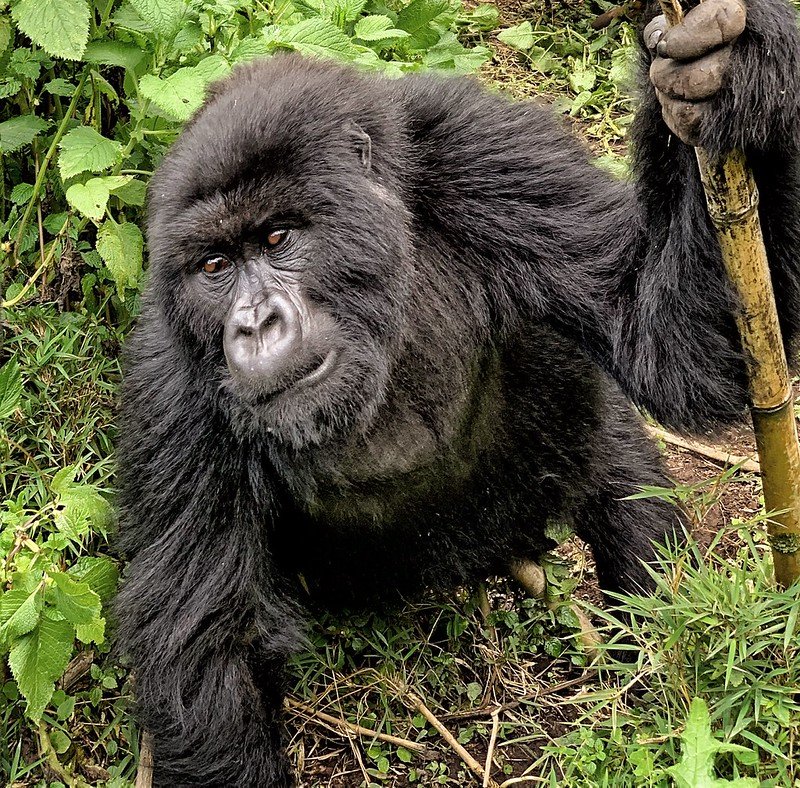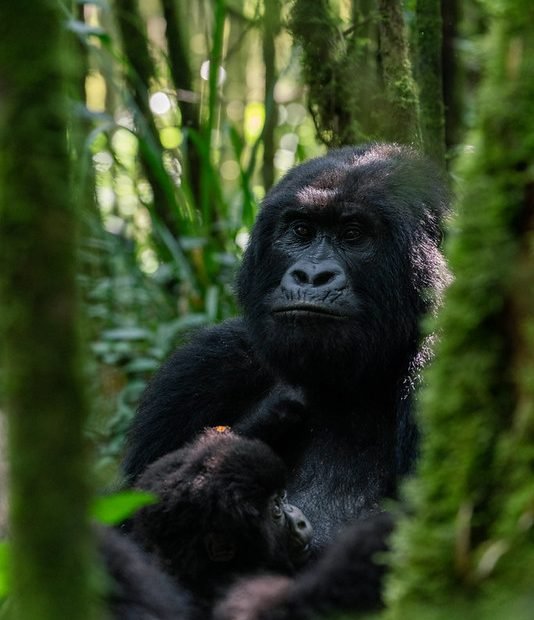
Gorilla trekking in Rwanda takes place in Volcanoes National Park, where visitors hike into the Virunga mountains with rangers to spend one hour with a habituated mountain gorilla family. Treks run daily, groups are capped at eight people per family, and permits are limited and sell out months ahead in the dry season. Volcanoes National Park sits in the far northwest, roughly two hours from Kigali, and protects more than half the world’s remaining mountain gorillas alongside its neighbours in Uganda and the Congo.
People worry about this trek far more than they need to. The two questions that come up most, whether the walking will be too hard and whether the gorillas are dangerous, both have reassuring answers once you know how the system works. What follows is the practical picture rather than the poetry.
Safaris built around gorilla trekking
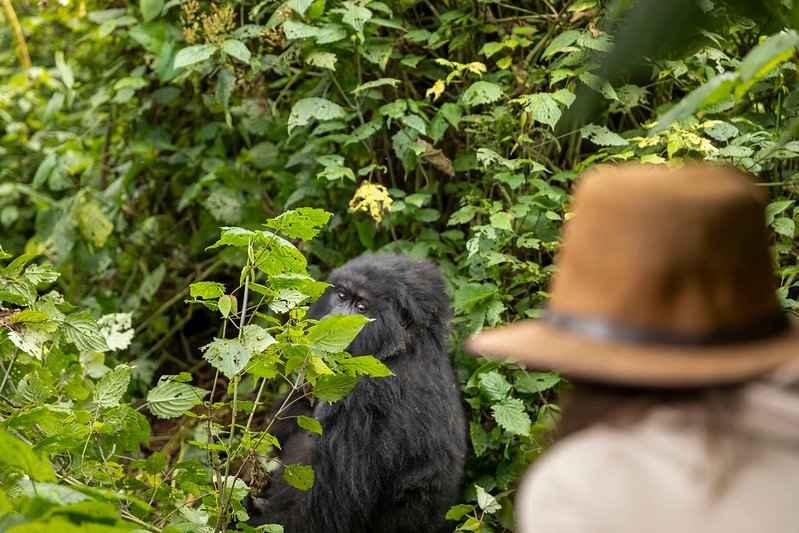
How a Rwanda Gorilla Trekking Safari Works, Hour by Hour
A gorilla trekking safari runs to the same rhythm every day of the year, and knowing it in advance removes most of the nerves.
You leave your lodge in the dark, usually between five and six depending on how far you are from Kinigi. Park headquarters is cold at that hour, with cloud sitting low on the volcanoes behind the buildings. There is coffee, and there are Intore dancers performing while everyone assembles, which sounds like a tourist gimmick and somehow works at six in the morning.
Trackers left before first light and are already sitting with each family, radioing positions back. That single detail is why treks now take a fraction of the time they did twenty years ago. Nobody is searching blind.
The briefing runs at seven. Rangers split everyone into groups of eight, one group per family, and read through the rules. Then you drive a short distance to the trailhead, walk through farmland and potato fields to the stone wall marking the park boundary, and step into the forest. From there it might be twenty minutes or it might be four hours.
When you reach the family you leave your bag with the porter, take only a camera, and the hour starts. Afterwards you walk out, collect a certificate back at headquarters, and find yourself unusually quiet in the vehicle on the way back to the lodge.
The Habituated Gorilla Families on a Volcanoes Gorilla Trekking Safari
Around a dozen gorilla families are habituated for tourism in Volcanoes National Park, each led by at least one silverback and each with its own territory and temperament. Susa is the historically important one, the group Dian Fossey studied most closely from Karisoke, which has since split into sub groups as gorilla families naturally do. Others regularly visited include Sabyinyo, Amahoro, Agashya, Kwitonda, Umubano, Hirwa and Bwenge.
You cannot request a family in advance, and this catches out people who have read up on the groups beforehand. Assignment happens at the briefing, based on your fitness, your age, the size of your party and where each family has moved overnight. What you can do is speak up honestly at the briefing about what you can manage, and rangers will place you accordingly.
Families sitting higher on the slopes mean longer, steeper walks. Families that have drifted down towards the boundary can be reached in under an hour. This is not a quality difference. An hour with a family you reached quickly is exactly the same hour as one you climbed four hours to find, and the gorillas do not know the difference.
If you are travelling as a group of friends or family and want to stay together, say so at the briefing before allocation happens rather than afterwards. Rangers accommodate this routinely, but only if they know before the lists are drawn.
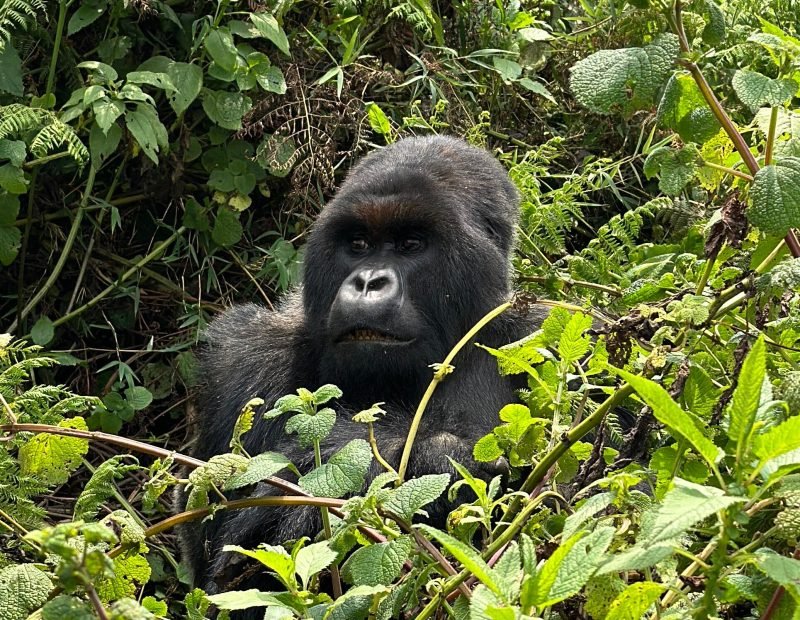
Gorilla Trekking Rules and Regulations in Volcanoes National Park
The rules exist because mountain gorillas share close to 98 percent of our DNA and catch our illnesses easily. A single respiratory infection moving through a family could do real damage to a population that has only recently climbed back above a thousand animals.
Keep seven metres back. Rwanda’s minimum distance is seven metres, enforced by rangers throughout the hour. Gorillas themselves ignore the rule, and curious juveniles sometimes walk right up to people. When that happens you stay still, crouch slightly and let the ranger direct you. You do not reach out and you do not back away suddenly.
Do not trek if you are ill. Flu, a cough, a fever or a heavy cold means you will be turned away at the briefing. Rangers do check. Losing a permit hurts, and it is still the right rule.
Wear a mask during the hour. Face masks are strongly promoted under the gorilla friendly guidance that Rwanda endorses. Carry surgical masks and wear them when you are with the family. It costs you nothing.
No flash photography. Turn the flash off before you set out and silence your phone. Natural light photography is fine and the forest light is usually better than people expect.
Eight people, one hour, one visit per family per day. These caps are fixed. Groups stay together, nobody wanders off the line, and voices stay low throughout.
Minimum age fifteen. Firm, with no exceptions. Younger travellers can do golden monkey tracking, which has a lower age limit, or join lodge based cultural and nature activities while the rest of the party treks.
On safety, the honest answer is that habituated gorillas are not a meaningful risk to visitors. Serious incidents in the history of Rwanda‘s tourism programme are all but unheard of. The real hazards are the ones people never think about: slipping on wet volcanic soil, stinging nettles, and safari ants finding their way inside a boot.
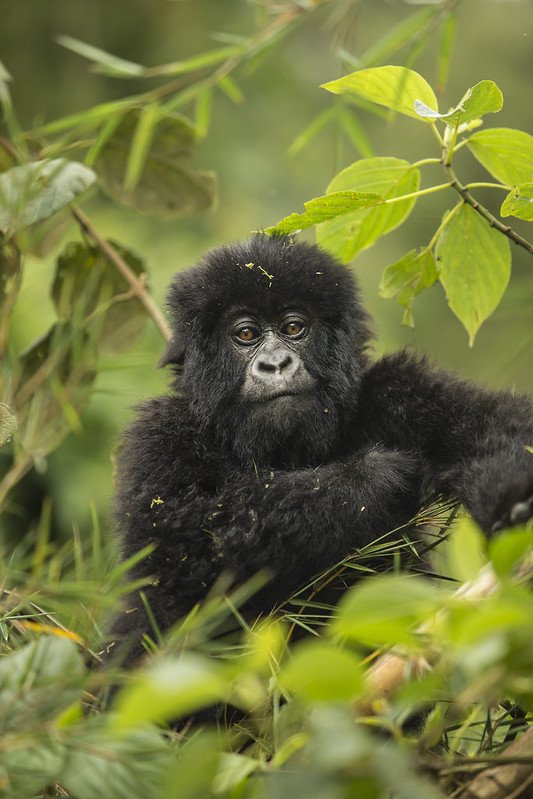
Fitness, Trek Difficulty and Porters on a Gorilla Trekking Safari
The park sits between roughly 2,400 and 4,500 metres, which is the part that surprises people. It is not the distance that tires you out, it is the altitude combined with the gradient and the vegetation. There is often no path. Rangers cut through with machetes and you follow, stepping over root systems and pushing through nettles taller than you are.
That said, this trek is done every day by people in their sixties and seventies. Fitness helps, but so does pace, and rangers set the pace to the slowest person in the group rather than the fastest. Nobody is left behind and nobody is rushed.
Hire a porter. This is the single most useful thing you can do and it costs very little. A porter carries your bag, gives you a hand up the steep sections, and pulls you out of the mud when your boot sticks. Beyond your own comfort, portering is paid work for people living on the park boundary, many of them former poachers, and that connection between tourism and local income is a large part of why the gorillas are still here.
Travellers with mobility limitations can be carried in and out on a sedan chair arranged in advance through the park, which is used more often than most visitors realise.
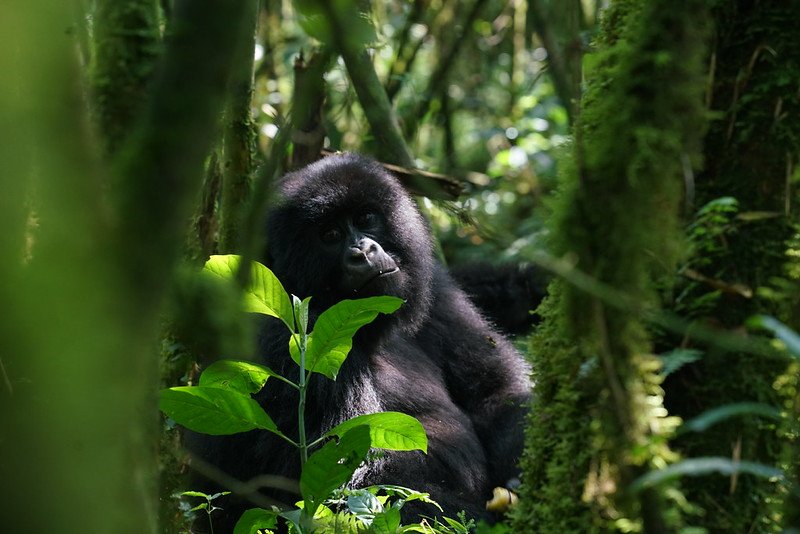
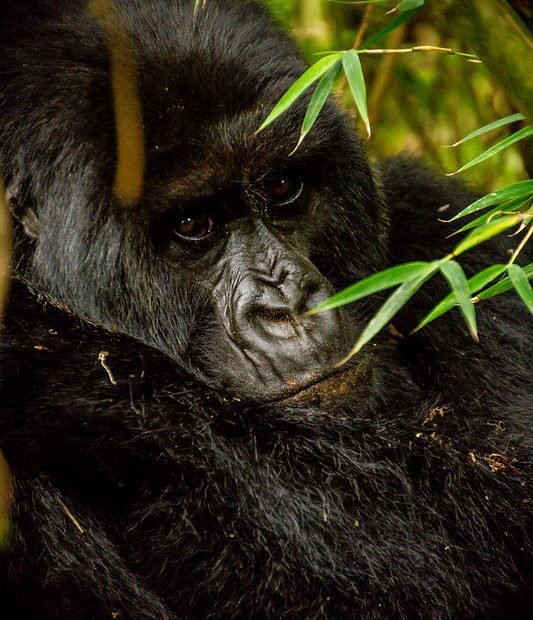
The gorillas do not perform. They eat, groom, nap and let their juveniles tumble past your boots. Your hour is spent in the middle of a family that has largely decided you are furniture.
What to Pack for Gorilla Trekking in Rwanda
Kit matters more here than fitness does. The forest is wet, cold at dawn, warm by midday, and full of things that sting.
Footwear. Waterproof hiking boots with ankle support and real grip, already worn in. Gaiters are worth their weight against mud and ants. Bring spare socks.
Clothing. Long trousers tucked into socks, long sleeved shirt, and layers you can shed. Neutral colours. Avoid jeans, which soak through and stay heavy all day. A proper rain jacket, not a poncho.
Hands. Thick gardening gloves. This sounds odd until you grab a nettle stem for balance on a slope. Every experienced trekker carries them.
Small items. Surgical masks, insect repellent, sunscreen, at least two litres of water, snacks, and a dry bag or waterproof cover for camera gear. Trekking poles if your knees appreciate them.
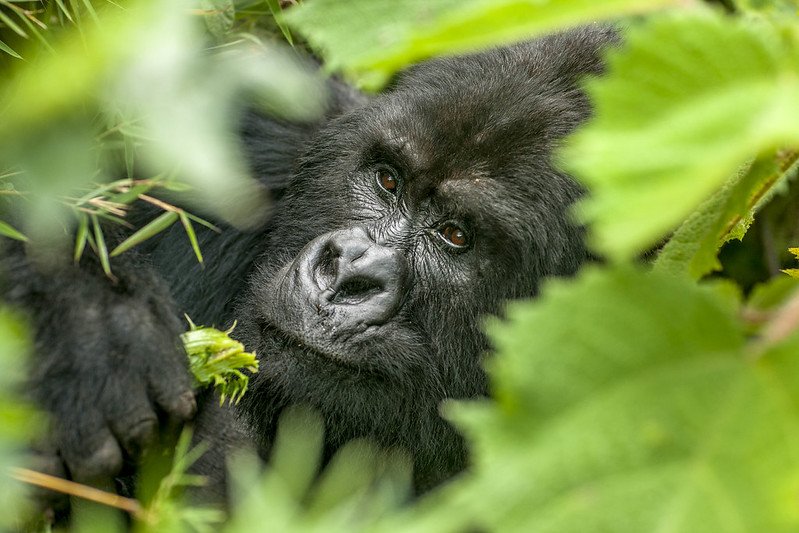
Gorilla Trekking Photography in the Virunga Forest
Conditions in the forest are darker and wetter than most people plan for. Cloud sits over the Virungas much of the morning and the canopy cuts what light gets through, so a camera that handles higher sensitivity well matters more than a long lens.
Leave the heavy telephoto behind. At seven metres in dense vegetation, a mid range zoom does far more work than a long lens you cannot swing between the branches. A fast prime is a good second option.
Flash is prohibited, so raise your sensitivity, accept some grain and keep your shutter speed up, because gorillas move more than the still photographs suggest. Wipe the lens often; mist beads on the front element within minutes. And put the camera down at some point during the hour. People who spend all sixty minutes behind a viewfinder tend to describe the experience differently afterwards from those who did not.
Rwanda Gorilla Trekking Compared With Uganda and the Congo
Mountain gorillas live in only two places on earth: the Virunga massif shared by Rwanda, Uganda and the Democratic Republic of Congo, and Bwindi Impenetrable National Park in Uganda. Choosing between them comes down to time, terrain and what else you want from the trip.
Rwanda, Volcanoes National Park. Around two hours from an international airport on tarmac, which is why it works for short trips and why it draws travellers who cannot spare a week. Terrain is steep volcanic slope with bamboo and open glade. Minimum distance is seven metres. The easiest gorilla trek in the region to organise.
Uganda, Bwindi and Mgahinga. Permits cost considerably less, and Uganda offers a gorilla habituation experience allowing four hours with a semi habituated family rather than one. Getting there means a long drive from Entebbe or a light aircraft. Terrain is dense tangled rainforest, and the walking is harder as a rule. Minimum distance is ten metres.
DR Congo, Virunga National Park. The cheapest permits and the lowest visitor numbers, in a park with eastern lowland gorillas at Kahuzi Biega as well. Access and security conditions vary and need checking close to travel. Most operators plan around Rwanda or Uganda instead.
Plenty of travellers combine them. Rwanda’s single East African tourist visa covers Uganda and Kenya on one document, and Kigali is the closest airport to Bwindi’s southern sectors, which makes a Rwanda arrival and a Uganda trek a common and sensible routing.
Best Time for a Gorilla Trekking Safari in Rwanda
Trekking runs every day of the year and no season closes the park. What shifts is the mud, the permit competition and how much rain lands on you.
June to September, long dry season. The most popular window. Trails firm up, the volcanoes are visible more often, and permits are hardest to get. Plan several months ahead, more for July and August. Kwita Izina, the gorilla naming ceremony, takes place near Musanze in September.
Mid December to February, short dry season. Similar walking conditions with slightly less pressure on permits. February falls in the calving period, so infants are often visible in the families.
March to May, long rains. The hardest trekking months. Volcanic soil turns to deep mud and afternoon downpours are routine. Permits are easier to secure and the forest is at its greenest. Perfectly doable with the right boots and a porter.
October and November, short rains. Showers rather than sustained rain, especially early on. A reasonable middle ground with better availability than the dry peak.
One honest caveat: this is a rainforest at altitude. It can rain in any month, including August, and anyone treating the dry season as a guarantee of dry weather will be disappointed.
Getting to the Trailhead at Kinigi and Musanze
The drive from Kigali International Airport to Musanze runs about two to two and a half hours on good tarmac, climbing north through terraced hills. From Musanze it is roughly twenty minutes more to Kinigi park headquarters, and most lodges sit within half an hour of the briefing point.
Because the road is short and reliable, a fair number of visitors land in the morning, transfer to Musanze the same day and trek at dawn the next, which compresses a gorilla trip into three days. Helicopter transfers from Kigali cut the road time to around twenty minutes for anyone who wants it.
There is no useful public transport from Musanze up to Kinigi, so a vehicle is part of any sensible plan. Where you sleep matters more than it sounds when the alarm goes at half past four; an extra hour in bed is worth a lot on trek morning, and lodges near Kinigi buy you exactly that.
Gorilla permits are capped daily, the good lodges near Kinigi are small, and both go first for the dry months. That is the whole planning problem in one sentence. Intare Safaris is based in Rwanda and works Volcanoes National Park constantly, so they can secure permits for your dates, place you near the briefing point, and tell you honestly what the trails are doing in the month you are travelling.
Send Intare Safaris your dates and a note on how much walking you are comfortable with, and a real person will tell you what is available and what to expect, without dressing it up.