
4 Day Tarangire, Ngorongoro And Lake Manyara Safari
Tanzania · Tarangire National Park, Ngorongoro Crater & Lake Manyara National Park
- 4 days, 3 nights
- Customisable itinerary
- Private departure
Trip overview
The short northern circuit, and a good deal better than its length suggests. Tarangire holds the highest elephant density in northern Tanzania and stands full of thousand year old baobabs. The Ngorongoro Crater is the largest unbroken caldera on earth, with around 25,000 large animals living inside a bowl 19 kilometres across and the best black rhino odds in East Africa. Lake Manyara stacks groundwater forest, floodplain and an alkaline lake into a narrow strip beneath a 600 metre rift wall. Three parks, three entirely different days, and no Serengeti drive.
Customise this trip for a perfect match
-
Private and tailor-made Your own vehicle, driver guide and pace. Nothing on this page is fixed — days can be swapped, added or dropped.
-
Routed by people who drive it Every itinerary here was planned by someone who has driven the road, and the planner who answers you is the one who builds it.
-
Licensed and accredited Registered with the Rwanda Development Board and a member of the Rwanda Tours and Travel Association.
-
Support while you travel One number reaches the Kigali office around the clock for the whole time you are on the ground.
A draft itinerary costs nothing and commits you to nothing. Tell us what you would change and a planner rewrites it as many times as it takes.
The route
- Start and finish
- Starts and ends at Kilimanjaro Airport or Arusha
- Length
- 4 days, 3 nights
- How it runs
- Three parks, no Serengeti
- Countries
- Tanzania
Itinerary
Day 1
Arusha To Tarangire National Park
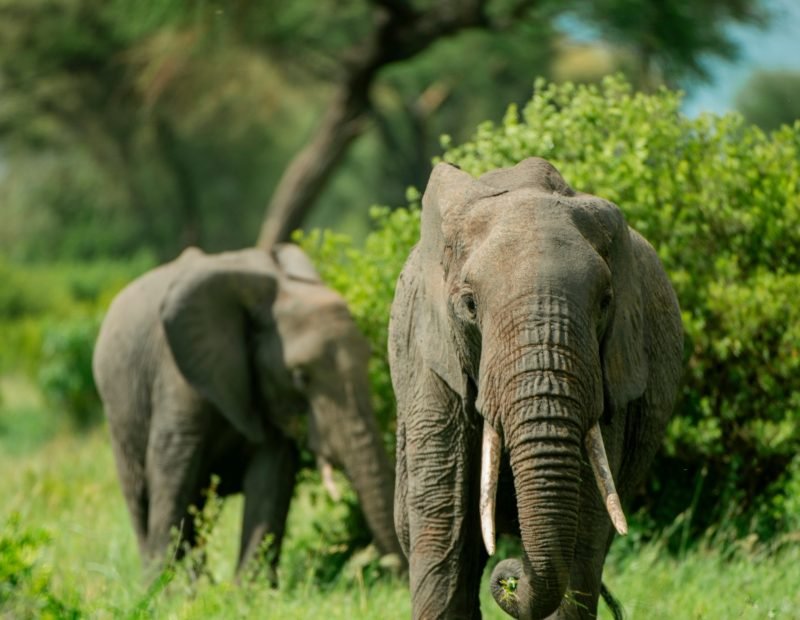
Our driver guide meets you at Kilimanjaro International Airport or your Arusha hotel and we head southwest, roughly two hours and 120 kilometres through Maasai country to the Tarangire gate. The park covers about 2,850 square kilometres and the Tarangire River running north to south through it is the only permanent water for a long way in any direction, which is what makes the dry season here so strong. We take you straight in for an afternoon game drive along the river corridor. Elephant are the reason to come, and in the dry months herds of 100 to 300 animals gather on the banks with as many as three thousand converging on the park. Baobabs stand across the grassland, some estimated at over a thousand years old, and elephants gouge them for the moisture stored in the trunks. Dinner at your lodge, with our guide running through the days ahead.
Day 2
A Full Day In Tarangire
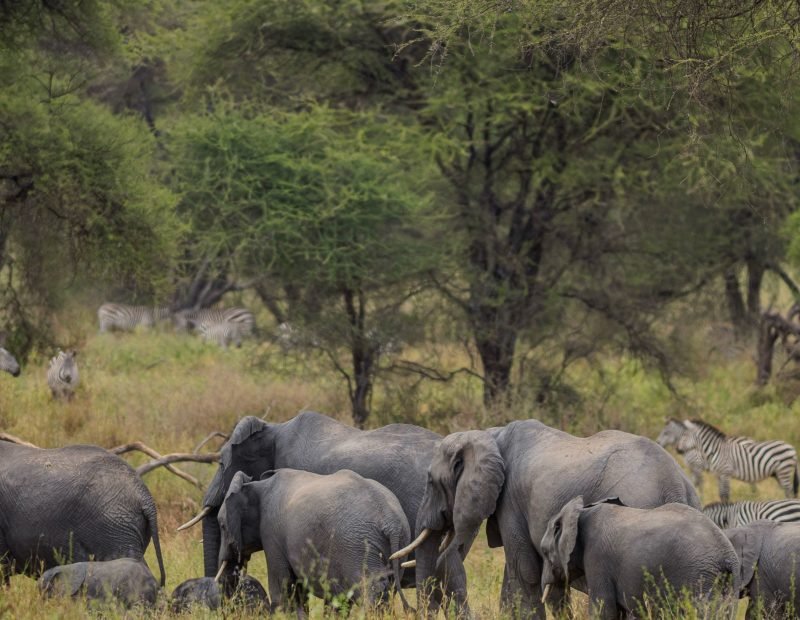
Out early, and today we go further than the day visitors do. The northern river corridor gives you the concentration, with zebra, wildebeest, buffalo, impala, giraffe, eland and hartebeest all using the water alongside the elephants, and lion following them. Lions climb trees here, which surprises people who think Lake Manyara has a monopoly on it, and around the Silale Swamp in the south the habit is regular. That swamp is the park’s second engine: it soaks up water through the rains and releases it slowly through the dry months, staying green when the plains have burned off, and it is where predator viewing peaks in September and October. We take a picnic lunch out and work south. Tarangire has recorded over 550 bird species, the longest list of any Tanzanian national park, including dry country endemics such as the yellow collared lovebird and ashy starling that are found almost nowhere else in Tanzania.
Day 3
The Ngorongoro Crater Floor
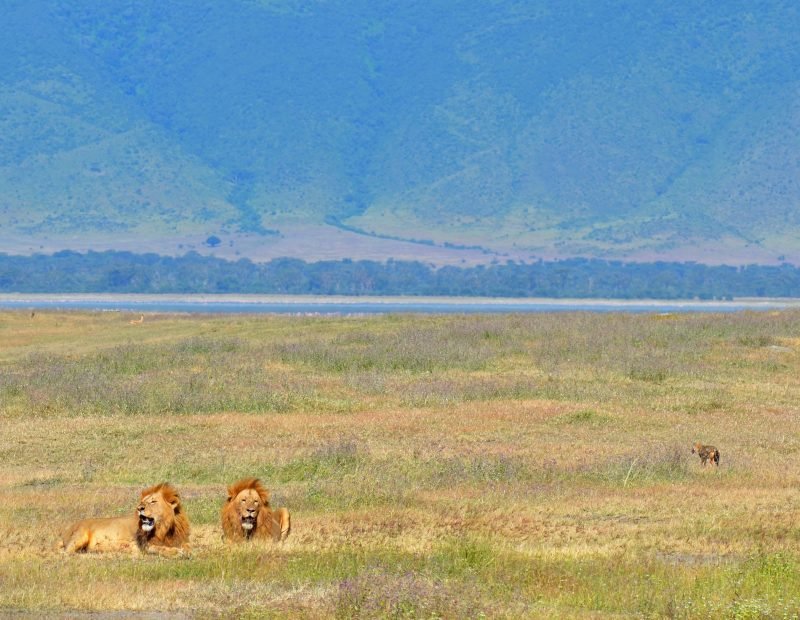
An early descent, because time on the crater floor is capped and the first hours are the best. The road drops through forest on the rim and opens onto a bowl 19 kilometres across with walls rising some 610 metres and a floor of about 260 square kilometres. It is the largest unbroken caldera in the world, formed when a volcano as tall as Kilimanjaro collapsed inward, and roughly 25,000 large animals live inside it year round. That containment is why the game viewing works: lion prides in the open grass, spotted hyena in large clans, elephant bulls carrying heavy ivory, buffalo, zebra, wildebeest and serval hunting the grass. Ngorongoro also gives the best black rhino odds in East Africa, usually at distance near the Lerai Forest in the early morning. Flamingos gather on Lake Magadi, and hippo lie in the Ngoitokitok springs where you can leave the vehicle.
Day 4
Lake Manyara And Return To Arusha
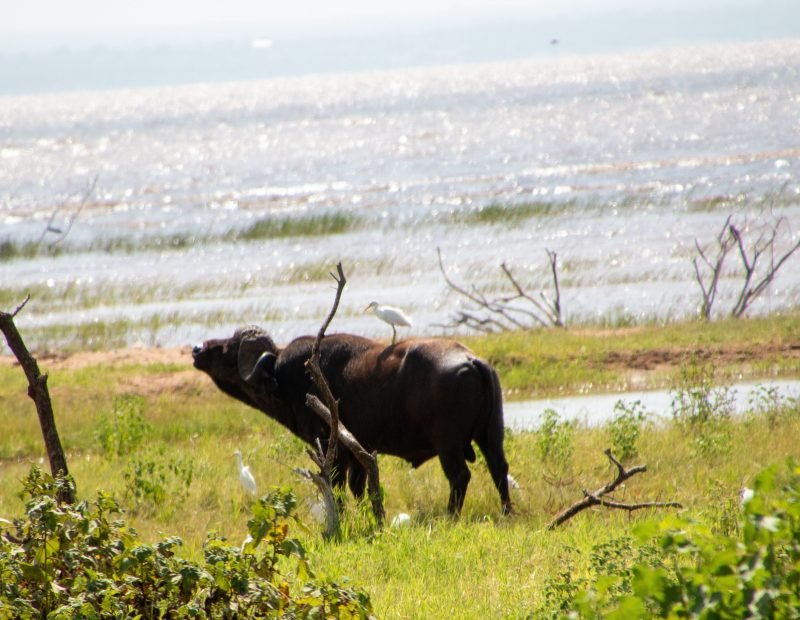
Down off the rim to Lake Manyara, a park of about 330 square kilometres of which two thirds is the lake itself, sitting beneath the 600 metre Gregory Rift escarpment. The entrance drops you straight into groundwater forest, mahogany and fig fed by springs rather than rainfall, with troops of olive baboon sometimes over a hundred strong and blue monkeys overhead. Beyond it the country opens into floodplain where elephant, buffalo, giraffe and waterbuck graze, and the tree climbing lions rest in acacia through the heat. Sightings of those are a genuine possibility rather than a certainty. The canopy walkway, the first of its kind in Tanzania, runs through the forest at treetop height on suspended bridges and takes about ninety minutes including the walk in. Then the drive back to Arusha or Kilimanjaro, roughly two hours through Mto wa Mbu and the escarpment road, for your onward flight or a final night in town.
Send them the itinerary before you decide. Everything on this page prints on to a few clean pages with the photographs and the day notes intact.
Quickly customise this itinerary
What is and is not included
Included
- Park entry fees for Tarangire, the Ngorongoro Conservation Area and Lake Manyara
- Ngorongoro Crater descent fee
- All game drives shown in a private 4×4 safari vehicle with a pop up roof
- Professional Tanzanian driver guide throughout
- Airport pickup and drop off at Kilimanjaro International Airport or your Arusha hotel
- Three nights accommodation at your chosen tier
- Meals as shown in the itinerary, with picnic lunches on full game drive days
- Drinking water in the vehicle throughout
- Lake Manyara treetop canopy walkway
- All government taxes and levies on the above
Not included
- International flights to and from Kilimanjaro
- Tanzanian visa
- Travel insurance
- Night game drives and walking safaris at Lake Manyara, bookable on request
- Canoe safari at Lake Manyara, which runs only when water levels allow
- Mto wa Mbu cultural walk and Maasai boma visits
- Empakaai or Olmoti crater hikes and Olduvai Gorge
- Tips for our guide and lodge staff
- Drinks, laundry and personal items
- Anything not listed under What’s Included
Before you book
Why Would You Want To Do This Safari?
Because it delivers three genuinely different parks in four days without the long drives the Serengeti demands. Tarangire, Ngorongoro and Manyara sit within a couple of hours of each other along the same road out of Arusha, so every transfer is short and every day is a wildlife day. The crater alone justifies the trip. Nowhere else puts 25,000 animals inside a self contained volcanic bowl where you can work the whole floor in a morning, and it is the most reliable place in East Africa to look for black rhino. Tarangire gives you elephant density nothing on the northern circuit matches, with herds of several hundred on the river in the dry months, standing among baobabs that were old before Europeans reached this coast. Manyara adds a completely different habitat: forest, floodplain and lake stacked under a rift wall, with a canopy walkway and the chance of a lion in a tree.
Is This 4 Day Tanzania Safari Enough?
For a first taste of the northern circuit, yes, and it suits travellers with limited days or those adding a safari to a Kilimanjaro climb or a Zanzibar week. The parks are close together, the driving is minimal and the crater day alone is worth the trip. What four days cannot include is the Serengeti. Reaching it means four to five hours from the crater rim, so any itinerary that adds it needs two more days at minimum, and the migration deserves three. If the wildebeest are your reason for coming to Tanzania, this is not the trip. The other honest note concerns Tarangire’s season. It is the most seasonal park on the circuit by a wide margin: in the dry months the herds concentrate on the river, and in the long rains they disperse onto the Maasai Steppe beyond the boundary. Tell us your dates and we will say plainly whether it suits.
How Much Will This Safari Cost?
Park entry and the crater descent fee are set by the Tanzanian authorities and cost the same wherever you book, and the crater fee in particular is a substantial line. Beyond that, the figure turns on accommodation, group size and season. Lodging runs from campsites and simple lodges around Karatu up to high end properties on the crater rim looking directly down into the caldera, and rim lodges buy you an earlier descent, which matters more here than in most parks because floor time is capped. A vehicle and driver guide split between four costs each traveller considerably less than between two, and June to October carries peak rates. Adding a Serengeti leg, a night drive at Manyara or the Empakaai hike changes things. Send our team your dates and numbers for a firm quote.