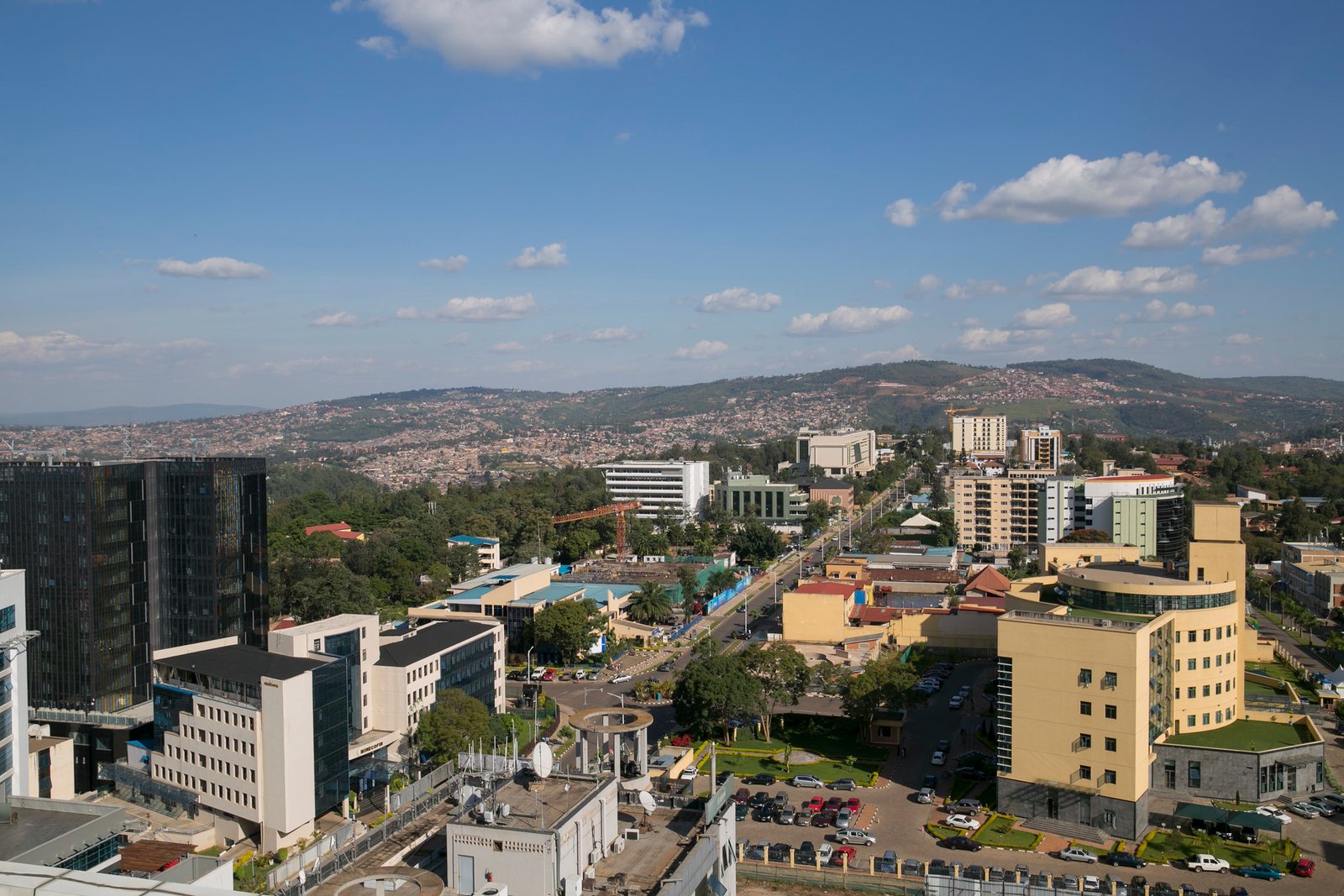
Kigali city tours typically cover the Kigali Genocide Memorial at Gisozi, Kimironko Market, the Inema Arts Centre, a walking tour of the Nyamirambo neighbourhood and the museums at Kandt House and the former presidential palace. Kigali is Rwanda’s capital, spread across a series of hills and ridges in the middle of the country, and it serves as the arrival point and safari base for almost every visitor to the region.
Most travellers give the city a single afternoon between landing and driving north to the gorillas. That is enough for a memorial visit and a market, and it misses most of what makes Kigali interesting. Two full days is the honest recommendation, and three if you want the outer sites as well.
Safaris built around culture and history
What a Kigali City Tour Covers in a Day
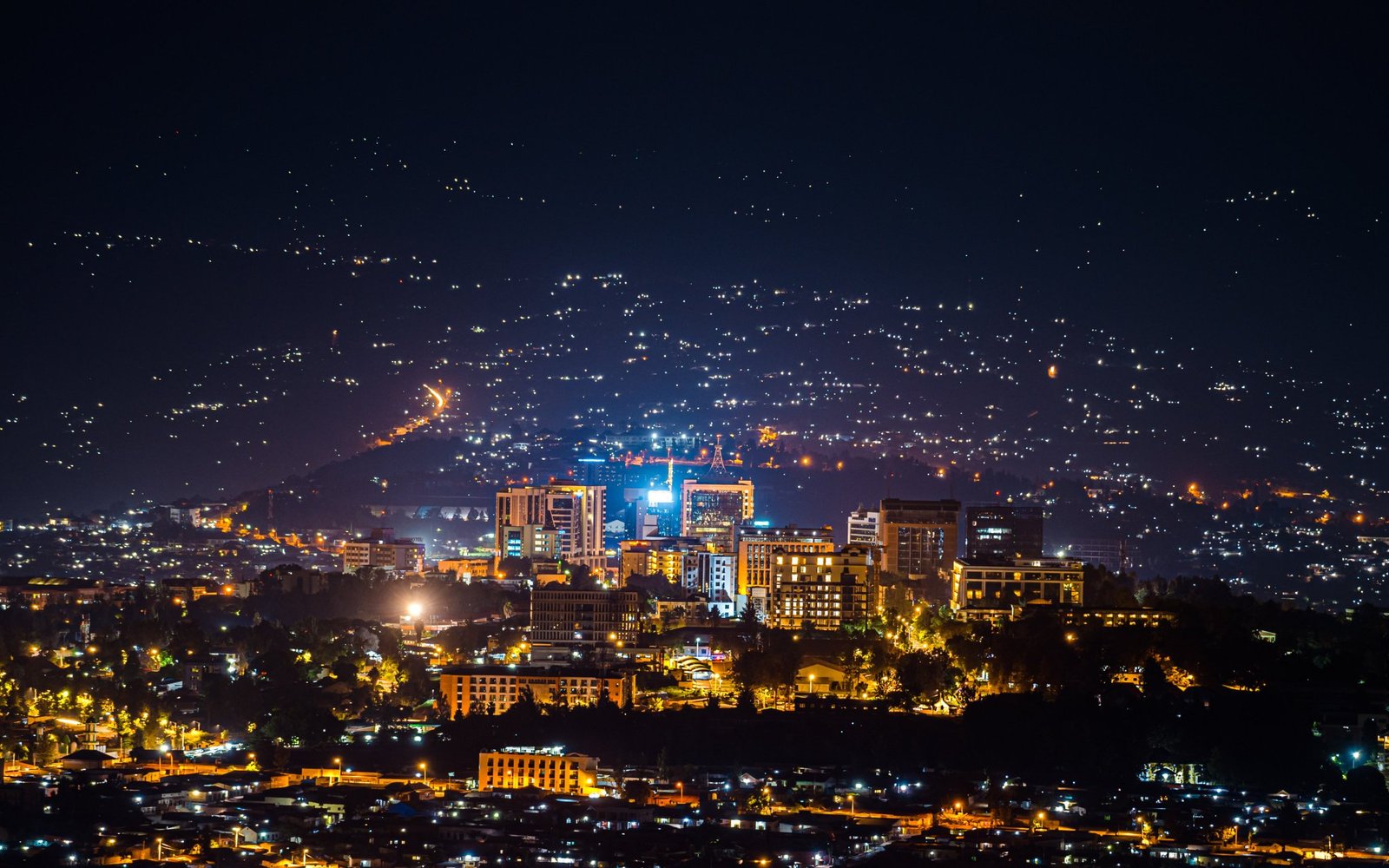
A standard guided city tour runs four to six hours and follows a fairly settled route. The Genocide Memorial usually comes first, in the morning when it is quietest and when you still have the day to absorb it. From there tours usually take in a drive through the government and business quarter around the Kigali Convention Centre, then Kimironko Market, then an arts centre, finishing with lunch or coffee somewhere with a view over the valleys.
Half day options drop either the market or the galleries. Full day tours add Nyamirambo, the Kandt House and sometimes Camp Kigali.
The city is genuinely easy to move around by regional standards. Roads are good, traffic is manageable outside rush hour, and Kigali is widely regarded as one of the safest capitals in Africa, with low violent crime and a strong police presence. Normal urban caution applies and nothing more.
One practical note that catches people out: the city sits across steep hills, so the distances on a map understate the driving. Sites that look close together can be twenty minutes apart because of the valleys between them.
Kigali Genocide Memorial Tours at Gisozi
The Kigali Genocide Memorial is the resting place of more than 250,000 victims of the 1994 genocide against the Tutsi. Inaugurated in 2004, it works as both a burial ground and a place of education, with permanent exhibitions covering how the genocide took shape, a children’s memorial, and a section examining genocide elsewhere in the twentieth century.
Allow three hours. Audio guides are available and worth taking, since they set a pace that the printed panels do not. The gardens are part of the visit rather than a place to wait, and the wall of names, still being added to, is where most people spend longest.
Photography is restricted in parts of the site and staff will tell you where. Dress modestly. Expect the visit to sit with you for the rest of the day, and schedule accordingly rather than heading straight into a market afterwards.
Do the memorial on your first full day rather than your last. It gives context for everything else you will see in Rwanda, including the conservation story in Akagera and the community projects around Volcanoes National Park, and those connections land better when the memorial comes first.
Camp Kigali and the Belgian Peacekeepers Memorial
Near the city centre, Camp Kigali marks the place where ten Belgian UN peacekeepers were killed in the opening days of the genocide in April 1994. The buildings where they died still stand, bullet marks intact, alongside a monument of ten stone columns, each of different height representing the age of one of the men.
It is a small site and a visit takes under an hour. What it adds to the larger memorial is specificity, and the story of the international withdrawal that followed those killings is one that most visitors arrive knowing nothing about.
Guides here are often willing to talk at length, and this is a good place to ask questions you may have felt unable to ask at Gisozi. The grounds are quiet and there is space to sit.
Kimironko Market Tours and Shopping in Kigali
Kimironko in Remera is the biggest market in the city and the best hour on most Kigali tours. Under one long roof you get produce, spices, secondhand clothing, household goods, kitenge fabric by the metre, agaseke baskets, wooden carvings and jewellery, with tailors working at machines along one side who will run up a garment in a day.
Hire a market guide at the entrance. This costs little, spares you the harder end of the haggling and turns a slightly overwhelming space into a genuinely good hour. Bring small notes in local currency, since change is a constant problem, and leave the big camera in the vehicle if you would rather move easily.
Agaseke baskets are the classic Rwandan buy, coiled from sweetgrass and sisal with conical lids, carrying a meaning of peace and reconciliation. Imigongo, the geometric cow dung relief paintings from the southeast, is the other. Both are available at Caplaki Craft Village too, which is calmer and better organised though less fun.
Local fruit is worth trying while you walk: tree tomato, passion fruit, small sweet bananas and sugarcane.
Nyamirambo Walking Tours
Nyamirambo is Kigali’s oldest and liveliest quarter, with a large Muslim community, mosques, tailors, hair salons and bars that keep hours unlike anywhere else in the city.
The walking tour run by the Nyamirambo Women’s Centre is the best half day in Kigali. A local guide takes a small group through the streets, into a salon and a tailoring workshop, past the mosque, into a family home, and finishes with a meal you help cook. The centre trains women in sewing and craft work and sells what they make, so the money stays in the neighbourhood.
Nothing about it is staged. You walk on ordinary streets past people going about ordinary business, and the guide explains rather than performs. Group sizes are deliberately small, so book ahead.
Kigali is not a city of monuments. It is a city of hills, and the best hour of most tours is the one spent walking a neighbourhood rather than driving between sights.
Kigali Art Gallery Tours: Inema, Niyo and Ivuka
Kigali has the strongest contemporary art scene in the region and the galleries are welcoming to drop in visitors.
Inema Arts Centre. Founded by two self taught painter brothers, Innocent Nkurunziza and Emmanuel Nkuranga, and now the best known gallery in East Africa. Resident artists work on site, there is a women’s craft showroom, a café, and regular evening events including dance and live music. Allow a couple of hours.
Niyo Art Gallery. Attached to a foundation supporting street children through art and education, with a café and shop. Smaller and more personal than Inema.
Ivuka Arts Kigali. One of the older studios in the city, with resident artists and a community dance programme. Good for seeing work in progress rather than only finished pieces.
Rwanda Art Museum. Housed in the former presidential palace, holding contemporary work across several rooms. The grounds contain the wreckage of the aircraft shot down in April 1994, which makes this a historical site as much as an art one.
Museum Tours: Kandt House and the Presidential Palace
The Kandt House Museum of Natural History occupies the former home of Richard Kandt, the German physician and explorer who became the first colonial administrator of Rwanda and founded Kigali. The museum covers Rwandan life before colonisation, the colonial period itself and natural history, and it is compact enough for an hour and a half.
It gives context that the bigger memorial does not: how Rwandan society was organised before Europeans arrived, and what colonial administration did to those structures. Anyone trying to make sense of the twentieth century here should visit this before or after Gisozi rather than skipping it.
The former presidential palace, now the Rwanda Art Museum, works as the third point of the same story. Between the three you get a readable account of the last hundred and twenty years, and none of them takes a full day.
Nyandungu Wetland Eco Park and Mount Kigali
Two outdoor options sit within the city and both surprise visitors who assumed Kigali was purely urban.
Nyandungu Urban Wetland Eco Park is a restored wetland with boardwalks, cycling and walking trails, a medicinal plant garden and a pond area. It was degraded land that has been deliberately brought back, and it is now the most accessible birding site in Rwanda, with papyrus species findable a short drive from the city centre. Mornings are best.
Mount Kigali rises directly above the city, with the usual route starting in Nyamirambo. The incline is gentle, the walk takes a couple of hours, and the views back across the ridges are the best available of the city’s layout. There is a wooded area at the top and somewhere to stop for food and a drink. Horse riding and zipline activities operate on the slopes.
Neither requires a permit or much arranging, which makes them useful for a spare morning.
Kigali Food Tours, Coffee Shops and Evenings Out
Kigali’s food scene has grown considerably and it deserves more than a hotel buffet. Brochettes, skewered goat or beef grilled over charcoal, are the national street food and the thing most visitors end up ordering repeatedly. Isombe, cassava leaves cooked slowly with groundnut, and ibirayi, potatoes from the volcanic north, fill out most menus, along with tilapia and sambaza from Lake Kivu.
The buffet lunch, known locally as a mélange, is the standard working lunch across the city and a cheap way to try eight things at once. Guided food tours run through Nyamirambo and other neighbourhoods and are the easiest way in.
Coffee is where Kigali punches hardest. Question Coffee, run in partnership with women’s cooperatives, does cupping sessions and barista training alongside the café. Bourbon Coffee and Kivu Noir both serve single origin Rwandan beans in comfortable rooms. For a country that exported almost all its coffee for decades, the domestic café culture that has grown up here is a recent and genuine thing.
Evenings run to live music, rooftop bars and restaurants across Kiyovu, Kimihurura and Nyamirambo, and the city is comfortable to move around after dark.

Motorbike, Cycling and Helicopter Tours of Kigali
Beyond the standard vehicle tour, three alternatives are worth knowing about.
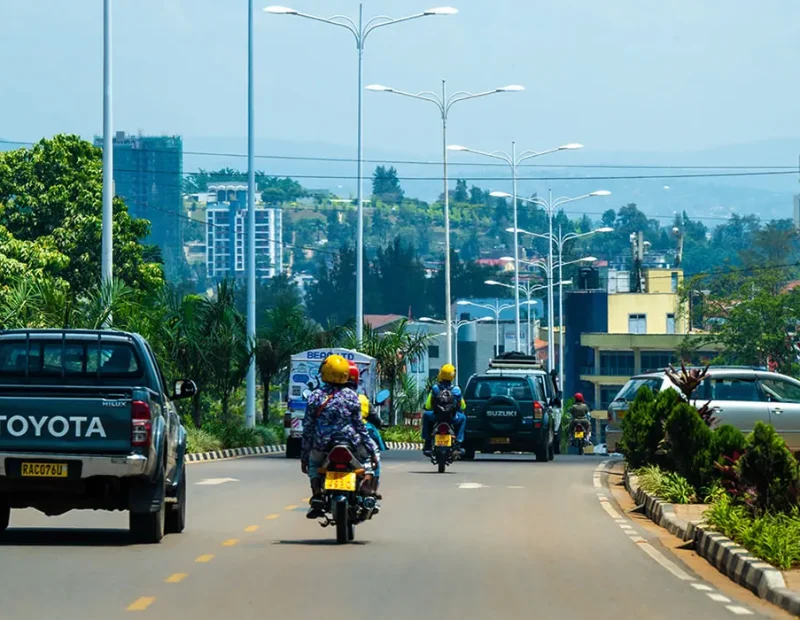
Motorbike tours put you on the back of a moto with a guide, which is how most of Kigali actually moves. You cover more ground, get into the smaller streets a vehicle cannot, and see the city at its own pace. Helmets are provided and the operators running tourist tours are licensed.
Cycling tours work the quieter residential ridges and the wetland valleys between them, usually in the early morning before traffic builds. Kigali is hilly enough that this is real exercise.
Helicopter tours run from Kigali International Airport, giving twenty minutes or so over the city and the surrounding hills. They also function as transfers to Volcanoes National Park and Akagera for anyone wanting to skip the road.
Best Time for a Kigali City Tour
Kigali sits at around 1,500 metres, which gives it a mild climate year round with warm days and cool evenings. City touring works in every month.
June to September and mid December to February. The dry seasons. Best for walking tours, Mount Kigali, Nyandungu and outdoor evenings. Busiest for hotels, since these are the peak gorilla trekking months.
March to May and October to November. Wetter months, and quietly the better time for city touring. Rain tends to come in afternoon bursts rather than all day, and the memorial, museums and galleries are all indoors.
Last Saturday of each month. Umuganda, the national community work morning. Shops close, buses stop and traffic disappears until around midday. Plan your tour for the afternoon, or ask about joining in.
April. Kwibuka, the annual commemoration, begins on 7 April. Travel is straightforward but the mood is subdued and some venues close or reduce hours. Visit with awareness rather than avoiding the dates.
Planning a Kigali City Tour Around a Rwanda Safari
Kigali works best as bookends rather than a destination in itself. Most itineraries land here, drive north to Volcanoes National Park within a day, and return at the end.
The shape that works is one night on arrival with a memorial visit the following morning, then the transfer north in the afternoon, and a fuller day in the city at the end when you are not thinking about a permit date. Volcanoes is two hours north, Akagera two hours east, so the capital sits genuinely central.
A few practical points. Visas on arrival are available for most nationalities, and the East Africa Tourist Visa covers Uganda and Kenya on one document. Plastic bags are banned countrywide and will be taken at the airport. Kigali is a walkable city in patches rather than end to end, so a vehicle or motos are part of the plan.
The difference between a forgettable Kigali afternoon and a day people remember is almost entirely the guide, and above all whether they can explain the memorial with care and then take you into a market without changing register. Intare Safaris is based in Kigali, works the city daily, and can pace a tour so that the heavy parts and the lively parts sit properly around each other.
Tell Intare Safaris how long you have in the capital, even if it is only a single afternoon, and they will build something worth doing rather than a drive past the convention centre.