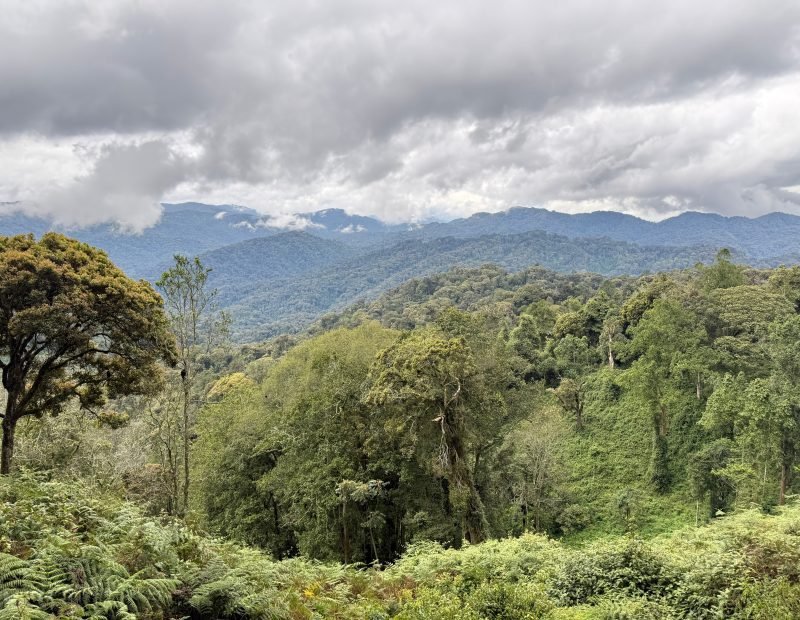
Chimpanzee trekking in Rwanda happens mainly in Nyungwe Forest National Park in the southwest, where visitors hike out before dawn with rangers to find semi habituated chimpanzee communities. Treks are also possible in Gishwati Mukura National Park on the Kivu ridge. Groups are capped at eight people, briefings start around five in the morning, and once the chimps are located you get an hour with them. Nyungwe is a UNESCO listed montane rainforest covering close to 1,000 square kilometres.
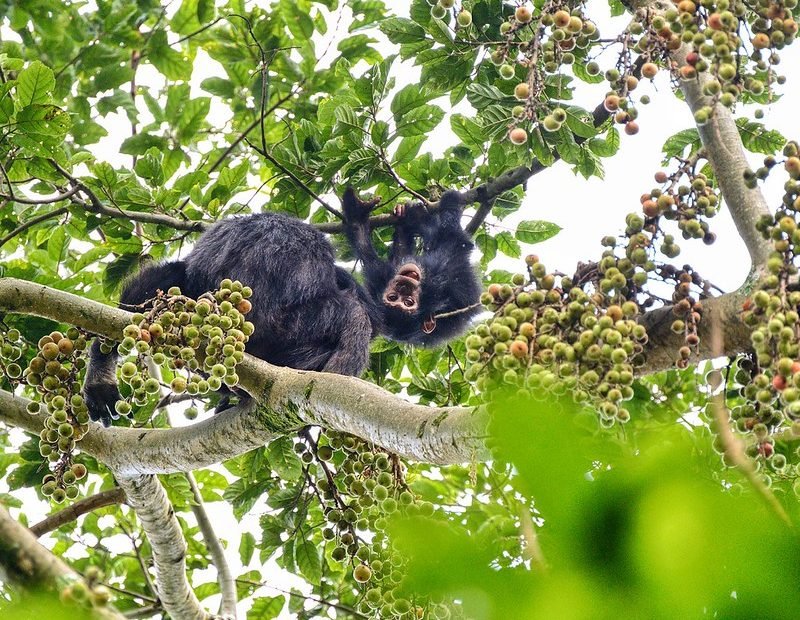
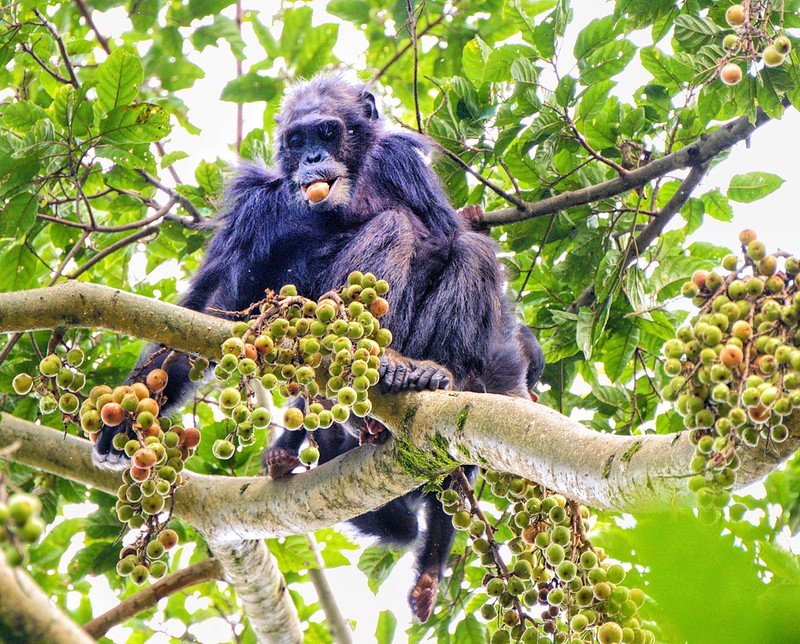
This is a different animal from gorilla trekking in every sense. Gorillas sit and eat and let you watch. Chimps move constantly, call to each other across valleys, climb thirty metres up a fig tree and drop back down without warning. Some people prefer it precisely for that reason, and others come away frustrated because nothing held still. Which camp you land in depends largely on what you were told beforehand.
Safaris built around chimpanzee trekking
Chimpanzee Trekking Safaris in Nyungwe Forest National Park
A chimpanzee trekking safari in Nyungwe starts absurdly early. Most lodges serve breakfast around four, you leave by half past four or five, and you report to one of three reception centres, Uwinka in the centre of the park, Gisakura on the western side or Kitabi at the eastern entrance, for a briefing before daylight.
The reason for that hour is straightforward. Chimps sleep in nests they build fresh each evening, and they are noisiest and most locatable in the first hour after waking, before they scatter to feed. Trackers head out ahead of the groups to find the nesting site from the previous night and work from there.
Once you are in the forest you follow calls. Pant hoots carry a long way through Nyungwe’s valleys, and the guides read them for direction and distance. You will almost certainly hear the community well before you see anything. When they are found, the hour begins, and it can mean anything from a settled view of animals feeding low down to twenty minutes of craning upward while they crash through the canopy above you.
Rwanda’s chimps are semi habituated rather than fully habituated. Sightings are good but not guaranteed, and any operator who promises otherwise is not being straight with you. Trackers reach the nests most mornings and the odds are decent, yet some treks come back with nothing more than sound.
Cyamudongo Forest Chimpanzee Trekking and Why It Suits Most Visitors
Cyamudongo is a separated block of forest of roughly 19 square kilometres on the southwestern edge of the park, cut off from the main body of Nyungwe by farmland. It holds a community of around thirty habituated chimpanzees, and for most travellers it is the better bet.
The logic is simple. A smaller forest means a smaller area for the chimps to be in, which means trackers find them more reliably and the walk to reach them is shorter. Sighting rates here run higher than in the main forest, and the animals tend to be seen at closer range.
The cost of that is the drive. Cyamudongo means leaving your lodge by half past four at the latest, on a winding unpaved track through tea plantations, with a driver who knows the turnings in the dark. It is a beautiful road in daylight and a slow one before dawn. The terrain once you are walking is steep, so this is not the easy option in effort terms, only in odds.
If seeing chimps matters more to you than the walk itself, book Cyamudongo and stay on the western side of the park near Gisakura or Rusizi. Doing the Cyamudongo trek from a lodge on the eastern side turns a hard morning into a brutal one.
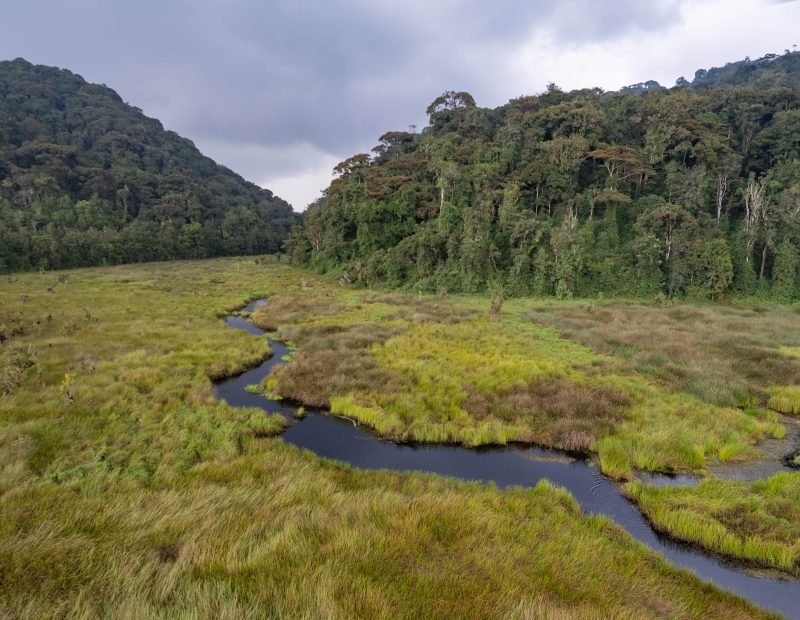
Uwinka and Gisovu Chimpanzee Tracking in the Main Forest
The main Nyungwe forest holds a larger community, commonly put at around sixty animals, ranging across a far bigger area near Uwinka. A third group is tracked from the Gisovu side in the north.
These treks are longer and less predictable. The chimps move widely through deep valleys and along sharp ridges, and finding them can take two to six hours of walking before the hour with them even begins. Sightings are less certain than at Cyamudongo.
What you get in exchange is the forest itself. Trekking from Uwinka takes you into old growth rainforest with giant tree ferns, hanging vines, orchids and a constant background of birds and colobus troops moving overhead. Guides point out medicinal plants, butterflies and primate sign as you go. Travellers who care as much about the rainforest as about the chimps usually prefer this side.
The practical way to decide is to be honest about your priority. Photograph of a chimp: Cyamudongo. A morning deep in one of Africa’s great rainforests, with chimps as the possible reward: Uwinka.
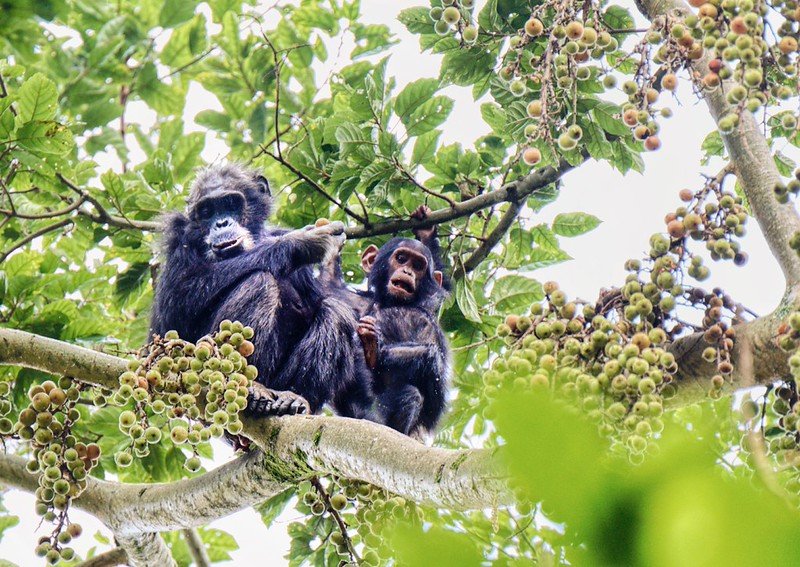
Chimpanzee Trekking Safaris in Gishwati Mukura National Park
Rwanda‘s fourth national park offers a third option, and it needs framing carefully. Gishwati Mukura sits on the ridge above Lake Kivu and holds a community of somewhere between twenty and thirty eastern chimpanzees that survived the near total clearance of this forest.
Those chimps are not habituated in the way Nyungwe’s are. They have had far less human contact, they are wary, and getting close is difficult even when the group is found. A track here can genuinely produce nothing.
The way it works is to go out before dawn to where the community nested and wait for them to wake. When it comes off it is a slower, quieter and more personal thing than a busier sighting elsewhere, and the guides know these animals individually because there are so few of them in such a small forest. All activities are arranged through the community owned guesthouse in the park.
Nobody should choose Gishwati over Nyungwe for a first chimpanzee trek. As a second primate stop on a longer western circuit, for travellers who value quiet and a restoration story over a guaranteed photograph, it earns its place.
How Hard Is a Rwanda Chimpanzee Trek
Harder than most people expect, and harder than the equivalent trek in Uganda’s Kibale Forest. Nyungwe is built of deep valleys and sharp ridges rather than gentle rolling hills, and you spend the morning going steeply up and steeply down.
The ground stays slick. This forest takes around 2,000 millimetres of rain a year, so leaf litter over wet clay is the standard surface even in the dry months, and balance matters more than cardiovascular fitness. Trekking poles help considerably. So do porters, available at the reception centres, who will take your bag and steady you on the descents.
Add the pace. Unlike gorilla trekking, where rangers move slowly towards a known stationary family, chimp tracking often means moving fast to keep up with animals travelling through the canopy. When the guides say the community is moving, they mean you are about to walk quickly downhill through wet undergrowth.
Reckon on two to six hours in total including the walk back out, and treat any estimate given the night before as a rough guess rather than a schedule.
You hear them first. A community calling across a valley at dawn, twenty or thirty voices building into something that carries for a kilometre, is worth the alarm clock even if you never get a clean photograph.
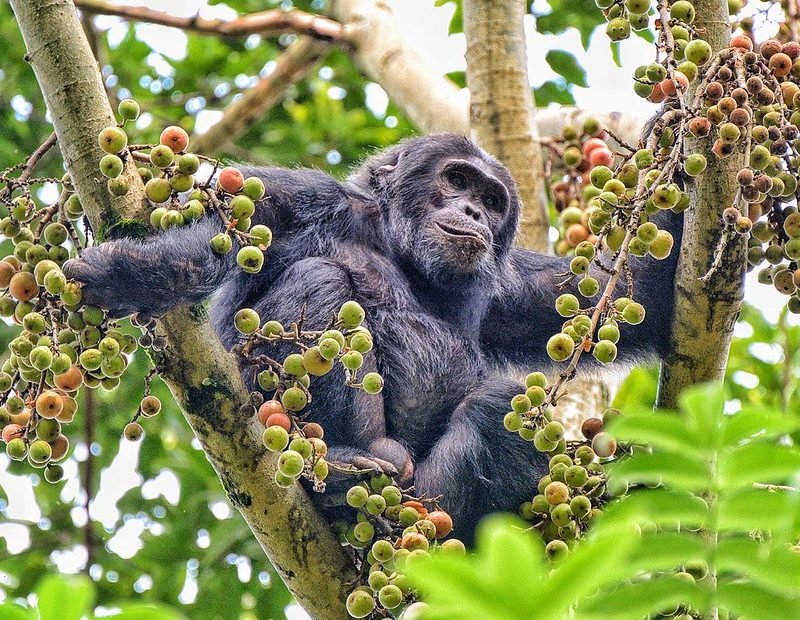
Chimpanzee Trekking Rules and Group Sizes in Rwanda
The rules mirror the gorilla protocols and exist for the same reason. Chimpanzees share close to 99 percent of our DNA and catch human respiratory illnesses readily.
Eight visitors per group. Groups are capped at eight per chimpanzee community per session, each led by ranger guides with trackers working ahead.
One hour once located. The clock starts when the community is found, not when you leave the reception centre. Time spent walking does not count against it.
Do not trek if you are unwell. A cold, cough or fever means you will be turned back at the briefing. Rangers check, and they are right to.
Keep your distance and stay quiet. A minimum distance is maintained throughout, voices stay low, and nobody eats or drinks in the presence of the chimps. Carry a mask for the viewing hour.
No flash photography. Flash is prohibited. Turn it off before you leave the vehicle and silence your phone at the same time.
Stay with the group. Nobody wanders off the line. When guides ask you to move quickly and quietly, they mean both parts.
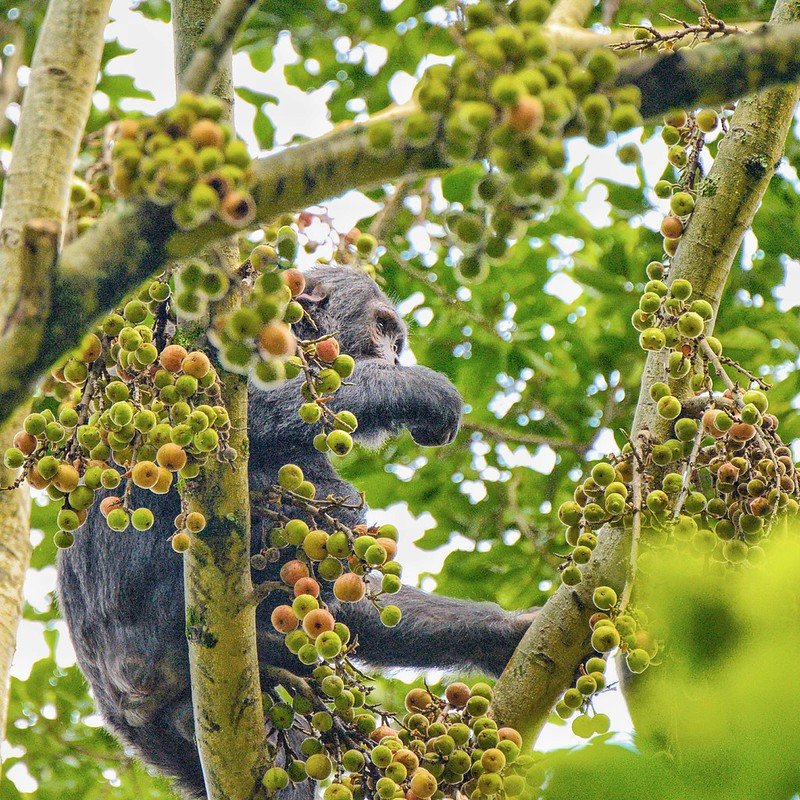
What to Pack for a Chimpanzee Trekking Safari
Nyungwe is wetter than the Virungas and the packing list reflects that. It is also cool at the ridgeline and humid lower down, so layers do real work here.
Footwear. Waterproof boots with ankle support and aggressive tread, broken in beforehand. The descents are where people go over. Gaiters or long socks pulled over trousers keep out mud and safari ants.
Clothing. Long trousers and long sleeves against stinging nettles and blister bush, in neutral colours. A proper waterproof jacket. A fleece for the pre dawn start, which you will strip off within an hour.
Hands and grip. Gardening gloves for grabbing branches on steep sections, and trekking poles if your knees have opinions about descending in mud.
Everything else. Two litres of water, a packed breakfast or snacks since you left before dawn, insect repellent, a mask, and a dry bag for camera gear. Mist gets into everything.
Other Primates on a Nyungwe Trekking Safari
Thirteen primate species live in Nyungwe, and the chimps are only the headline. Anyone building a trip around primates should plan more than one morning here.
Colobus monkey tracking is the most reliable primate activity in the park and the one visitors consistently underrate. Nyungwe holds the largest known troops of Rwenzori colobus anywhere, sometimes 300 or more animals moving together, which is very unusual for the species. Tracking runs from Gisakura and Uwinka at several points through the day, the walking is easy, and sightings are close to dependable. It works well as an afternoon after a hard chimp morning.
Alongside them the forest holds L’Hoest’s monkeys, silver monkeys, red tailed monkeys, Dent’s mona monkeys, grey cheeked mangabeys, owl faced monkeys, olive baboons and vervets. You see several of these incidentally while chimp tracking, and guides will name them as you pass.
Best Time for Chimpanzee Trekking in Rwanda
Chimp trekking runs year round, and the seasonal advice here runs against the standard Rwanda pattern, which catches out people who planned around gorilla trekking.
March to May, long rains. Counterintuitively among the strongest months. Fruiting patterns bring chimps lower and closer to the trails, which shortens treks and improves sightings. Mud and slow going are the price. Waterfalls run hard.
October and November, short rains. Similar logic with lighter rainfall, usually afternoon showers. Migrant birds arrive from November, so this suits anyone pairing a chimp trek with birding.
June to September, long dry season. Best walking conditions and firmest trails, and the busiest period across Rwanda. Chimps range more widely when fruit is scattered, so treks can run longer. Still a perfectly good time to come.
Mid December to February, short dry season. Reasonable conditions with fewer visitors than the mid year peak. A sound choice if you are also fitting in gorilla trekking, which favours these months.
Temperature barely moves through the year here, sitting around twenty degrees by day and dropping to about ten at night. Rain is possible in every month regardless of season.
Getting to Nyungwe and Cyamudongo for Your Trek
Nyungwe is roughly 225 kilometres southwest of Kigali, about five to six hours by road to Uwinka. The drive itself is scenic, running through tea country and terraced hills, but it is a full day and anyone arriving that afternoon for a five o’clock start the next morning will be tired.
RwandAir flies Kigali to Kamembe near Rusizi in around forty minutes, landing you close to the western side of the park and within reach of Cyamudongo. For a short trip built around chimps, this is the sensible choice.
Where you sleep decides how your morning goes. Gisakura and the western lodges put you nearest Cyamudongo. Uwinka and the central options suit main forest treks. Getting this wrong adds an hour or more of driving in the dark to an already early start.
Most travellers fold Nyungwe into a wider circuit rather than visiting alone, coming down the Lake Kivu shoreline from the volcanoes or looping back towards Kigali afterwards.
Chimpanzee trekking rewards travellers who arrive with the right expectations and the right base, and both are easy to get wrong from a distance. Intare Safaris runs Nyungwe regularly from its Rwanda base and will tell you plainly whether Cyamudongo or the main forest suits you, which side of the park to sleep on, and whether the flight to Kamembe is worth it for your dates.
Message Intare Safaris with your dates and how you feel about a four thirty start, and someone who has done that drive many times will build the trek around what actually works for you.