Golden monkey trekking in Rwanda takes place in Volcanoes National Park, where visitors walk into the bamboo zone at the foot of the Virunga volcanoes to spend an hour with one of two habituated troops. Treks start with a briefing at park headquarters around seven in the morning, groups are capped at eight, and the walking is easy compared with gorilla trekking. Golden monkeys are an endangered guenon found only in the Virunga region, and a smaller population lives in Gishwati Mukura National Park.
Most people book this as a second day activity after their gorilla trek, and most come back saying they had not expected to enjoy it as much as they did. It is the cheerful, chaotic counterpoint to the stillness of an hour with a gorilla family, and it asks far less of your legs.
Safaris built around golden monkey tracking
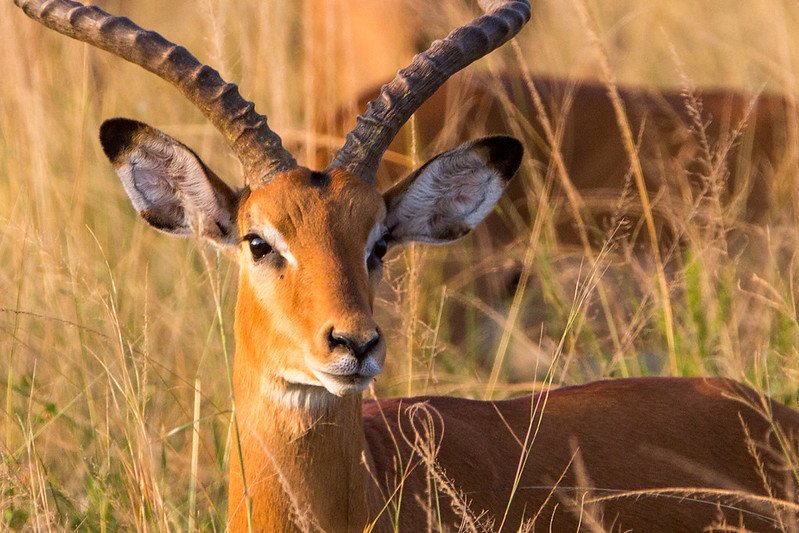
Golden Monkey Trekking Safaris in Volcanoes National Park
A golden monkey trekking safari runs on a gentler schedule than the gorilla trek that usually precedes it. Your guide collects you from the lodge in the morning and you report to park headquarters at Kinigi, where the briefing runs at seven alongside the gorilla groups.
Rangers explain the rules, assign you to a troop and lead you out to the trailhead. From there the walk crosses farmland to the park boundary wall, then into the lower bamboo. The monkeys are usually found within an hour, often much less, because the troops keep to fairly consistent feeding areas within the bamboo zone rather than ranging across the whole massif.
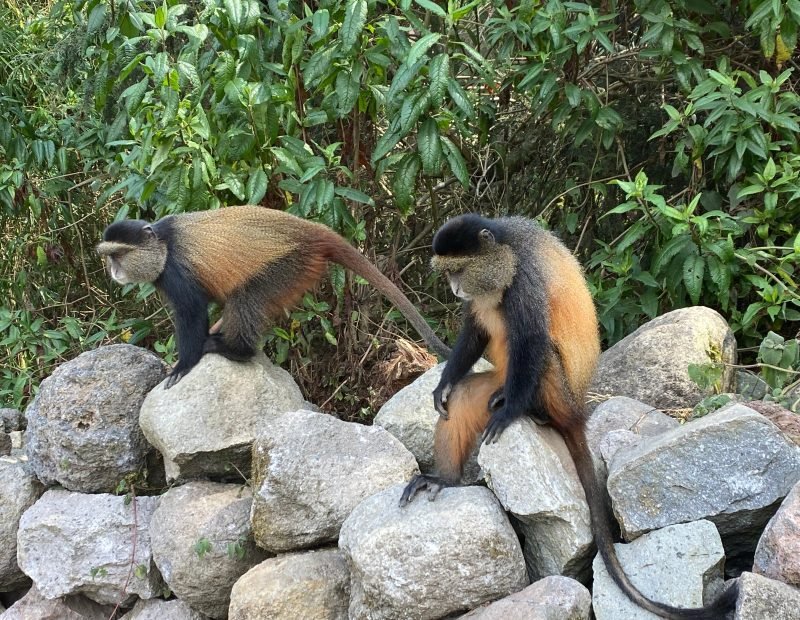
Then you get your hour. What follows is not the reverent hush of a gorilla visit. Golden monkeys are fast, loud and permanently in motion, dropping between bamboo stems, chasing each other in circles above your head and stripping fresh shoots while keeping half an eye on you. Sightings are reliable, though the animals rarely sit still long enough to satisfy anyone hoping for a portrait.
Trekking is available daily, permits are far easier to secure than gorilla permits, and porters can be hired at the trailhead if you want one.
The Two Habituated Golden Monkey Troops on the Virunga Slopes
Two troops in Volcanoes National Park have been through habituation and receive visitors. Both are large by guenon standards, usually put at somewhere between eighty and a hundred animals, and both split into smaller subgroups that join and separate through the day.
The more frequently visited troop lives around the base of Mount Sabyinyo, on ground that is relatively easy to reach and holds good bamboo. The second ranges on the slopes below Karisimbi. Which one you visit is decided at the briefing based on where the troops have been feeding and how many visitors are booked that morning.
Troop structure follows a familiar pattern for the species. A dominant male leads, females and their young form the stable core, and you will see grooming, play and a great deal of feeding during the hour. Because the groups keep splitting and rejoining, the number of animals visible at any moment varies from a handful to several dozen.
Other troops in the park remain unhabituated and avoid people, which is why the two visited groups carry all the tourism.
Golden monkey trekking has a lower minimum age than gorilla trekking, which makes it the practical option for families travelling with children under fifteen. It is also the sensible choice for anyone recovering from a hard gorilla trek the previous day.
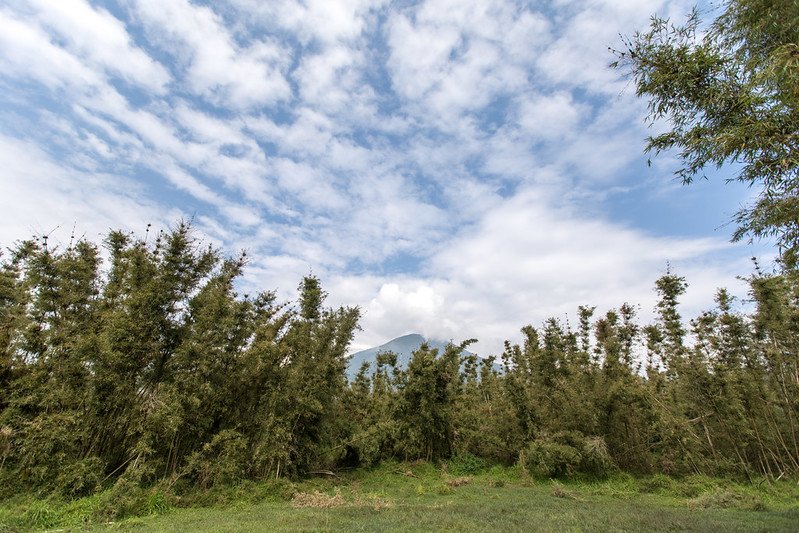
Golden Monkeys as a Species: Bamboo, Behaviour and Status
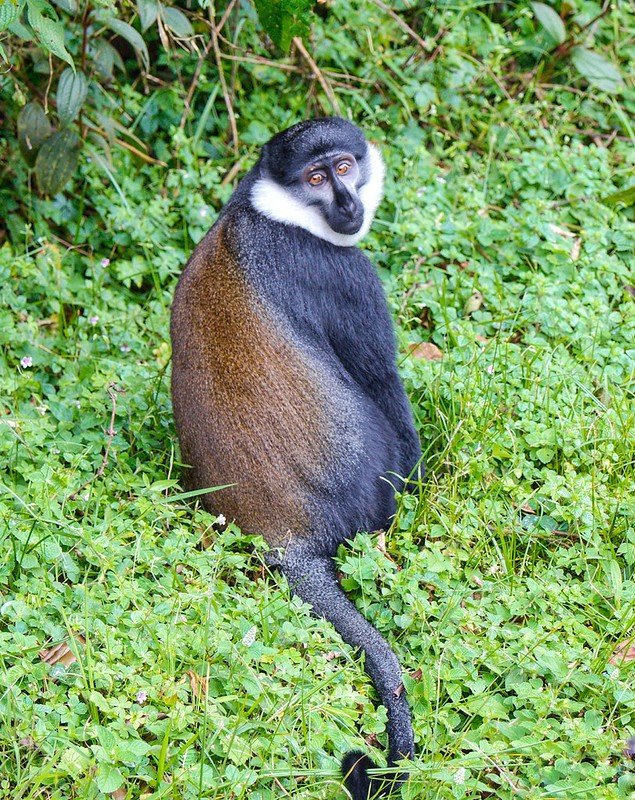
The golden monkey, Cercopithecus kandti, is a subspecies of the widespread blue monkey that adapted to high altitude life in the Virungas. It is larger and thicker furred than its lowland relatives, which is what the cold at 2,400 metres and above demands.
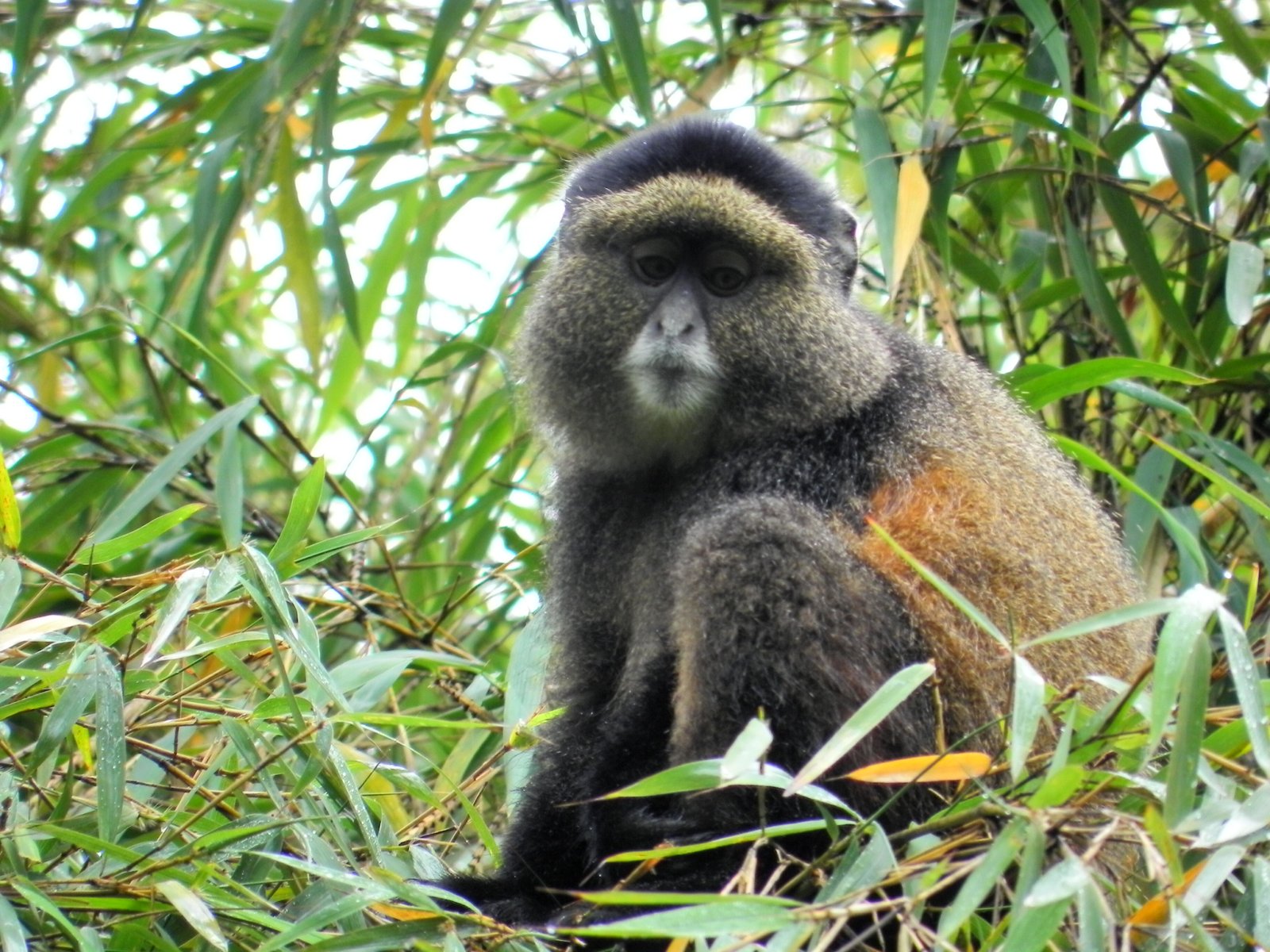
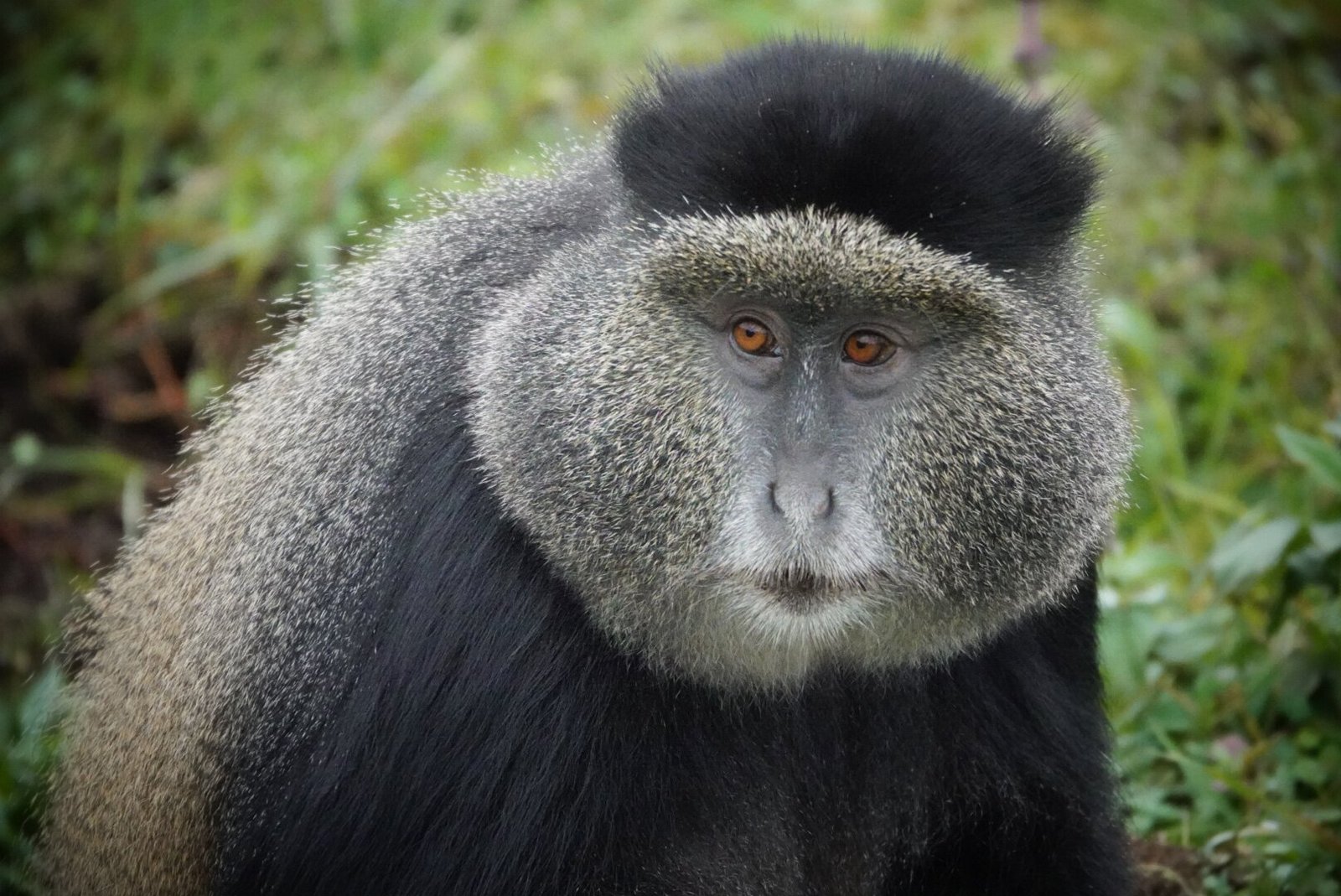
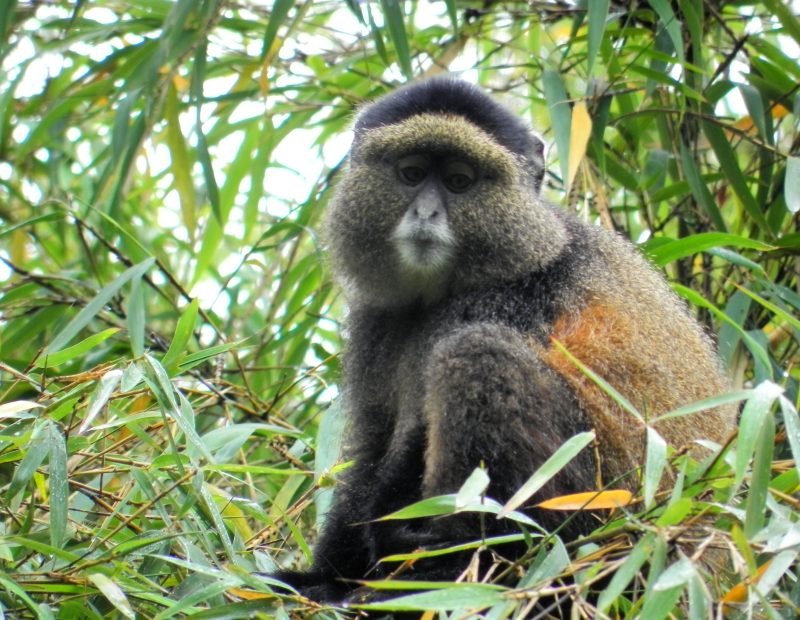
The colouring is the thing people remember. A bright golden orange patch across the back and flanks, contrasting against black limbs, tail and crown, with the gold catching the light in a way that blends oddly well with mature bamboo. In good light they look almost improbable.
Bamboo shoots are the core of the diet, supplemented with fruit, leaves, flowers and invertebrates. The troops follow the bamboo growth cycle, which is why they keep to predictable elevations and why the trekking is so much easier than following gorillas across the massif.
They are listed as endangered. The population is confined to the Virunga volcanoes and a few fragmented forests nearby, with estimates ranging from a couple of thousand to around five thousand animals, and researchers are candid that the total has never been confirmed. Habitat loss, historical conflict in the region and crop raiding conflicts with farmers are the main pressures. Tourism revenue funds ranger monitoring, research and community projects, and a share of permit income goes directly to the communities living on the park boundary.
Golden Monkey Trekking Compared With Gorilla Trekking
People often ask whether golden monkey trekking is worth a day when they have already booked gorillas. The two activities are different enough that the comparison is worth laying out plainly.
Effort. Golden monkey trekking is rated easy to moderate, usually under an hour of walking on fairly level ground in the lower bamboo. Gorilla trekking can mean anything from thirty minutes to five hours on steep volcanic slope. If you are worried about fitness, this is the one to start with.
What you watch. Gorillas settle, feed and largely ignore you, which makes for a calm and strangely intimate hour. Golden monkeys never stop moving. The experience is energetic and funny rather than moving, and the hour passes in a completely different way.
Access and permits. Gorilla permits are capped tightly and sell out months ahead in the dry season. Golden monkey permits are far more available, often bookable much closer to travel, and can sometimes be arranged at park headquarters the morning of the trek.
Age limits. Gorilla trekking requires trekkers to be at least fifteen. Golden monkey trekking allows younger children, which changes what a family can do together.
The honest recommendation is to do both if you have two days at Volcanoes. Doing only golden monkeys makes sense for families with younger children, for travellers who cannot manage the gorilla terrain, or for anyone who wants a morning in the Virungas without a long climb.
Rangers call them the clowns of the bamboo, and after an hour of watching them chase each other in circles above your head, the name stops sounding like guide patter.
Photographing Golden Monkeys in the Bamboo
This is where honesty helps more than encouragement. Golden monkeys are difficult to photograph and the reasons are structural rather than a matter of skill.
Bamboo forest is dim, the animals move constantly through cluttered vertical stems, and autofocus systems latch onto the bamboo in front of the subject rather than the monkey behind it. Add that the gold fur is bright against dark limbs, which pushes the exposure range further than most cameras handle comfortably.
What works: a fast shutter speed, higher sensitivity than feels comfortable, and continuous autofocus with a small focus point you place deliberately. Manual focus is a genuine option when the stems keep winning. A mid range zoom beats a heavy telephoto, since the monkeys often come closer than you expect and swinging a long lens between bamboo stems is unpleasant.
Flash is prohibited. Shoot burst sequences and accept a low keeper rate; a handful of frames from a hundred is a normal outcome and nothing has gone wrong. Then put the camera away for a while and simply watch, because that is where the hour actually lives.
Golden Monkey Trekking in Gishwati Mukura National Park
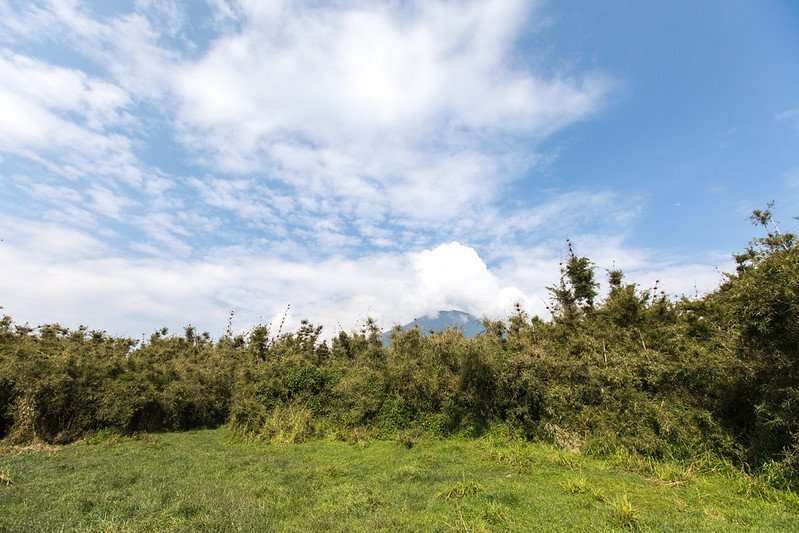
Rwanda‘s fourth national park offers a second and much quieter place to track golden monkeys. Gishwati Mukura sits on the ridge above Lake Kivu, and a separated golden monkey population persisted there through the near total clearance of the forest in the last century.
Tracking here works differently. The Gishwati monkeys are less habituated than the Virunga troops, sightings vary considerably, and guides will tell you what has been active recently rather than promising a result. The walking follows the park’s forest trails alongside chimpanzee tracking and birding, and all activities are arranged through the community owned guesthouse.
Nobody should choose Gishwati over Volcanoes for a first golden monkey trek. As part of a longer western circuit between the volcanoes and Nyungwe, it adds a quieter primate morning and a restoration story that the Virungas cannot tell in the same way.
Beyond Rwanda, golden monkeys are also tracked in Mgahinga Gorilla National Park across the Ugandan border, where a four hour habituation option exists alongside the standard one hour visit.
What to Pack and How Fit You Need to Be
The fitness bar is low. If you can manage an hour’s walk on uneven ground at altitude, you can do this trek. The park sits above 2,400 metres, which is the main thing that slows people down, and rangers set the pace to the slowest walker.
Footwear. Waterproof walking boots with grip. The bamboo zone stays damp underfoot and the volcanic soil turns greasy after rain, even if the gradient is gentle.
Clothing. Long trousers and long sleeves against nettles, plus a fleece for the cold start and a waterproof jacket. Neutral colours. It is genuinely cold at seven in the morning at this altitude and warm by mid morning.
Hands. Gardening gloves. The bamboo zone has fewer nettles than the higher gorilla trails, but you will still grab vegetation for balance.
Small items. Water, a mask for the viewing hour, insect repellent, sunscreen and a dry bag for your camera. A porter is available at the trailhead and worth hiring even on an easy walk.
Best Time for Golden Monkey Trekking in Rwanda
Trekking runs every day and no season closes it. Because the troops keep to the bamboo zone rather than ranging widely, seasonal variation matters less here than for gorillas or chimps.
June to September, long dry season. The most comfortable walking and the clearest views of the volcanoes. The busiest window across the park, although golden monkey permits stay available when gorilla permits have long gone.
Mid December to February, short dry season. Similar conditions with fewer visitors. A good pairing with gorilla trekking, which also favours these months.
March to May, long rains. Wet underfoot and often raining by afternoon, but the walking stays manageable because the ground is relatively flat. Bamboo puts out fresh shoots in the wet, which keeps the troops feeding actively.
October and November, short rains. Showers rather than sustained rain. Quiet across the park and a sound choice for anyone wanting the Virungas without the dry season crowds.
Mornings are consistently better than any other time of day, which is why treks are scheduled early. Cloud tends to build over the volcanoes as the day goes on.
Getting to Volcanoes National Park for Your Trek
The drive from Kigali International Airport to Musanze takes about two to two and a half hours on tarmac, then another twenty minutes or so up to Kinigi park headquarters where the briefing happens. Most lodges near the park sit within half an hour of that briefing point.
Because the road is short and reliable, golden monkey trekking works as a day trip from Kigali for travellers very short on time, leaving the capital before dawn and returning by evening. It works far better as part of a two or three night stay in Musanze, paired with gorilla trekking, a Bisoke hike or the Dian Fossey tomb trail.
There is no useful public transport up to Kinigi, so a vehicle is part of the plan whichever way you do it. Accommodation runs from guesthouses in Musanze town through mid range lodges near the park to the small high end camps on the boundary.
Golden monkey trekking is the easiest thing to add to a Rwanda trip and the easiest to overlook, which is a shame given how few places on earth these animals still exist. Intare Safaris is Rwandan, works Volcanoes National Park year round, and can slot a golden monkey morning around your gorilla permit date without adding a wasted day.
Get in touch with Intare Safaris with your dates and who is travelling, including any children under fifteen, and they will put together a couple of days in the Virungas that suits everyone in the party rather than only the fittest.