
8 Day Kenya Classic Safari
Kenya · Amboseli, Lake Naivasha, Hell's Gate, Lake Nakuru & the Masai Mara
- 8 days, 7 nights
- Customisable itinerary
- Private departure
Trip overview
The full Rift Valley run, and the version that gets you out of the vehicle. Amboseli for elephants beneath Kilimanjaro, then north to Lake Naivasha for a boat among hippo, a walking safari on Crescent Island where you move on foot among giraffe and zebra, and cycling through Hell’s Gate gorge. Lake Nakuru for both rhino species, and three nights in the Masai Mara to finish. Eight days, and only two of them are transfer days.
Customise this trip for a perfect match
-
Private and tailor-made Your own vehicle, driver guide and pace. Nothing on this page is fixed — days can be swapped, added or dropped.
-
Routed by people who drive it Every itinerary here was planned by someone who has driven the road, and the planner who answers you is the one who builds it.
-
Licensed and accredited Registered with the Rwanda Development Board and a member of the Rwanda Tours and Travel Association.
-
Support while you travel One number reaches the Kigali office around the clock for the whole time you are on the ground.
A draft itinerary costs nothing and commits you to nothing. Tell us what you would change and a planner rewrites it as many times as it takes.
The route
- Amboseli National Park
- Hell's Gate National Park
- Lake Nakuru National Park
- Masai Mara National Reserve
- Start and finish
- Starts and ends in Nairobi
- Length
- 8 days, 7 nights
- How it runs
- Four parks plus a lake, with cycling and a walking safari
- Countries
- Kenya
Itinerary
Day 1
Nairobi To Amboseli National Park
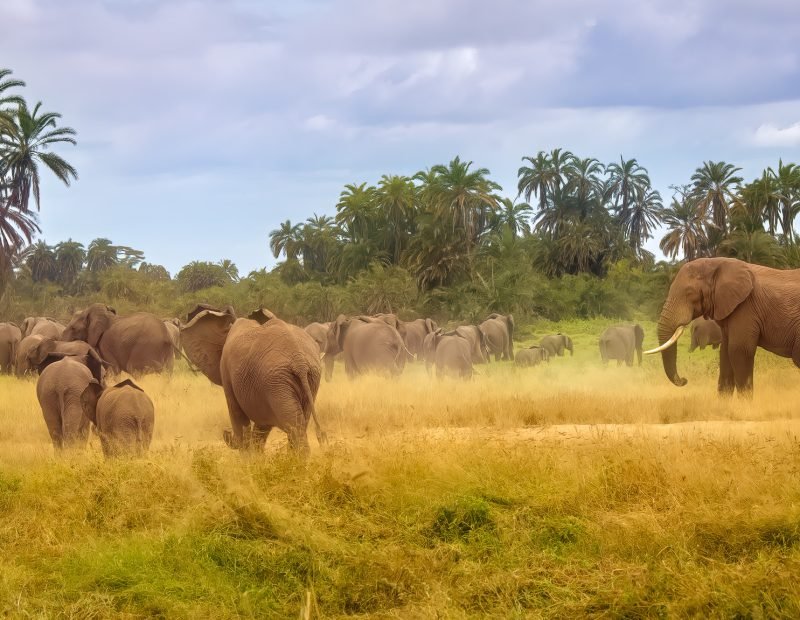
Our driver guide collects you in Nairobi and we head southeast towards the Tanzanian border, roughly 230 kilometres and four to five hours, tarmac to Emali and a rougher stretch to the gate. Amboseli covers 392 square kilometres in Kajiado County and sits within a wider Maasai ecosystem of around 8,000 square kilometres. We go straight in for an afternoon game drive, which is one of the two windows when Kilimanjaro is usually clear of cloud. The park holds around 1,800 elephants, and they move between the swamps and the plains on established routes, often crossing directly in front of the vehicle. Give them right of way and switch the engine off; the best viewing here happens when a family walks past a stationary vehicle rather than the other way round. Amboseli sits at around 1,150 metres and is dry, dusty and warm; a scarf and covers for camera gear both earn their place.
Day 2
A Full Day In Amboseli
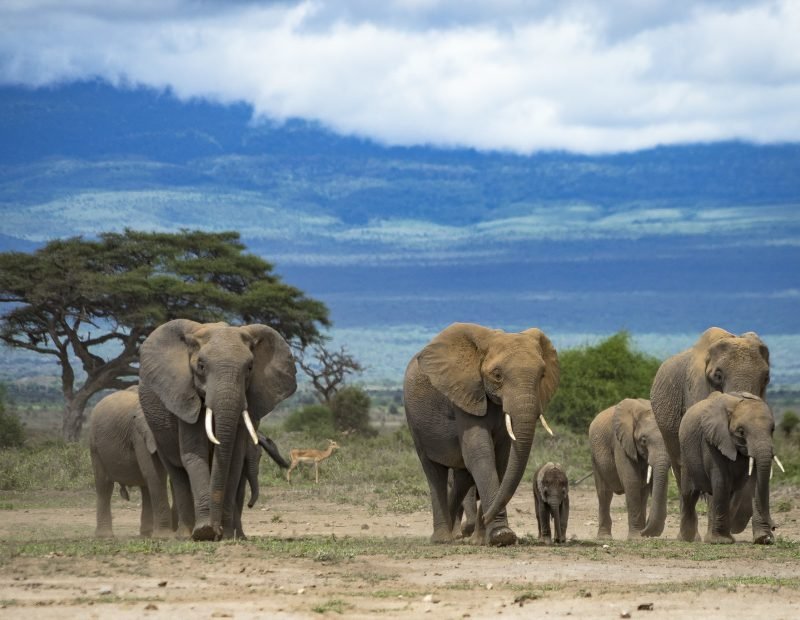
Out before sunrise, because the mountain hides in cloud through the middle of the day and the reliable windows are the first hour after dawn and the last before dark. Kilimanjaro rises to 5,895 metres about seventy kilometres south in Tanzania. Amboseli‘s elephants have been followed continuously since the early 1970s in the longest running study of wild elephants anywhere, which is why some of the last great tuskers in Africa live here, bulls carrying ivory that reaches almost to the ground. We work the permanent swamps at Enkongo Narok and Longinye, fed by snowmelt that percolates underground from the mountain for decades before surfacing, then climb Observation Hill for the full circle view over the swamps and the dry lakebed. Dust is constant, so keep camera gear covered. The dust is also what gives Amboseli its amber haze, which makes backlit herds work so well in the last hour of light.
Day 3
Amboseli To Lake Naivasha
The long transfer of the trip, and worth naming honestly. We run back north past Nairobi and out onto the Rift Valley floor, roughly six to seven hours in total with a lunch stop, taking in the escarpment viewpoint on the descent, which is the classic view over the valley. Lake Naivasha is a freshwater lake at around 1,880 metres, ringed with fever tree woodland and papyrus, and it is a completely different proposition from the alkaline lakes further north. We check you in and take a late afternoon boat out among the hippo pods, with fish eagles working the shoreline and pelicans and cormorants on the water. Ask the boatman to call an eagle down; they know exactly which birds respond. Dinner by the lake with hippo grazing on the lawns after dark. They come out of the water to feed at night, which is worth knowing before you walk between buildings without a torch.
Day 4
Crescent Island And Hell's Gate National Park
A day on foot and on two wheels, which is rare in Kenya. We start at Crescent Island, a private walking area on the lake with no dangerous predators, where you walk unaccompanied by a vehicle among giraffe, zebra, waterbuck, eland and impala. Being at ground level with a giraffe rather than looking up from a seat changes the scale of everything. Afterwards, Hell’s Gate National Park, one of very few Kenyan parks where cycling is permitted among wildlife: you ride between towering red cliffs past Fischer’s Tower with zebra and buffalo grazing alongside the track, then walk down into the gorge with a local guide, through narrow sandstone passages carved by hot springs. Back to Naivasha in the late afternoon. Elsamere, the former home of Joy Adamson, is the alternative if you would rather not cycle. It sits on the lakeshore in old gardens and does a good afternoon tea, and the colobus in the trees there are easy to see.
Day 5
Naivasha To Lake Nakuru National Park
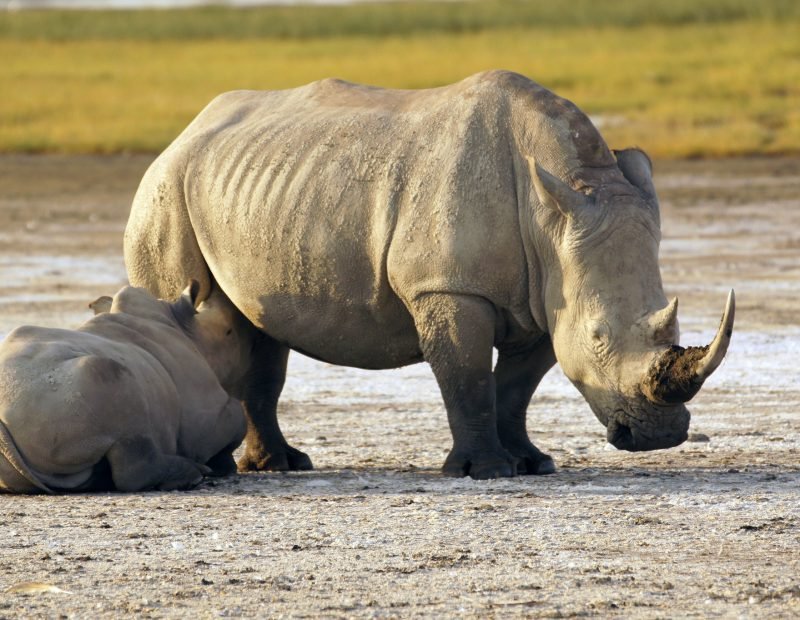
A short drive north, only about an hour and a half, which makes this the easiest morning of the trip. Nakuru covers about 188 square kilometres around a shallow alkaline lake and forms part of the UNESCO listed Kenya Lake System of the Great Rift Valley. We take a full afternoon game drive, concentrating on the southern sector, which is the best rhino ground. Southern white rhino graze in the open in family groups, largely indifferent to vehicles, while eastern black rhino browse in thicker cover and are considerably harder to find. Rothschild’s giraffe work the acacia belt on the eastern shore. We take in Baboon Cliff for the view across the whole lake, and Makalia Falls at the southern end if the water is running, which it does best from April to August. In a hard dry season it can reduce to nothing, leaving a hot empty basin, so our guide will tell you on the day whether it is worth the drive south.
Day 6
Lake Nakuru To The Masai Mara
An early game drive before we leave, giving the rhino a second chance in the best light of the day, then southwest through Njoro and Narok, roughly four to five hours to the Mara. On the flamingos, an honest word: Nakuru was once famous for a million of them, and rising water across the Rift lakes has diluted the alkalinity, thinned the algae they feed on and pushed most of them to other lakes. Numbers vary and some are usually present, so treat them as a bonus. We reach the Mara in the afternoon for a first game drive on the way to your camp. The reserve covers about 1,510 square kilometres of rolling grassland, and around 2,400 elephants live across the greater ecosystem alongside buffalo, giraffe, topi and eland. Black rhino exist here but are scarce and heavily protected, so the Big Five is achievable rather than routine. Dinner at camp with tomorrow planned around the most recent sightings.
Day 7
A Full Day In The Masai Mara
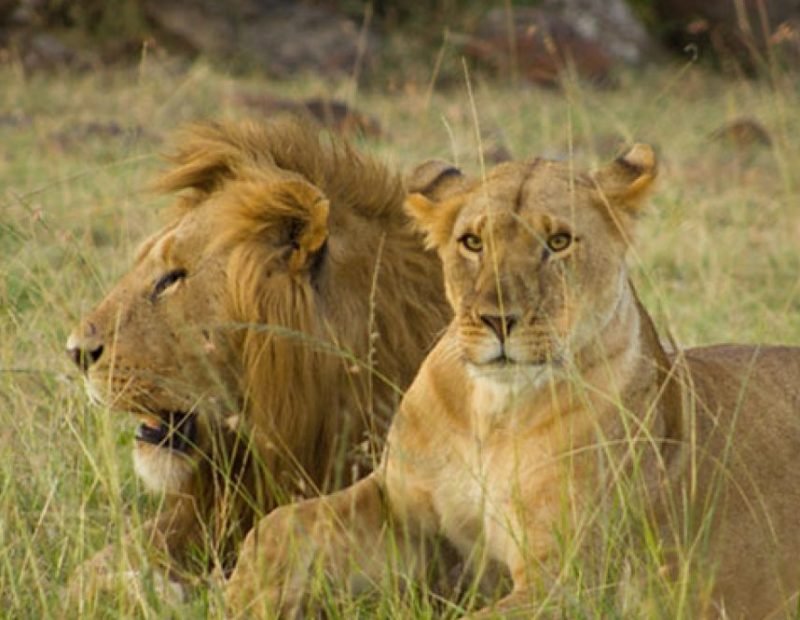
Out at first light with a picnic lunch, because the Mara rewards a full day rather than two short drives. Its real strength is the resident predator population, present in every month regardless of the migration. Something in the order of 850 lions live across the greater Mara, and the open country makes them far easier to find than in wooded parks. Cheetah do well on these plains and are seen more reliably here than almost anywhere in East Africa, while leopard work the riverine forest along the Mara and Talek rivers. From July to October the herds are here, around 1.5 million wildebeest with several hundred thousand zebra, and the crossings are what everybody comes for, though nobody can predict one. Over 470 bird species have been recorded. Raptors are the headline, with martial eagle, bateleur and six vulture species working the plains, and vulture behaviour at a kill repays proper watching rather than driving past.
Day 8
Morning Game Drive And Return To Nairobi
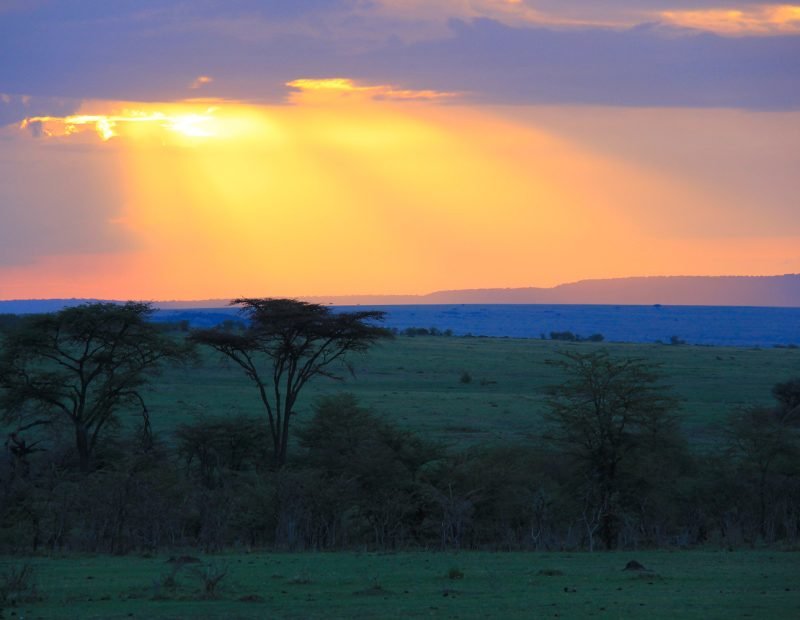
A last drive at dawn, which is when the cats are still moving and the light across the grass is at its best. If you have not yet found a leopard or the herds shifted overnight, this is the morning that can change the trip, so we go out early and stay out. Afterwards, back to camp for breakfast and then the road east through Narok to Nairobi, roughly five to six hours with the escarpment climb at the end. We can stop at Narok town, the largest Maasai town and the gateway to the reserve, which has a small museum on Maasai history and customs. If you would rather not spend the day driving, we can put you on a scheduled flight from a Mara airstrip to Wilson Airport instead, roughly forty five minutes. That turns your last day into a morning and puts you at the airport in good order rather than after dark.
Send them the itinerary before you decide. Everything on this page prints on to a few clean pages with the photographs and the day notes intact.
Quickly customise this itinerary
What is and is not included
Included
- Park entry fees for Amboseli, Hell’s Gate, Lake Nakuru and the Masai Mara National Reserve
- Boat trip on Lake Naivasha and the Crescent Island walking safari
- Bicycle hire and a local guide for Hell’s Gate gorge
- All game drives shown in a private 4×4 safari vehicle with a pop up roof
- Professional Kenyan driver guide throughout
- Airport pickup and drop off at Jomo Kenyatta International Airport or your Nairobi hotel
- Two nights Amboseli, two Lake Naivasha, one Lake Nakuru and two Masai Mara, at your chosen tier
- Meals as shown, with picnic lunches on full game drive days
- Drinking water in the vehicle, and all government taxes and levies
Not included
- International flights to and from Nairobi
- Kenyan visa or East Africa Tourist Visa
- Travel insurance
- Optional scheduled flight from the Masai Mara to Wilson Airport on the final day
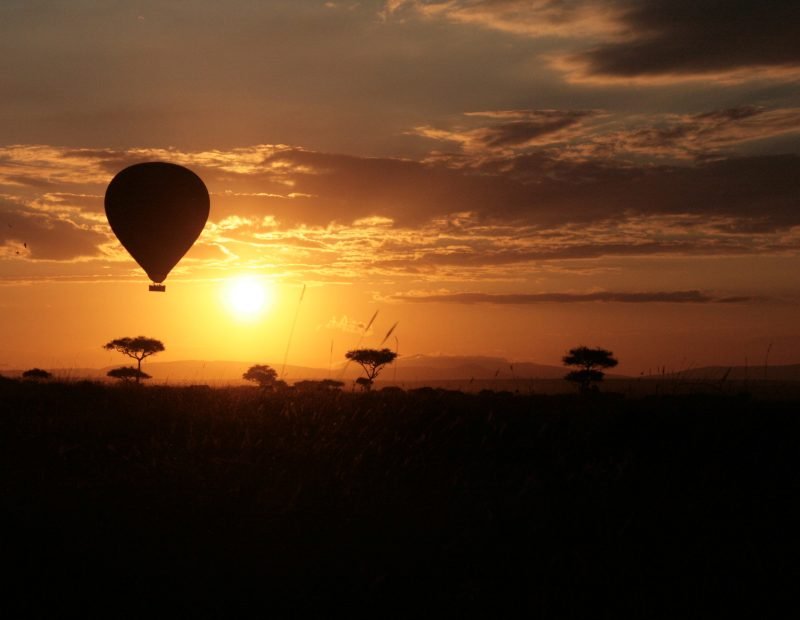
- Hot air balloon safari over the Mara, bookable well in advance
- Night game drives and walking safaris at the Mara, permitted only in the conservancies
- Elsamere entry and Maasai village visits
- Tips for our guide and camp staff
- Drinks, laundry and personal items
- Anything not listed under What’s Included
Before you book
Why Would You Want To Do This Safari?
Because eight days lets Kenya be more than a sequence of game drives. Crescent Island puts you on foot among giraffe and zebra with no vehicle between you and them, which almost no Kenyan itinerary includes. Hell’s Gate lets you cycle through a park with buffalo and zebra beside the track and walk down into a gorge carved by hot springs. Those two days change the rhythm of the trip entirely, and they fall in the middle, exactly where a long safari starts to blur. Around them you get the headline wildlife: elephants beneath Kilimanjaro at Amboseli, both rhino species at Nakuru, and three nights in the Mara where the resident lions, cheetah and leopard perform in every month. Only two of the eight days are transfer days, which for a country this size is unusually efficient.
Is This 8 Day Kenya Safari Enough?
For the classic Kenyan circuit, comfortably. Every park gets the time it needs, the pace varies rather than being eight days of the same activity, and the Mara gets two full nights plus arrival and departure drives. The honest weak point is day three, a six to seven hour run from Amboseli back past Nairobi to Naivasha, and there is no way around it by road. Flying Amboseli to Naivasha is possible and we will quote it if the driving concerns you. What sits outside this route is the north. Samburu, five to six hours beyond Nakuru, holds the Samburu Special Five, species found in no other Kenyan park, and needs two nights of its own. Adding it takes this to ten days, which is the version we would suggest for anyone on a second visit.
How Much Will This Safari Cost?
Park entry across four parks is set by the respective authorities and identical wherever you book, with the Mara and Amboseli the largest, and conservancy fees added if you stay outside the reserve. Beyond that, accommodation across five areas is the main variable: Naivasha runs from simple lakeside guesthouses to old colonial farmhouses, Nakuru from campsites to lodges inside the boundary, and the Mara spans the widest range of all, up to conservancy camps whose rate includes a lease payment to Maasai landowners. Group size counts, since a vehicle and driver guide split between four costs each traveller far less than between two, and July to October sits at peak rates. The Mara flight and a balloon safari are the main optional lines. Send our team your dates for a firm quote.