
4 Day Masai Mara And Lake Nakuru Safari
Kenya · Lake Nakuru National Park & the Masai Mara
- 4 days, 3 nights
- Customisable itinerary
- Private departure
Trip overview
Kenya’s two headline reserves in four days, joined by the Rift Valley road. Lake Nakuru is the best place in the country to see both black and white rhino, with a protected population of endangered Rothschild’s giraffe alongside them. The Masai Mara needs no introduction: around 850 lions across the greater ecosystem, the highest predator density in Kenya, and from July to October the wildebeest herds crossing north from the Serengeti. Two nights in the Mara, one at Nakuru, and no wasted mileage between them.
Customise this trip for a perfect match
-
Private and tailor-made Your own vehicle, driver guide and pace. Nothing on this page is fixed — days can be swapped, added or dropped.
-
Routed by people who drive it Every itinerary here was planned by someone who has driven the road, and the planner who answers you is the one who builds it.
-
Licensed and accredited Registered with the Rwanda Development Board and a member of the Rwanda Tours and Travel Association.
-
Support while you travel One number reaches the Kigali office around the clock for the whole time you are on the ground.
A draft itinerary costs nothing and commits you to nothing. Tell us what you would change and a planner rewrites it as many times as it takes.
The route
- Start and finish
- Starts and ends in Nairobi
- Length
- 4 days, 3 nights
- How it runs
- Two parks, with a fly-out option from the Mara
- Countries
- Kenya
Itinerary
Day 1
Nairobi To Lake Nakuru National Park
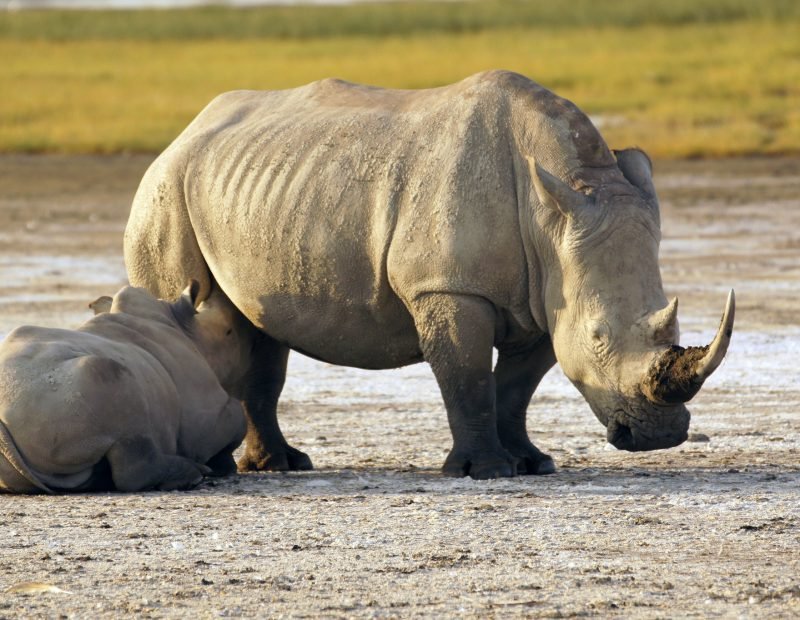
Our driver guide collects you in Nairobi and we head northwest, climbing the escarpment out of the city with the classic viewpoint over the Rift Valley on the way down the other side. It is roughly 160 kilometres and three hours to the park gate. Nakuru covers about 188 square kilometres around a shallow alkaline lake and forms part of the UNESCO listed Kenya Lake System of the Great Rift Valley. We take you in for an afternoon game drive in the southern sector, which is the best rhino country: southern white rhino graze in the open in family groups, largely indifferent to vehicles, while eastern black rhino browse in thicker cover and are harder to find. Rothschild’s giraffe work the acacia belt on the eastern shore, recognisable by the pale unmarked lower legs that look like white stockings, and moved here from western Kenya when their home range was being converted to farmland.
Day 2
Lake Nakuru To The Masai Mara
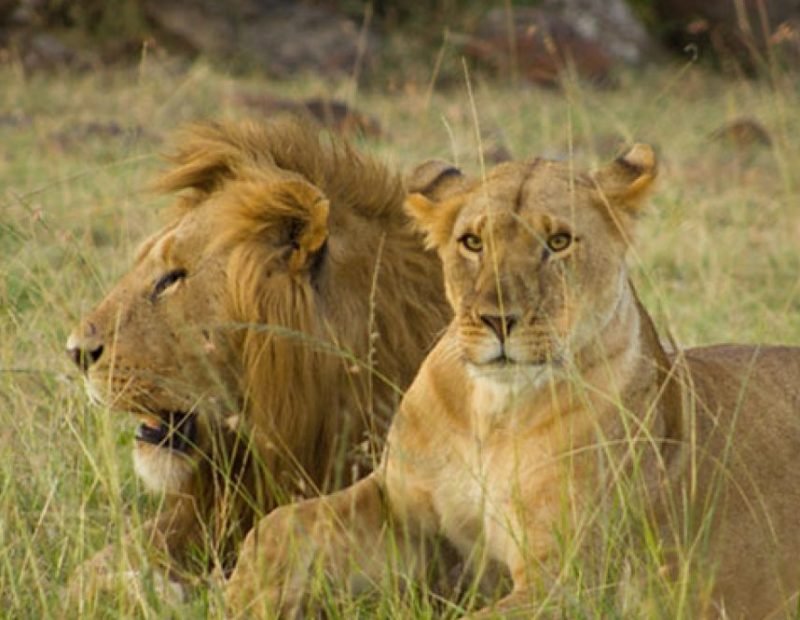
An early game drive before we leave, taking in Baboon Cliff on the western escarpment for the view over the whole lake and out across the valley floor, and working the acacia woodland where lion sometimes rest up in the trees. Then southwest through Njoro and Narok, roughly four to five hours to the Mara. One honest note on the way: Nakuru was once famous for a million flamingos, and rising water across the Rift lakes has diluted the alkalinity, thinned the algae they feed on and pushed most of them to other lakes. Some are usually present and numbers vary; treat them as a bonus rather than the reason for coming. We reach the Mara in the afternoon for a first game drive on the way to your camp. Around 2,400 elephants live across the greater ecosystem, alongside buffalo, giraffe, topi, eland and hippo. The word Mara means spotted in Maa, a reference to the scattered acacia and cloud shadow dotting the plains.
Day 3
A Full Day In The Masai Mara
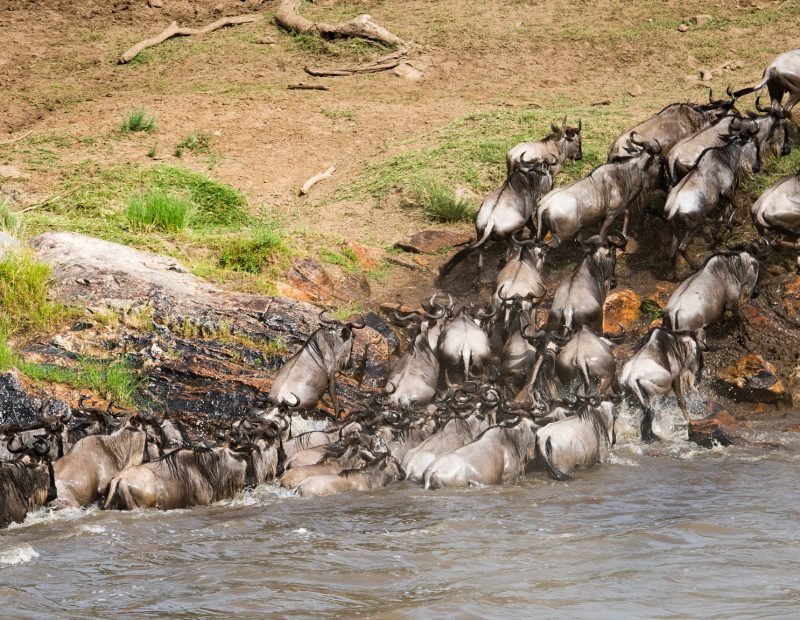
Out at first light with a picnic lunch, because the Mara rewards a full day rather than two short drives. The reserve covers about 1,510 square kilometres of rolling grassland, and its real strength is the resident predator population, present in every month regardless of the migration. Something in the order of 850 lions live across the greater Mara, and the open country makes them far easier to find than in wooded parks. Cheetah do well on these plains and are seen more reliably here than almost anywhere in East Africa, and leopard work the riverine forest along the Mara and Talek rivers. From July to October the herds are here, around 1.5 million wildebeest with several hundred thousand zebra, and the Mara River crossings are what everybody comes for. Nobody can predict a crossing; herds pile up on the banks for hours and then simply walk away, and a guide can only position you and wait.
Day 4
Morning Game Drive And Return To Nairobi
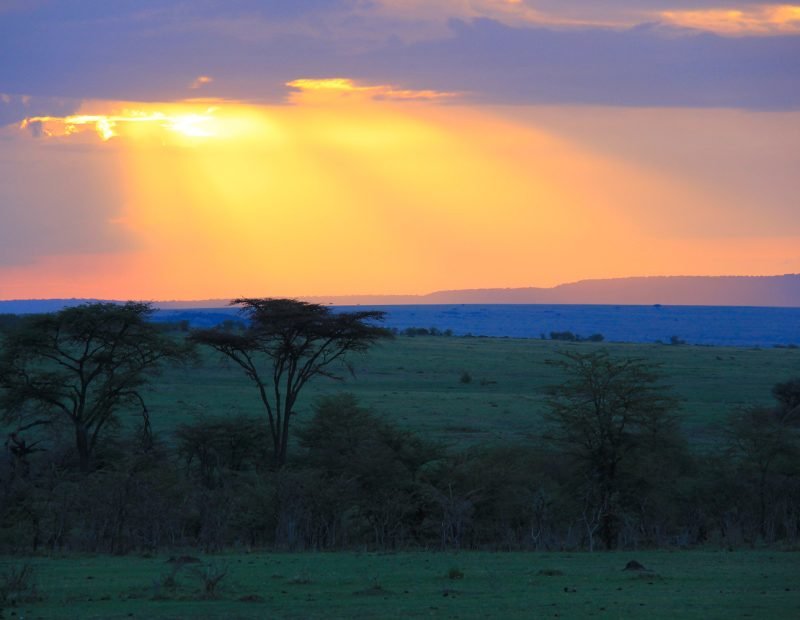
A last drive at dawn, which is when the cats are still moving and the light across the grass is at its best. If you have not yet found a leopard or the herds have shifted overnight, this is the morning that can change the trip, so we go out early and stay out. Afterwards, back to camp for breakfast and then the road east through Narok to Nairobi, roughly five to six hours with the escarpment climb at the end. We can stop at Narok town, the largest Maasai town and the gateway to the reserve, which has a small museum covering Maasai history and customs and makes a reasonable stop to break the drive. If you would rather not spend the day driving, we can put you on a scheduled flight from one of the Mara airstrips to Wilson Airport instead, roughly forty five minutes, which turns your last day into a morning.
Send them the itinerary before you decide. Everything on this page prints on to a few clean pages with the photographs and the day notes intact.
Quickly customise this itinerary
What is and is not included
Included
- Park entry fees for Lake Nakuru National Park and the Masai Mara National Reserve
- All game drives shown in a private 4×4 safari vehicle with a pop up roof
- Professional Kenyan driver guide throughout
- Airport pickup and drop off at Jomo Kenyatta International Airport or your Nairobi hotel
- One night at Lake Nakuru and two in the Masai Mara at your chosen tier
- Meals as shown in the itinerary, with picnic lunch on the full game drive day
- Drinking water in the vehicle throughout
- Rift Valley viewpoint stop on the outward drive
- All government taxes and levies on the above
Not included
- International flights to and from Nairobi
- Kenyan visa or East Africa Tourist Visa
- Travel insurance
- Optional scheduled flight from the Masai Mara to Wilson Airport on the final day
- Hot air balloon safari over the Mara, bookable in advance
- Night game drives and walking safaris, which are permitted only in the conservancies
- Maasai village visits and Narok museum entry
- Tips for our guide and camp staff
- Drinks, laundry and personal items
- Anything not listed under What’s Included
Before you book
Why Would You Want To Do This Safari?
Because it pairs the two things Kenya does better than anyone: rhino at close range and big cats in open country. Nakuru is fenced and closely monitored, which is why white rhino sightings there are close to routine and black rhino a realistic hope, and it adds Rothschild’s giraffe, one of the most threatened giraffe populations in Africa. Then the Mara, where the resident lion, cheetah and leopard perform in every month of the year, migration or not. Four days keeps the driving sensible because the two parks sit on the same Rift Valley road rather than at opposite ends of the country. One thing worth saying plainly: Nakuru has no elephant, so this is a four of the Big Five itinerary on that side, with the Mara filling the gap. Anyone expecting elephant at Nakuru has been sold the wrong picture.
Is This 4 Day Kenya Safari Enough?
For a first taste, yes, and it suits travellers with limited days or those adding a safari either side of business in Nairobi. Two Mara nights is the working minimum: it gives one full day and two half days, which is enough for the resident cats. It is not enough for the migration. In season the herds gather at a riverbank for hours and then walk away, so anyone travelling mainly for a crossing should plan four or five Mara nights rather than two. The other addition worth weighing is a conservancy night. The national reserve does not permit night drives, walking safaris or off road driving, and all three are standard on the community conservancies that ring it, where vehicle numbers at a sighting are capped. Adding Amboseli for elephants beneath Kilimanjaro takes this to six days.
How Much Will This Safari Cost?
Park entry for the Masai Mara and Lake Nakuru is set by the respective authorities and costs the same wherever you book, with the Mara the larger of the two and conservancy fees added on top if you stay outside the reserve. Beyond that, accommodation is the main variable and the Mara spans an enormous range, from campsites and simple tented camps outside the gates up to conservancy camps where the nightly rate includes a lease payment to the Maasai landowners. Group size counts, since a vehicle and driver guide split between four costs each traveller far less than between two, and July to October carries peak rates because of the migration. The flight back from the Mara and a balloon safari are the two main optional lines. Send our team your dates and numbers for a firm quote.