
8 Day Rwanda Hiking And Gorilla Trekking Safari
Rwanda · Nyungwe Forest, Lake Kivu, Musanze & Volcanoes National Park
- 8 days, 7 nights
- Customisable itinerary
- Private departure
Trip overview
Rwanda calls itself the land of a thousand hills, which is accurate to the point of understatement, and almost nobody walks it. This trip does. You climb Bigugu, the highest point in Nyungwe, walk the Isumo waterfall trail and the canopy bridge, ride or hike a section of the Congo Nile Trail along Lake Kivu, summit Mount Bisoke to its crater lake, trek a gorilla family, and finish at Dian Fossey’s grave in the saddle between the volcanoes. Serious walking, one great ape, and country most visitors only see through a windscreen.
Customise this trip for a perfect match
-
Private and tailor-made Your own vehicle, driver guide and pace. Nothing on this page is fixed — days can be swapped, added or dropped.
-
Routed by people who drive it Every itinerary here was planned by someone who has driven the road, and the planner who answers you is the one who builds it.
-
Licensed and accredited Registered with the Rwanda Development Board and a member of the Rwanda Tours and Travel Association.
-
Support while you travel One number reaches the Kigali office around the clock for the whole time you are on the ground.
A draft itinerary costs nothing and commits you to nothing. Tell us what you would change and a planner rewrites it as many times as it takes.
The route
- Start and finish
- Starts and ends in Kigali
- Length
- 8 days, 7 nights
- How it runs
- Four named hikes plus a gorilla trek
- Countries
- Rwanda
Itinerary
Day 1
Kigali To Nyungwe Forest
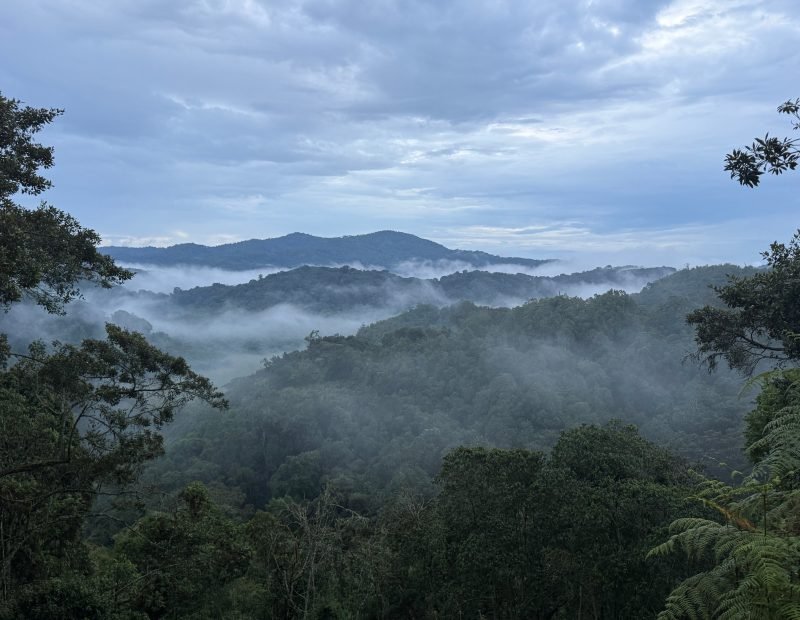
Our driver guide collects you and we head south, breaking the long road with two stops worth making. Nyanza, seat of the Rwandan monarchy, where the reconstructed royal residence stands in woven wood and thatch and the sacred long horned inyambo cattle are still sung to by their herders. Then Huye and the Ethnographic Museum, given to Rwanda by Belgium in 1987 and holding one of the better collections on the continent. Lunch there, then west into tea country until the forest wall rises ahead. The drive covers about 225 kilometres over five to six hours with the stops. Nyungwe protects close to 1,000 square kilometres of montane rainforest, has stood unbroken for something like 25,000 years and became a UNESCO World Heritage Site in 2023. Check in near Uwinka or Gisakura. Our guide will go through tomorrow’s climb with you over dinner, check your boots and make sure you have gaiters, because Bigugu is not a stroll.
Day 2
Mount Bigugu Hike In Nyungwe Forest
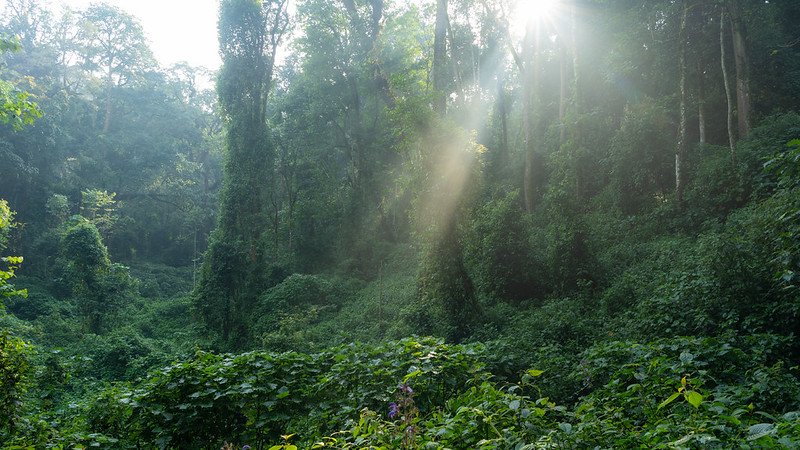
The hardest walking day of the trip and the one that sets the tone. Bigugu is the highest point in Nyungwe at 2,950 metres, and the trail runs roughly 13 kilometres taking around six hours round trip. You climb through changing forest zones, from tall old growth with hanging vines and giant tree ferns into low twisted montane scrub near the summit, with the vegetation getting shorter and stranger as you gain height. The ground is wet. Nyungwe takes around 2,000 millimetres of rain a year, so leaf litter over clay is the standard surface even in the dry months and balance matters more than fitness. Birders should carry binoculars, because the Bigugu trail is one of the most productive in the park for Albertine Rift endemics. On a clear day the summit gives you Lake Kivu to the north and the Congo hills beyond it. Back down for a late lunch and an early night.
Day 3
The Isumo Waterfall Trail And The Canopy Walkway
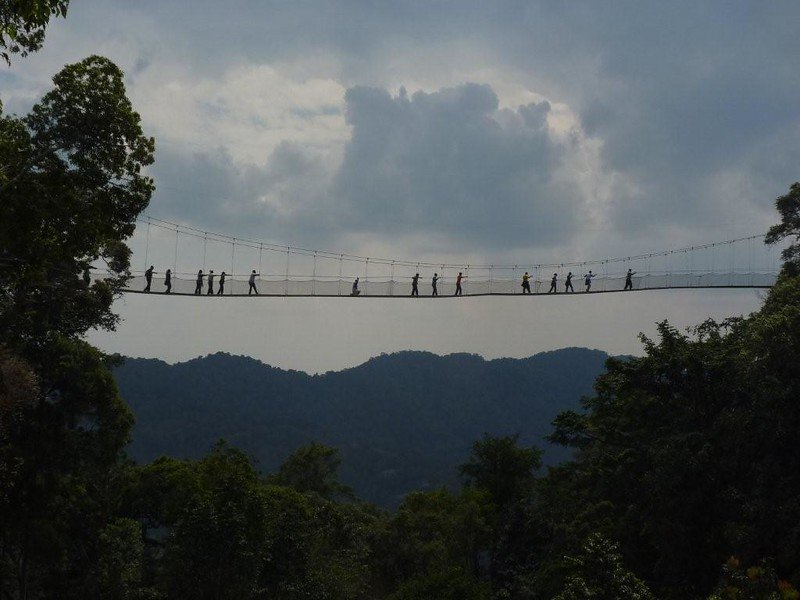
A gentler day after Bigugu, though still a proper walk. The Isumo trail runs about ten kilometres from the Gisakura centre and takes around four hours, crossing the tea estate first, roughly 1,600 hectares of clipped green with pickers working the contour rows, before dropping steeply into forest and following the valley to the biggest waterfall in the park. Colobus and blue monkeys work the forest edge along the way and butterflies come up off the path in numbers after rain. In the afternoon we take you to the canopy walkway at Uwinka, a suspended bridge running about 160 metres between towers at some 60 metres above the forest floor, reached on the Igishigishigi trail past giant tree ferns. It moves underfoot in the middle span, which people either enjoy or do not. From up there the canopy runs unbroken to the horizon and you get a sense of the scale of the forest you spent yesterday inside.
Day 4
North To Lake Kivu And The Congo Nile Trail
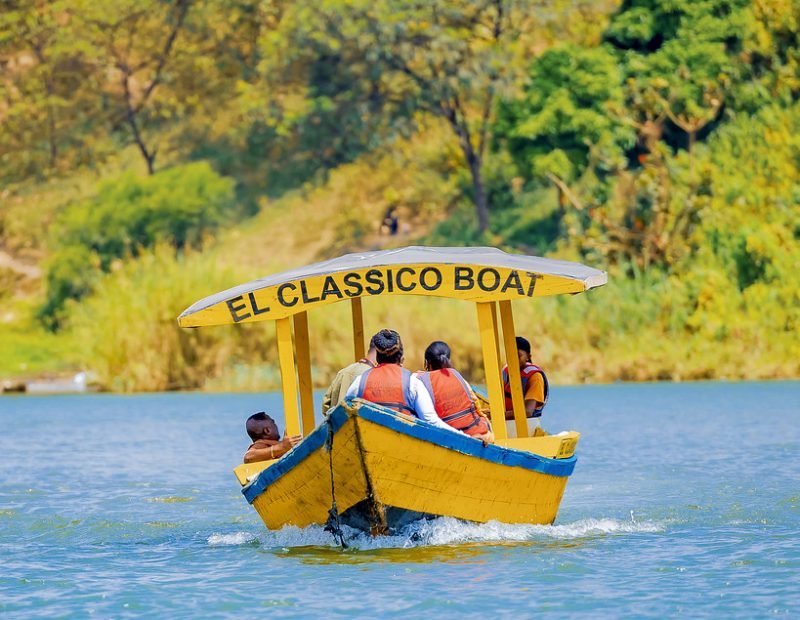
We drive north up the Kivu Belt road, winding above the water with the Congo hills across the lake, three to four hours to Karongi or Rubavu depending on where we base you. The Congo Nile Trail runs 227 kilometres along the eastern shore between Rubavu and Rusizi, and the afternoon is yours on a section of it, either on a mountain bike or on foot. The route moves through fishing villages, coffee terraces, banana groves and eucalyptus stands, dirt for most of its length and relentlessly hilly, so it is harder than the profile suggests. Lake Kivu covers about 2,700 square kilometres and is the sixth largest lake in Africa, and it holds no crocodiles, no hippos and no bilharzia, so a swim at the end of the ride is straightforward. At dusk the night fishermen paddle out in threes, canoes lashed together, singing in unison to keep time. The sound carries a long way over still water.
Day 5
Lake Kivu To Musanze And The Musanze Caves
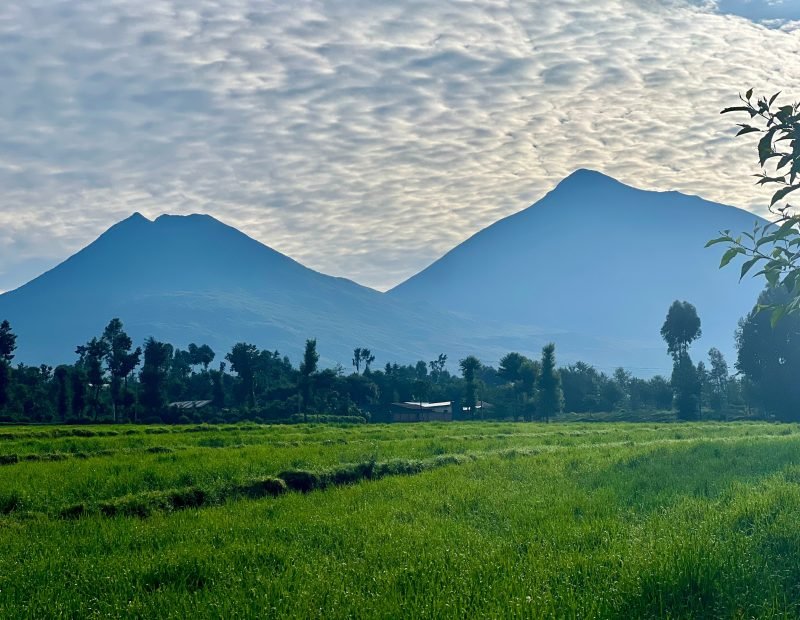
An easy morning and a short transfer, only about an hour from Rubavu up to Musanze through farmland and eucalyptus, which gives your legs a day off before the volcanoes. If we are further south the drive is longer and we break it at the Kinunu coffee washing station, where cherries from hundreds of smallholder farms are hand sorted, pulped and dried on beds facing the water. In the afternoon we take you into the Musanze caves, a lava tube system running a couple of kilometres beneath the town, formed by the same volcanic activity that built the Virungas, with lamps taking you past bat colonies and collapsed roof openings that throw shafts of light into the tunnels. The floor is uneven basalt so wear your boots. If you would rather stay above ground, the Twin Lakes at Burera and Ruhondo give a boat trip with the volcanoes standing behind the water. Check in near Kinigi. Tomorrow is Bisoke.
Day 6
Mount Bisoke Hike To The Crater Lake
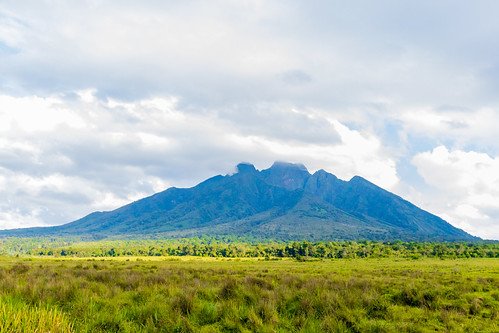
The headline climb of the trip. Bisoke stands at 3,711 metres on the Rwanda and Congo border with a crater lake roughly 400 metres across sitting in its summit, and the round trip takes about six to seven hours, commonly four up and two down. There is no scrambling and nothing technical. What there is, in the last third, is a steep gradient on volcanic soil that turns to deep mud, and in the wet season it becomes a genuine slog. Trekking poles help more than fitness and gaiters help more than poles. Golden monkeys are seen fairly often on the lower bamboo, and buffalo and forest elephant leave sign your guide will read for you. At the top, weather permitting, you look down into the lake and across to Mikeno in the Congo. Weather does not always permit, and the descent is the same mud in reverse, which is where most people go over. Hire a porter.
Day 7
Mountain Gorilla Trekking In Volcanoes National Park
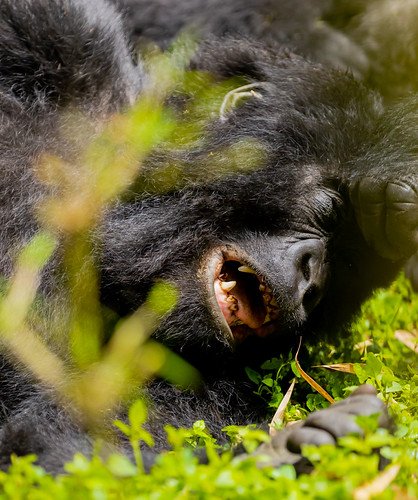
You leave in the dark and Kinigi is cold at six, mist on the peaks, dancers performing while everyone assembles. Trackers went out at first light and are already sitting with the families, radioing positions back. The briefing runs at seven. Rangers split you into groups of eight trekkers per gorilla family and go through the rules: seven metres back, no flash, mask on during the hour. Families are assigned that morning on fitness and overnight movement, and after Bigugu and Bisoke our guide will tell the rangers plainly that you can take a harder one if you want it. Then out through farmland to the boundary wall and into bamboo and nettles. Volcanoes National Park was gazetted in 1925 and is the oldest national park in Africa, protecting five of the eight Virunga volcanoes, and the massif holds more than half the world’s mountain gorillas. When you reach the family you get one hour, and after a week of walking it lands differently.
Day 8
The Dian Fossey Tomb Hike And Return To Kigali
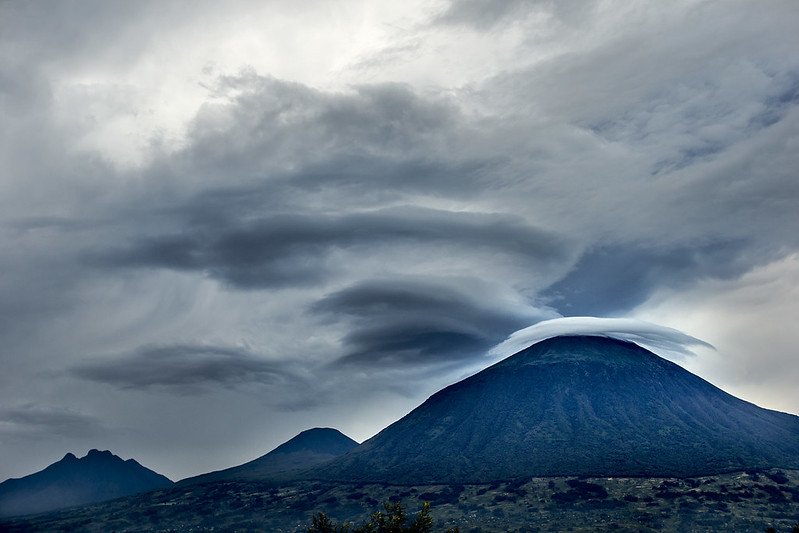
One last climb, and the right one to end on. A short drive takes you to the trailhead, then the walk rises steadily for two to three hours through hagenia forest into the saddle between Bisoke and Karisimbi. This is where Dian Fossey set up the Karisoke Research Centre in 1967 and worked until her death, and she is buried here in the gorilla graveyard she dug herself, alongside Digit and other animals she had known individually. The camp is gone; the foundations and the graves remain. Guides tell the story properly rather than as a film summary. Having walked Bisoke two days ago, you will understand the ground she covered daily rather better than most visitors do. Back down for a late lunch, then the drive south to Kigali, two to two and a half hours, arriving in the evening. This day suits a late flight; if yours is early we swap in Buhanga Eco Park and leave in the morning.
Send them the itinerary before you decide. Everything on this page prints on to a few clean pages with the photographs and the day notes intact.
Quickly customise this itinerary
What is and is not included
Included
- Gorilla trekking permit for Volcanoes National Park, one per person
- Mount Bisoke hiking permit and the Dian Fossey tomb hike permit
- Mount Bigugu, Isumo waterfall trail and canopy walkway permits at Nyungwe
- Park entry fees for Nyungwe and Volcanoes for the duration of your stay
- Guides and armed rangers on every hike, as required by the parks
- All road transfers in our 4×4 safari vehicle with a Rwandan driver guide
- Airport pickup and drop off at Kigali International Airport
- Three nights Nyungwe, one Lake Kivu, three near Volcanoes National Park at your chosen tier
- Meals as shown, packed lunches on hiking days and drinking water in the vehicle
- King’s Palace at Nyanza, Ethnographic Museum at Huye and the Musanze caves
- All government taxes and levies on the above
Not included
- International flights to and from Kigali
- Rwandan visa or East Africa Tourist Visa
- Travel insurance, which must cover trekking at altitude
- Porter hire on every hike, payable on the day and strongly recommended
- Mountain bike hire for the Congo Nile Trail section
- Mount Karisimbi two day expedition, quoted separately on request
- Tips for our guide, rangers, trackers, porters and lodge staff
- Drinks, laundry and personal items
- Anything not listed under What’s Included
Before you book
Why Would You Want To Do This Safari?
Because Rwanda’s trails are better than the country’s gorilla reputation suggests and almost nobody uses them. Nyungwe alone holds over 130 kilometres of marked trail through rainforest that has been standing for 25,000 years, and on a typical morning on Bigugu you will meet nobody at all. Volcanoes has five volcanoes and most visitors never get above the gorilla trails. The trip is built so the walking builds rather than peaks early: Bigugu on day two while you are fresh, a gentler forest day, an active day on the lake, then Bisoke, the gorilla trek and Fossey’s grave to finish. Doing Bisoke before the gorillas is deliberate. You arrive at the briefing knowing exactly what your legs can take on that soil, which means you can ask the rangers for a harder family with some confidence rather than guessing. And walking to Karisoke on your last morning, after a week on the same mountains, is a better ending than a drive to the airport.
Is This 8 Day Rwanda Safari Enough?
For a walking trip with gorillas attached, yes, and it is more physically demanding than anything else in our Rwanda range. Four named hikes in eight days, two of them long, plus a gorilla trek that can run to four hours each way. Anyone booking it should be walking regularly at home. What it leaves out is savannah and chimpanzees. Akagera sits on the far side of the country and Nyungwe’s chimp trek needs its own pre dawn start, though we can swap the Isumo day for chimpanzee trekking if you would rather have the great ape than the waterfall. The bigger addition is Mount Karisimbi. At 4,507 metres it is the highest peak in the Virunga chain and takes two days with a night camped at around 3,700 metres, so adding it makes this a ten day trip. For serious hill walkers that is the version worth doing, and very few visitors to Rwanda ever attempt it.
How Much Will This Safari Cost?
Hiking permits in Rwanda are set by the Rwanda Development Board and vary by peak, with the gorilla permit sitting well above all of them, so your total turns mostly on which climbs you take and where you sleep. Accommodation spans three areas here and the range is wide, from the Gisakura guesthouse and simple lakeside places up to high end lodges in the Nyungwe tea and around Kinigi. Group size matters, since a vehicle and driver guide split between four costs far less per head than between two. Porters are paid on the day and we would budget for one on every hike rather than only the hard ones. Adding the two day Karisimbi expedition, mountain bike hire on the Congo Nile Trail or a chimpanzee trek changes the figure. Send our team your dates, numbers and fitness level and we will quote firmly with permits held.