
9 Day Rwanda Photography Safari
Rwanda · Kigali, Volcanoes National Park, Musanze, Lake Kivu & Akagera
- 9 days, 8 nights
- Customisable itinerary
- Private departure
Trip overview
Built around the light rather than a checklist. Two gorilla permits, because the first trek teaches you the forest and the second is where you get your frames. Golden monkeys in the bamboo, a private sunset boat on Lake Ihema, the Kivu fishermen paddling out at dusk and back at dawn, tea and volcano country in low side light, and enough time in each place to wait for weather rather than shoot through it. Our vehicle stops when the light is right, not when the schedule says so.
Customise this trip for a perfect match
-
Private and tailor-made Your own vehicle, driver guide and pace. Nothing on this page is fixed — days can be swapped, added or dropped.
-
Routed by people who drive it Every itinerary here was planned by someone who has driven the road, and the planner who answers you is the one who builds it.
-
Licensed and accredited Registered with the Rwanda Development Board and a member of the Rwanda Tours and Travel Association.
-
Support while you travel One number reaches the Kigali office around the clock for the whole time you are on the ground.
A draft itinerary costs nothing and commits you to nothing. Tell us what you would change and a planner rewrites it as many times as it takes.
The route
- Start and finish
- Starts and ends in Kigali
- Length
- 9 days, 8 nights
- How it runs
- Two gorilla permits, private vehicle, private boat
- Countries
- Rwanda
Itinerary
Day 1
Arrival In Kigali And City Photography
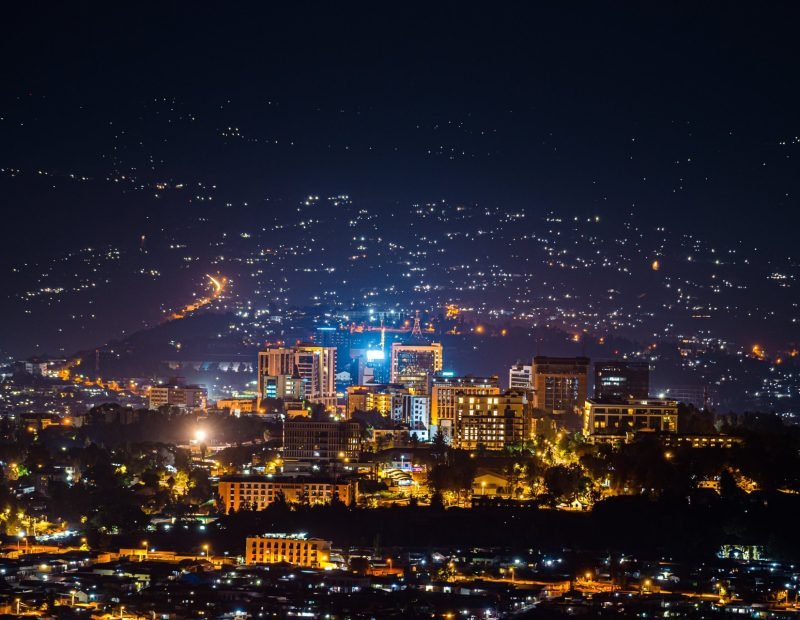
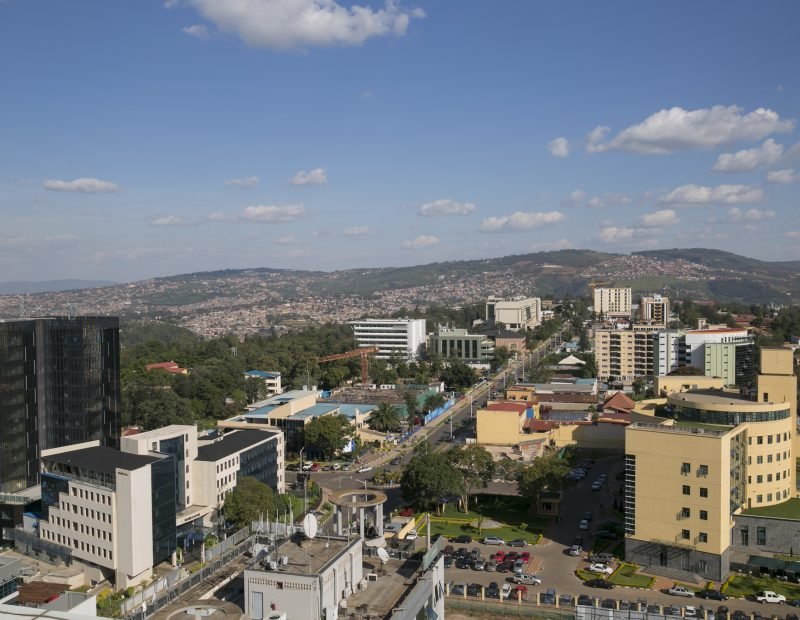
Our driver guide meets your flight and takes you into the city, which is a better photographic subject than most visitors realise. Kigali is built across a series of hills and ridges, so the late afternoon light rakes across the valleys between neighbourhoods. We start with the Kigali Genocide Memorial at Gisozi, resting place of more than 250,000 victims of the 1994 genocide against the Tutsi, where photography is restricted in parts of the site and the staff will tell you where. Respect that without being asked twice. Afterwards, Nyamirambo for street work with a local guide who can ask on your behalf in Kinyarwanda, then the Inema Arts Centre where resident artists work on site and are used to cameras. Kimironko market if there is time, and hire a market guide at the entrance. Ask before photographing people, every time. Overnight in Kigali, gear charged, cards cleared and a plan agreed for the morning. Our guide will also talk through the drone position before you unpack one, since use in Rwanda needs authorisation arranged well in advance.
Day 2
North To Musanze And The Twin Lakes At Golden Hour
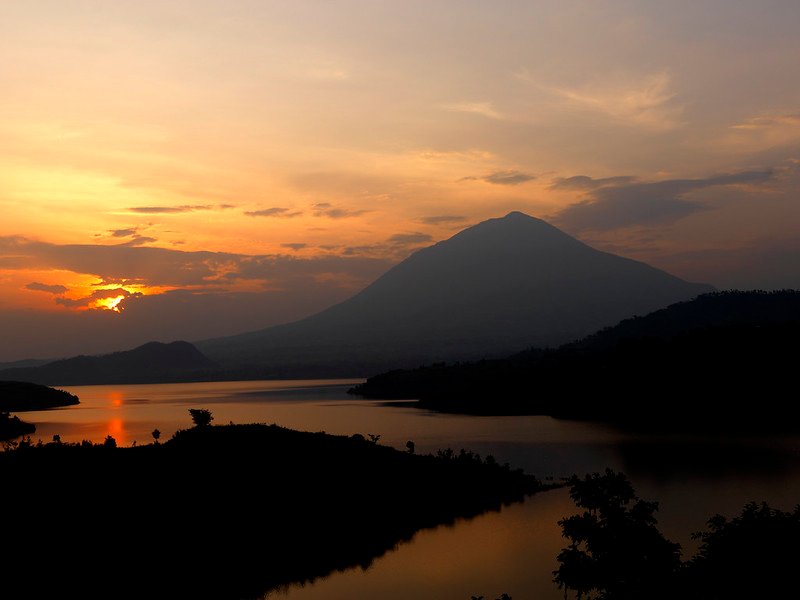
A relaxed start, then north out of the capital through hills terraced to the ridgeline. We time the drive so you reach the Twin Lakes at Burera and Ruhondo in the late afternoon, when the light comes in low across the water with the Virunga chain standing behind. This is the frame most people leave Rwanda wishing they had taken. A local wooden boat gets you off the bank and onto the water for a different angle, and the terraced slopes above the shoreline work well in raking light. The drive from Kigali runs two to two and a half hours before the detour. Afterwards we check you in near Kinigi, close to park headquarters. Our guide will go through tomorrow with you: what to carry, what to leave, and why the long lens stays at the lodge. Charge everything tonight, because cold at altitude drains batteries faster than you expect.
Day 3
First Gorilla Trek In Volcanoes National Park
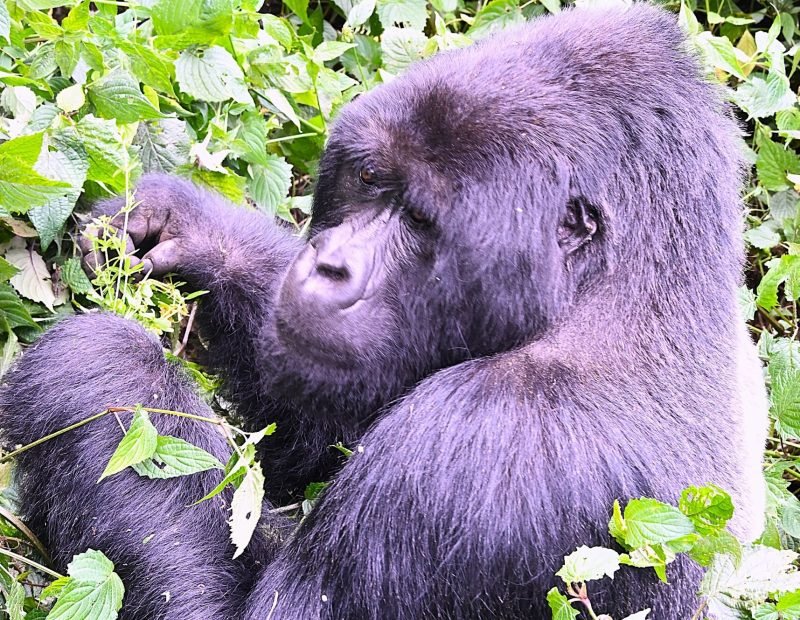
Kinigi at six is cold and dark, with mist on the peaks and dancers performing while everyone assembles. Briefing at seven, groups of eight trekkers per gorilla family, rules covered: seven metres back, no flash, mask on during the hour. Rwanda’s minimum distance sets your framing before you choose a lens, which is why a 70 to 200mm zoom does more work here than anything longer. Forest light is the real difficulty. Cloud sits over the Virungas most of the morning and the canopy cuts what gets through, so expect to work at higher sensitivity than feels comfortable and keep your shutter speed up, because juveniles move constantly. Volcanoes National Park was gazetted in 1925 and the massif holds more than half the world’s mountain gorillas. You get one hour. Treat today as reconnaissance: learn the light, the distances and how fast the time goes. Hire a porter so you arrive with steady hands.
Day 4
Golden Monkeys And The Volcano Country
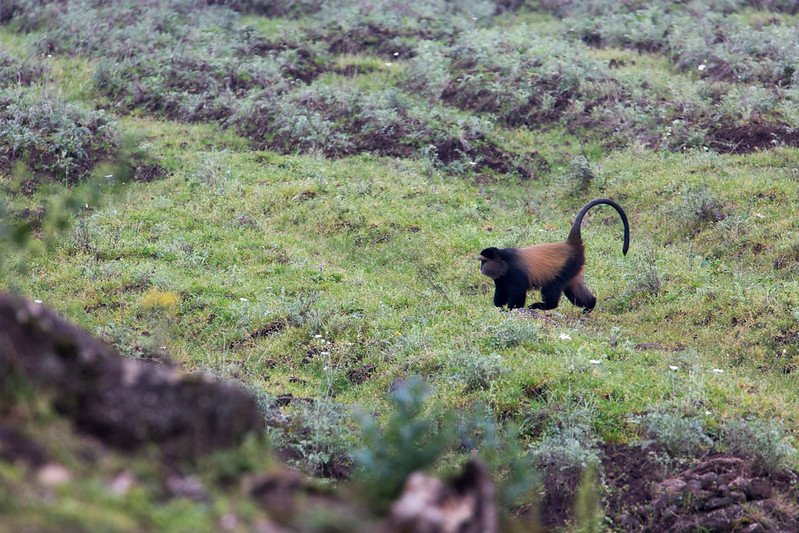
Golden monkey tracking at seven, in the lower bamboo at the foot of Sabyinyo. These are the hardest subjects in Rwanda and it is worth knowing that before you feel you have failed. Bamboo forest is dim, the animals move constantly through cluttered vertical stems, and autofocus latches onto the bamboo in front rather than the monkey behind. Add bright gold fur against black limbs and you have a genuinely difficult exposure. Continuous autofocus with a small deliberately placed point, a fast shutter, and a willingness to switch to manual when the stems keep winning. Frame wider than instinct says. Two habituated troops are open to visitors, each around eighty to a hundred animals, and they are found only in the Virunga region. The afternoon is for the country rather than the wildlife: terraced farmland below the volcanoes, pyrethrum fields, and the Dian Fossey Gorilla Fund campus if the weather closes in.
Day 5
Second Gorilla Trek In Volcanoes National Park
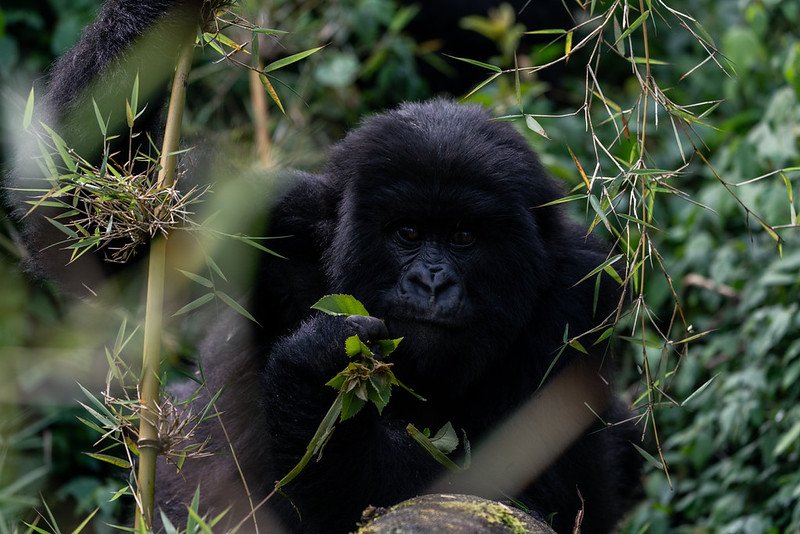
The reason this trip is nine days rather than seven. You go back into the forest with everything you learned on day three: which settings held up, how close the family came, how the light behaved under cloud, and how quickly the hour disappears. Rangers assign a different family, so the terrain and the group composition change, and photographers who do this rarely regret it. Practical notes from our guides. Overcast days are your friend rather than your enemy, since flat cloud removes the harsh dappled contrast that ruins frames in bright sun, and some of the best gorilla images are made in weather that feels disappointing at the time. Wipe the front element often, because mist beads within minutes. And put the camera down for ten minutes somewhere in the hour. Guests who shoot all sixty describe the day quite differently from those who did not. Afternoon at the lodge to back up cards.
Day 6
Musanze To Lake Kivu And The Kinunu Coffee Station
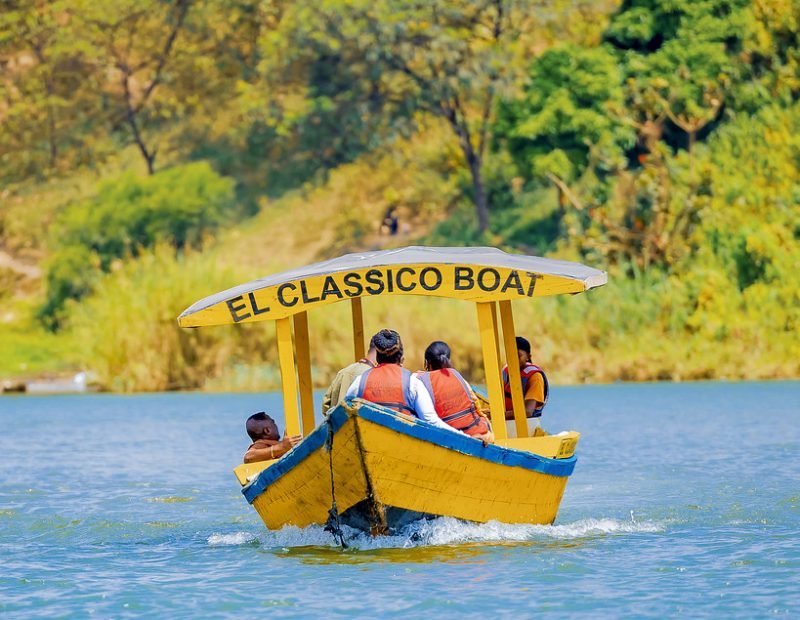
A short transfer, about an hour down to Rubavu through farmland and eucalyptus, with a stop at the Kinunu coffee washing station on the way. Drying beds face out across the water, cherries are hand sorted by women working the raised screens, and the whole chain from picking to tasting is visible in ninety minutes. It is good process photography and the light on the beds is best in the morning. Lake Kivu covers about 2,700 square kilometres and is the sixth largest lake in Africa. The reason we are here is dusk. The night fishermen work in threes, canoes lashed together with long poles, paddling out singing in unison to keep time, and they make one of the strongest images available in Rwanda. We arrange a boat so you shoot them from the water rather than the shore. On a clear night the lava glow of Nyiragongo shows across the border.
Day 7
Dawn On Lake Kivu And East To Kigali
Out early, because the fishermen return at first light and the water is at its stillest before the wind gets up. Same subject, opposite light, and the mist coming off the lake at that hour does half the work for you. Afterwards there is time to swim, since Kivu holds no crocodiles, no hippos and no bilharzia, which is rare among African lakes. Late morning we start the drive east to Kigali, about three hours on good tarmac through the western hills, with stops wherever the country asks for them: terraced slopes, roadside markets, tea. We arrive in the afternoon and the rest of the day is yours in the city. If you want a second run at Kimironko or Nyamirambo with the light you now understand, this is when to take it. Back up everything tonight and clean your gear properly, because tomorrow you swap forest for dust.
Day 8
Kigali To Akagera And A Private Sunset Boat Safari
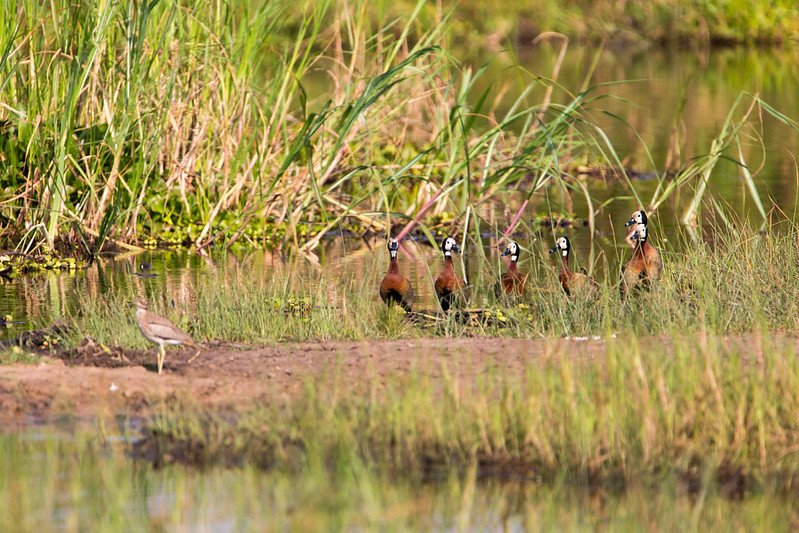
East to Akagera, roughly 110 kilometres and two to two and a half hours, stopping at Nyakarambi where a women’s cooperative makes imigongo, the geometric relief paintings worked from cow dung and earth pigments. Into the park after lunch, and this afternoon is the single most productive photographic hour of the trip. We charter a private boat on Lake Ihema so you control position relative to the sun and can hold on a subject rather than moving on with a group. The lake carries one of the densest hippo populations in East Africa, with Nile crocodiles on the mud and fish eagles working the papyrus, and being at water level changes the geometry of everything. Late afternoon brings elephant and buffalo down to drink. Shutter speed higher than feels necessary, stabilisation on, lens hood against spray. Dinner at the lodge with hippo calling across the water, and a look at the forecast, because the northern plains tomorrow are open enough that cloud cover decides how the morning goes.
Day 9
Dawn Game Drive In Akagera And Return To Kigali
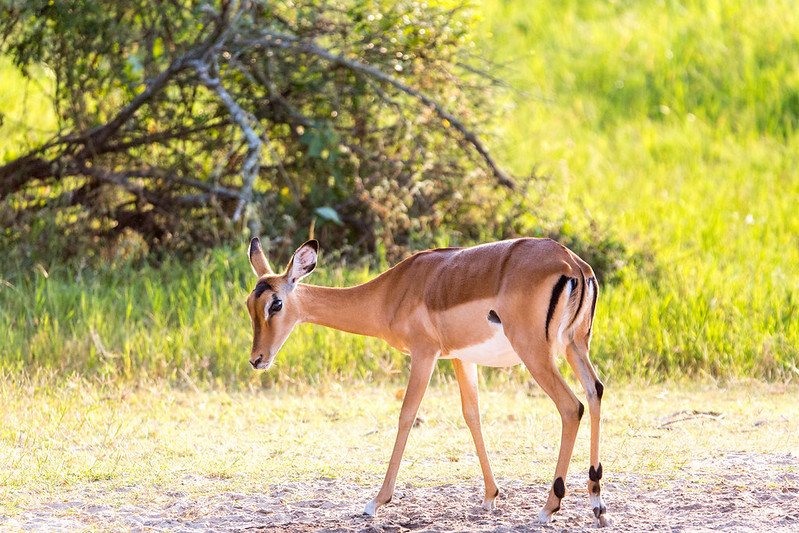
Gates open at six and the first two hours are the best light Akagera gives you, low and warm across the plains with animals still active before the heat. We work north towards the Mutumba Hills where the country opens into short grass at Kilala and Mohana, and the clean backgrounds up there are what make wildlife frames work. This is also the best lion ground: Akagera lost its last lion around 2001, had them flown back from South Africa in 2015, and now holds all Big Five across 1,122 square kilometres. A beanbag on the window frame beats a tripod, and our vehicle has a pop up roof so you can shoot standing. Leopard stays unlikely and our guide will say so. We exit late morning and drive back to Kigali, about two and a half hours, arriving in good time for an evening flight. If you would rather keep shooting than sit at the airport, we will hold the vehicle and find you somewhere in the city for a last hour of light.
Send them the itinerary before you decide. Everything on this page prints on to a few clean pages with the photographs and the day notes intact.
Quickly customise this itinerary
What is and is not included
Included
- Two gorilla trekking permits per person for Volcanoes National Park
- Golden monkey tracking permit
- Akagera National Park entry and a private charter boat on Lake Ihema
- Private boat on Lake Kivu for the fishermen at dusk and at dawn
- All game drives, park entry fees and ranger and tracker fees shown
- Private 4×4 safari vehicle with a pop up roof and a Rwandan driver guide throughout
- Airport pickup and drop off at Kigali International Airport
- Two nights Kigali, three near Volcanoes, two on Lake Kivu and one at Akagera, at your chosen tier
- Meals as shown in the itinerary and drinking water in the vehicle
- Kigali Genocide Memorial, Nyamirambo walking tour, Twin Lakes boat trip and Kinunu coffee tour
- All government taxes and levies on the above
Not included
- International flights to and from Kigali
- Rwandan visa or East Africa Tourist Visa
- Travel insurance, including cover for camera gear and trekking at altitude
- Porter hire on both gorilla treks, payable on the day and strongly recommended
- Specialist photography guiding alongside the mandatory park ranger, bookable on request
- Drone authorisation from the Rwanda Civil Aviation Authority, which must be arranged well in advance
- Tips for our guide, rangers, trackers, porters and lodge staff
- Drinks, laundry and personal items
- Anything not listed under What’s Included
Before you book
Why Would You Want To Do This Safari?
Because photography trips fail on logistics rather than on skill. The single most common regret we hear is one gorilla permit: you spend the hour learning the light, the distances and how fast sixty minutes go, and then it is over. Two permits fixes that, and it is the reason this itinerary runs to nine days. The rest follows the same logic. A private vehicle means we stop when the light works rather than when the group is ready. A private boat on Ihema means holding position relative to the sun instead of drifting past a hippo pod at the wrong angle. Two nights on Kivu means shooting the fishermen at dusk and again at dawn, the same subject in opposite light. And the pacing builds in time to wait, because in the Virungas the difference between an ordinary frame and a good one is usually weather rather than technique. Our guides know which families sit lower on wet mornings and where the light lands.
Is This 9 Day Rwanda Safari Enough?
For a photography trip built on primates and light, yes. Nine days gives two gorilla treks, a golden monkey morning, two dawns and two dusks on Kivu, and a proper Akagera session, with enough slack to lose a morning to weather without losing the trip. What it deliberately leaves out is Nyungwe. Chimpanzees are the hardest primate in Rwanda to photograph, high in the canopy and shot upward into bright sky, and two days there would come at the cost of your second gorilla permit. If chimps matter to you we will add them, and the trip becomes eleven days. The other honest note concerns drones. Use in Rwanda is regulated and requires authorisation from the Civil Aviation Authority arranged well in advance, and flying inside a national park without it is not something to attempt. Tell us at booking if you plan to bring one and we will start that process early.
How Much Will This Safari Cost?
Two gorilla permits sit at the centre of this trip and both are set by the Rwanda Development Board, so they cost the same wherever you book, and they are the largest single line. Beyond that, the things that make this a photography trip rather than a standard tour carry a premium: a private vehicle for the whole itinerary rather than a shared one, private boat charters on both Kivu and Ihema, and lodges chosen for position and early departure rather than price. Group size still matters, though less than usual, since the vehicle is private either way. The dry season peaks of June to September and December to February carry higher rates, while the green months give better skies and softer light for less money. Send our team your dates, your kit list and what you want to shoot, and we will quote firmly with both permits held.