
8 Day Four Parks Of Rwanda Safari
Rwanda · Akagera, Volcanoes, Gishwati Mukura & Nyungwe National Parks
- 8 days, 7 nights
- Customisable itinerary
- Private departure
Trip overview
Rwanda has four national parks and most visitors see one. This trip takes all of them, running east to west across the country: Big Five game drives and a boat safari at Akagera, mountain gorillas in the Virungas, the restored forest of Gishwati Mukura on the Kivu ridge, and chimpanzees and the canopy walkway at Nyungwe. Gishwati is the one nobody else includes, and it is the quiet highlight for a lot of our guests, because you are walking through forest that was almost entirely cleared and has been deliberately grown back inside one generation.
Customise this trip for a perfect match
-
Private and tailor-made Your own vehicle, driver guide and pace. Nothing on this page is fixed — days can be swapped, added or dropped.
-
Routed by people who drive it Every itinerary here was planned by someone who has driven the road, and the planner who answers you is the one who builds it.
-
Licensed and accredited Registered with the Rwanda Development Board and a member of the Rwanda Tours and Travel Association.
-
Support while you travel One number reaches the Kigali office around the clock for the whole time you are on the ground.
A draft itinerary costs nothing and commits you to nothing. Tell us what you would change and a planner rewrites it as many times as it takes.
The route
- Akagera National Park
- Gishwati Mukura National Park
- Nyungwe Forest National Park
- Volcanoes National Park
- Start and finish
- Starts and ends in Kigali
- Length
- 8 days, 7 nights
- How it runs
- Every national park in the country
- Countries
- Rwanda
Itinerary
Day 1
Kigali To Akagera And An Afternoon Boat Safari
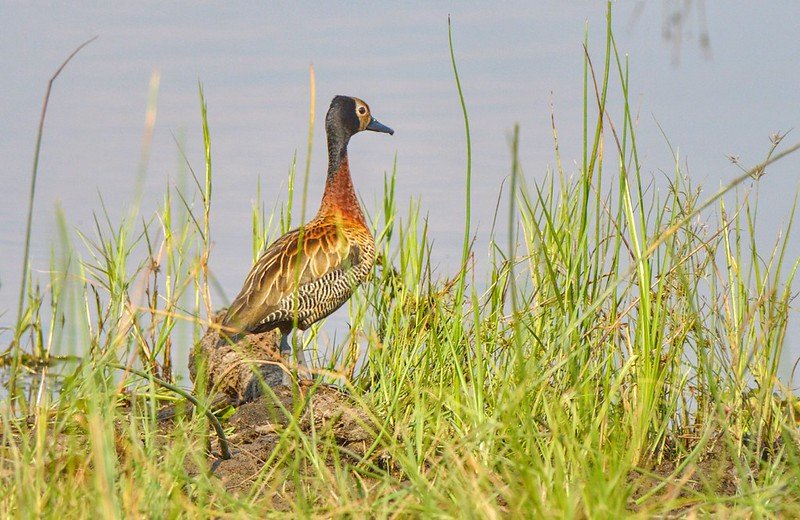
Our driver guide collects you at the airport and we head east, roughly 110 kilometres and two to two and a half hours to Akagera’s southern gate. On the way we stop at Nyakarambi, where a women’s cooperative still makes imigongo, the geometric relief paintings worked from cow dung mixed with ash and earth pigments, a tradition carried down from the old Gisaka kingdom. Lunch at your lodge, then straight down to Lake Ihema for a boat safari of one to two hours. Ihema is the second largest lake in Rwanda and holds one of the densest hippo populations in East Africa, so you spend the trip within earshot of pods grunting in the shallows, with Nile crocodiles on the mud and African fish eagles along the papyrus. Late afternoon brings elephant and buffalo down to drink at the shoreline, which is why we put you on the water at that hour rather than in the morning. Dinner at the lodge with hippo calling across the water after dark.
Day 2
Full Day Game Drive In Akagera
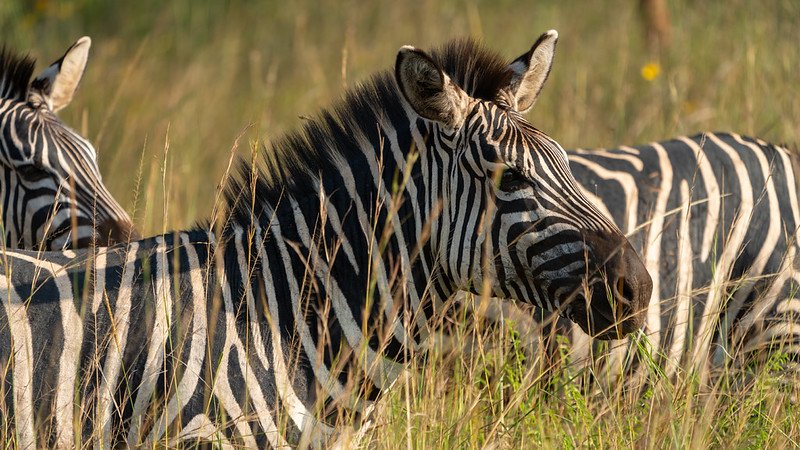
Out of the gate at six, when the light is best and lions are still active before the heat pushes everything into shade. The southern sector starts you among the lakes with waterbuck, bushbuck, impala and olive baboon, and the Giraffe Area often producing Masai giraffe early. Then north, where the park changes completely: past the Mutumba Hills the country opens into short grass plains at Kilala and Mohana, low ridges running to the horizon with zebra, topi, eland and buffalo grazing in the open. Akagera lost its last lion around 2001, had them flown back from South Africa in 2015, and added eastern black rhino in 2017 and southern white rhino in 2021, so all Big Five now live inside its 1,122 square kilometres, with wildlife numbers past twelve thousand animals. Leopard stays the hard one and our guide will say so plainly. Picnic lunch on the plains, a slow return through the afternoon, and a night drive from the lodge if you want one.
Day 3
Akagera To Volcanoes National Park
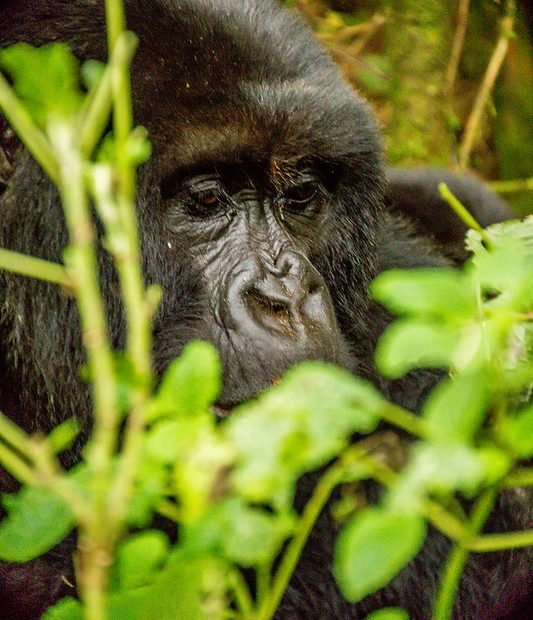
The long crossing, and worth naming honestly. We take a final morning drive through the lake circuit on the way to the gate, then run west and north through Kigali to Musanze, about five to six hours in total on tarmac with a lunch stop in the capital. If you would like the Kigali Genocide Memorial, resting place of more than 250,000 victims of the 1994 genocide against the Tutsi, this is where it fits, and it is worth the three hours. The country changes as you climb: the dry warmth of the east gives way to cool green highlands, hills terraced to the ridgeline, and by mid afternoon the Virunga chain stands ahead, five volcanoes with Karisimbi at 4,507 metres the highest of them. We check you in near Kinigi, close to park headquarters so tomorrow does not start with an extra hour in the vehicle. Dinner early, boots by the door, and pack your bag tonight rather than in the dark.
Day 4
Mountain Gorilla Trekking In Volcanoes National Park
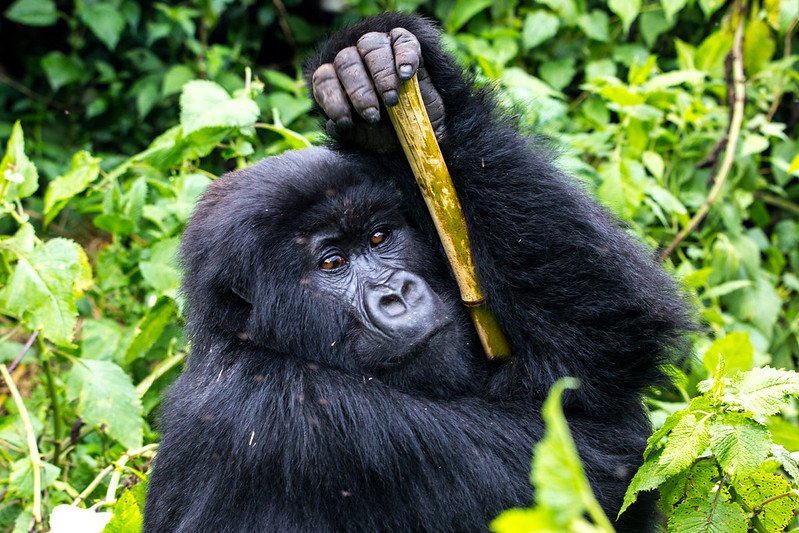
You leave in the dark and Kinigi is cold at six, with mist on the peaks and dancers performing while everyone assembles. Trackers went out at first light and are already sitting with the families, radioing positions back. The briefing runs at seven. Rangers split you into groups of eight trekkers per gorilla family and go through the rules: seven metres back, no flash, mask on during the hour, nobody treks with a cold. Families are assigned that morning on fitness and where each group has moved overnight, so be honest about what you can walk. Then out through farmland to the stone boundary wall and into bamboo, nettles and volcanic soil that holds water for days. Volcanoes National Park was gazetted in 1925 and is the oldest national park in Africa, protecting five of the eight Virunga volcanoes, and the massif holds more than half the world’s mountain gorillas. When you reach the family you get one hour. Hire a porter at the trailhead. The afternoon is yours and you will use it.
Day 5
Volcanoes To Gishwati Mukura National Park
South down the Kivu road, about two and a half to three hours through farmland and eucalyptus with the lake appearing below on the right. Gishwati Mukura is Rwanda‘s fourth and smallest national park, roughly 34 square kilometres across two separate forest blocks on the ridge dividing the Congo and Nile watersheds. It was gazetted in 2015 and named a UNESCO Biosphere Reserve in 2020, and what makes it different from everywhere else you will go is that this forest had been almost entirely cleared. What you walk through has been deliberately grown back. The last stretch of road is dirt and climbs steeply. We check you into the community owned guesthouse, then take the waterfall trail in the afternoon, about seven kilometres out across a working tea plantation before dropping into secondary forest and following a river valley to a fall. Butterflies everywhere in the open sections. Dinner on the ridge, and it gets properly cold once the sun goes.
Day 6
Gishwati Forest Walk And South To Nyungwe
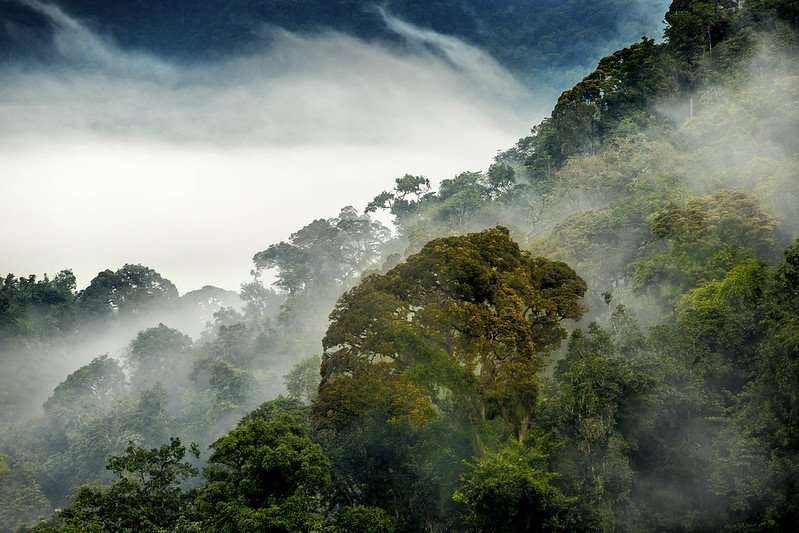
An early guided walk on the Umushwati trail, about eight kilometres through the heart of the Gishwati block, which is the main route for primate tracking. The forest holds a community of twenty to thirty eastern chimpanzees that survived the clearance, alongside golden monkeys, L’Hoest’s and blue monkeys. Be realistic: these chimps are not habituated the way Nyungwe’s are, and a track can turn up nothing at all. The guides will say so. Birding is the surer bet, with 232 species recorded in the Gishwati block and a good run of Albertine Rift endemics, and the mix of restored forest, older growth, tea edge and open ridge means you work several habitats within a short walk. What you take away is the restoration itself, and the guides talking about which slopes were bare in their childhood. Late morning we drive south down the lake road to Nyungwe, three to four hours, arriving in the tea country by late afternoon.
Day 7
Chimpanzee Trekking And The Nyungwe Canopy Walkway
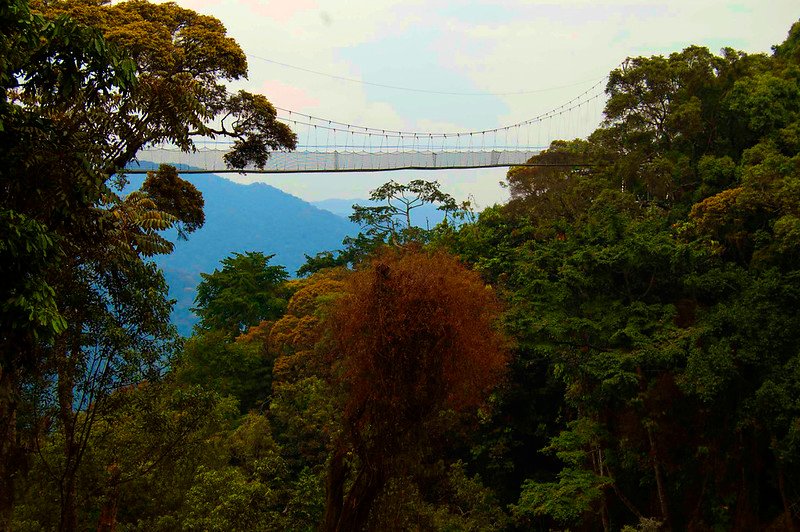
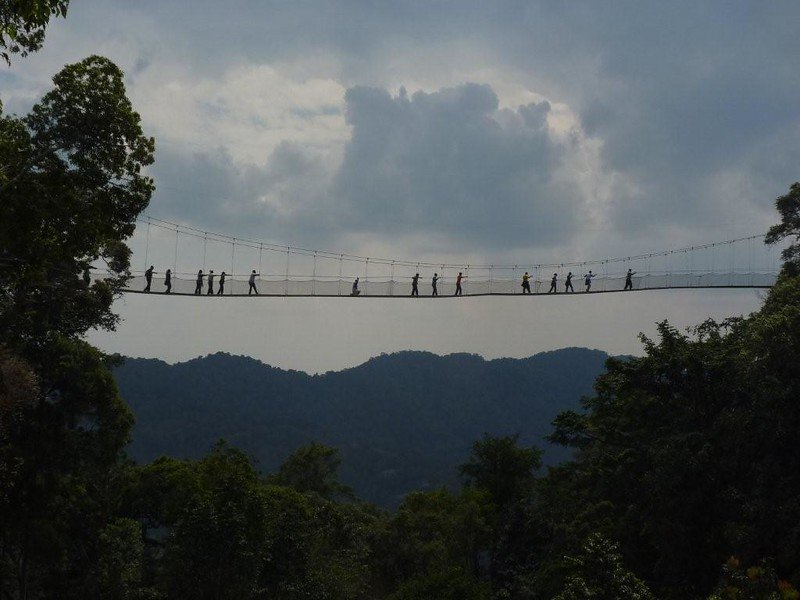
Breakfast at four thirty, moving by five, because chimps are loudest in the hour after leaving their nests. Most of our guests trek at Cyamudongo, a separated forest block of about 19 square kilometres holding a habituated community of roughly thirty chimpanzees, where the smaller search area gives better odds than the main forest. Groups are capped at eight trekkers. You hear them long before you see them and the ground is steep and slick underfoot. When the community is found you get one hour, often spent craning upward at a fig tree. Lunch at the lodge, then the canopy walkway: a suspended bridge running about 160 metres between towers at some 60 metres above the forest floor, reached on the Igishigishigi trail past giant tree ferns. Nyungwe protects close to 1,000 square kilometres of montane rainforest, holds thirteen primate species, and became a UNESCO World Heritage Site in 2023, the first site in Rwanda listed.
Day 8
Colobus Tracking And Return To Kigali
One last morning in the forest before the drive home. Colobus tracking from the Gisakura centre is the most reliable primate sighting of the whole trip, since Nyungwe holds the largest known troops of Rwenzori colobus anywhere, groups running to 300 or more animals moving together, and they often work the forest edge beside the tea so the walking is easy. Several hundred black and white monkeys pouring through a stretch of canopy is a good last image to leave with. We stop at the Gisakura tea estate, roughly 1,600 hectares buffering the forest from the farmland, then take the road east to Kigali, about five to six hours back through Huye and the southern hills. If your flight is tight or you would rather not spend the day driving, we can put you on the forty minute flight from Kamembe instead, which turns the last day into a leisurely morning. Drop off at your hotel or the airport.
Send them the itinerary before you decide. Everything on this page prints on to a few clean pages with the photographs and the day notes intact.
Quickly customise this itinerary
What is and is not included
Included
- Gorilla trekking permit for Volcanoes National Park, one per person
- Chimpanzee trekking permit for Nyungwe Forest National Park
- Canopy walkway and colobus monkey tracking permits
- Gishwati Mukura guided forest walks and park fees, arranged through the community guesthouse
- Akagera National Park entry, a boat safari on Lake Ihema and all game drives shown
- All road transfers in our 4×4 safari vehicle with a pop up roof and a Rwandan driver guide
- Airport pickup and drop off at Kigali International Airport
- Two nights Akagera, two near Volcanoes, one at Gishwati Mukura and two at Nyungwe, at your chosen tier
- Meals as shown in the itinerary and drinking water in the vehicle
- Imigongo cooperative at Nyakarambi and the Gisakura tea estate visit
- Park ranger and tracker fees for all treks
- All government taxes and levies on the above
Not included
- International flights to and from Kigali
- Rwandan visa or East Africa Tourist Visa
- Travel insurance, including cover for trekking at altitude
- Porter hire at the trailheads, payable on the day
- Kigali Genocide Memorial entry on the day three transfer, bookable on request
- Optional domestic flight from Kamembe to Kigali on the final day
- Night game drives and walking safaris at Akagera
- Tips for our guide, rangers, trackers and lodge staff
- Drinks, laundry and personal items
- Anything not listed under What’s Included
Before you book
Why Would You Want To Do This Safari?
Because almost nobody does all four, and the fourth is the one that changes how you read the other three. Gishwati Mukura is small, quiet and hard to sell, since the chimps there are barely habituated and you may see nothing. What you do see is a forest that had been cut to fragments being brought back, with guides who remember the slopes bare. Set that against Akagera, where lions and rhinos were flown in to refill an emptied park, and against the Virungas, where a gorilla population has climbed because permit money pays the trackers, and Rwanda stops looking like a destination and starts looking like an argument. Beyond that, the trip simply covers more ground than any other week in the country: savannah, volcanic bamboo, restored ridge forest and ancient rainforest, with both great apes, the Big Five and the largest colobus troops in Africa. Eight days is what it takes, and the route runs east to west so you never double back.
Is This 8 Day Rwanda Safari Enough?
For the whole country, yes, and this is as complete as Rwanda gets without slowing down. Every park gets a night or more, both great apes are covered, and the only compromise is Gishwati at a single night, which is the right allocation given how little is developed there. The honest weak points are the transfers. Day three from Akagera to Musanze runs five to six hours, and day eight from Nyungwe to Kigali the same, though the Kamembe flight fixes the second one. If long drives wear you down, add a ninth day and split the day three crossing with a night in Kigali. The other addition worth weighing is Lake Kivu. This route passes along the lake twice without stopping, and a night at Rubavu or Karongi between Volcanoes and Gishwati turns a busy itinerary into a paced one. Ten days covers all four parks plus Kivu plus a second gorilla permit, which is the version we would book ourselves.
How Much Will This Safari Cost?
Two trekking permits and four sets of park fees sit at the centre of this trip, all set by the Rwanda Development Board and identical wherever you book. Everything else moves with your choices. You are staying in four areas plus a community guesthouse, and the spread is wide: Akagera runs from campsites to a private northern concession, the Virungas from Musanze guesthouses to some of the most expensive lodges in Africa, Gishwati has one small community owned property, and Nyungwe from the Gisakura guesthouse to high end lodges in the tea. Group size matters, since a vehicle and driver guide shared between four costs far less per head than between two, and June to September and December to February carry peak rates. The Kamembe flight, a Kivu night, night drives at Akagera and a second gorilla permit are all quoted on request. Send our team your dates and numbers for a firm quote with permits held.