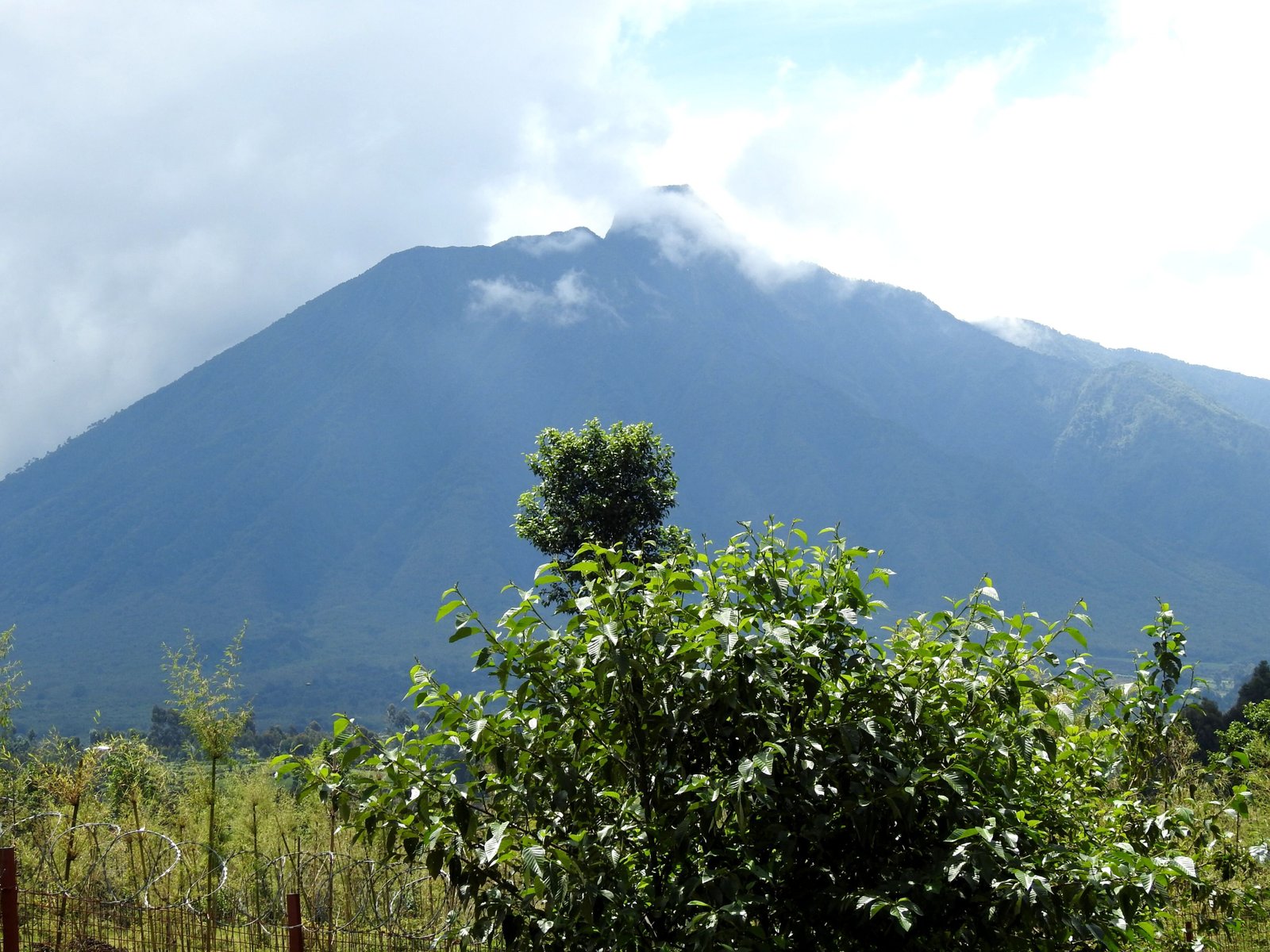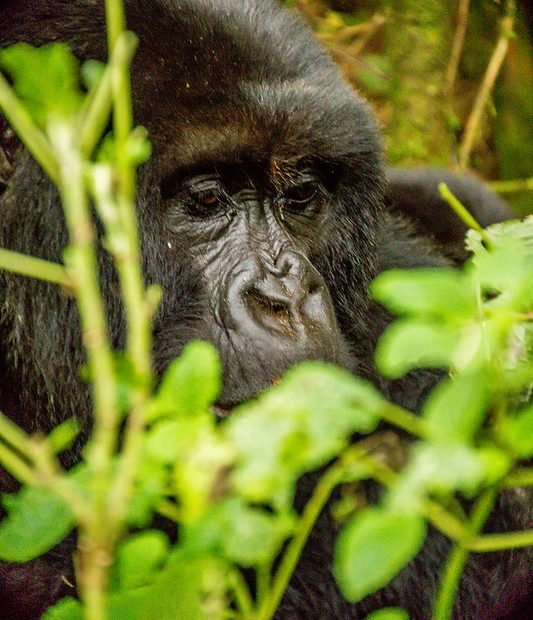
Volcanoes National Park is Rwanda’s mountain gorilla trekking destination, a 160 square kilometre reserve along the Virunga chain in the far northwest, about two hours by road from Kigali. Visitors book gorilla trekking safaris here, along with golden monkey tracking, volcano hiking on Bisoke and Karisimbi, and the trail to Dian Fossey’s tomb. Gazetted in 1925, it is the oldest national park in Africa and protects five volcanic peaks, bamboo zones, swamp and afro alpine heath.
Locals still call it the PNV, short for Parc National des Volcans. The park shares the Virunga massif with Mgahinga in Uganda and Virunga National Park in the Democratic Republic of Congo, and the gorillas move across those borders without any regard for them. More than half the world’s mountain gorillas live in this massif, and the global population has climbed past a thousand animals for the first time since anyone started counting.
Mountain Gorilla Trekking Safaris in Volcanoes National Park
A gorilla trekking safari in Volcanoes National Park runs to a strict daily rhythm, and knowing it in advance takes most of the nerves out of the morning. You arrive at Kinigi park headquarters between six and half past, in the cold, with mist usually sitting on the volcanoes behind the buildings. There is coffee. There are traditional dancers, which sounds like a gimmick and somehow is not at that hour.
The briefing runs at seven. Rangers split everyone into groups of eight, one group per gorilla family, and read out the rules: stay seven metres back where the terrain allows, no flash, turn away if you need to cough, and leave after your hour. Trackers went out at first light and are already sitting with the families, feeding positions back by radio, which is why the walking time is so much shorter than it was twenty years ago.
You cannot request a specific family in advance. Assignment happens that morning and takes account of your fitness, your age and where each group has moved overnight. Around a dozen habituated families are open to tourism, among them Susa, the group Dian Fossey studied most closely, along with Sabyinyo, Amahoro, Agashya, Kwitonda, Umubano, Hirwa and others. Susa has split over the years, which is normal gorilla behaviour rather than a problem.
Walking time varies wildly. Some treks reach a family in half an hour on gentle farmland edge. Others climb for four hours through stinging nettles and waist high vegetation on volcanic soil that gives way under your boot. Tell the rangers honestly what you can manage. Porters are available at the trailhead and hiring one is the single best decision most trekkers make, both for your knees and because that money goes straight into households living beside the park.
Then the hour. Gorillas eat, groom, sleep, and juveniles tumble past your feet with more confidence than you would like. Nobody comes back describing it well, which is probably the honest measure of it.
The minimum age for gorilla trekking in Rwanda is fifteen. Families travelling with younger children can still base themselves near the park, since golden monkey tracking has a lower age limit and several lodges run cultural visits and short nature walks that younger travellers can join.
Safari packages visiting Volcanoes National Park
8 Day Four Parks Of Rwanda Safari
Eight days covering all four Rwandan national parks: Akagera Big Five, gorillas at Volcanoes, restored forest at Gishwati Mukura and chimpanzees in…
Rwanda · Akagera, Volcanoes, Gishwati Mukura & Nyungwe National Parks
View itinerary 8 Day Four Parks Of Rwanda Safari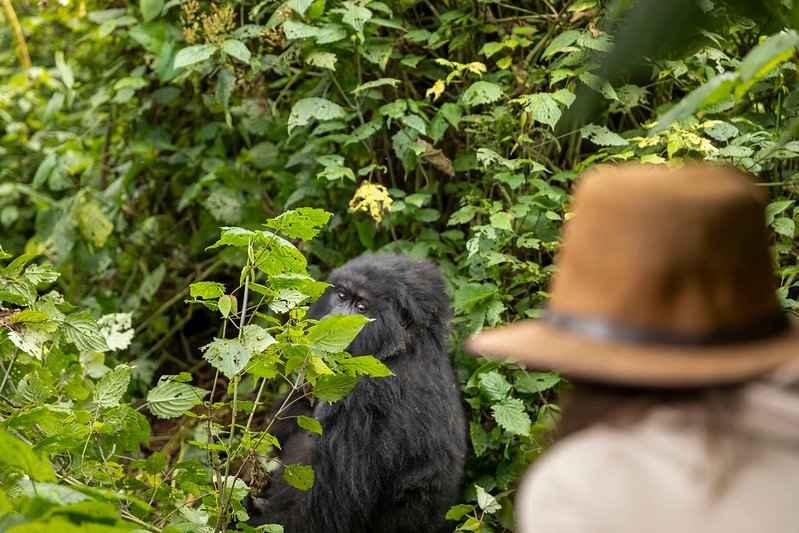
8 Day Rwanda Hiking And Gorilla Trekking Safari
Eight days walking Rwanda: Mount Bigugu and the Nyungwe trails, a Congo Nile Trail section on Lake Kivu, Mount Bisoke, the Dian…
Rwanda · Nyungwe Forest, Lake Kivu, Musanze & Volcanoes National Park
View itinerary 8 Day Rwanda Hiking And Gorilla Trekking Safari
9 Day Rwanda Photography Safari
Nine days built around the light: two gorilla permits at Volcanoes, golden monkeys, Lake Kivu fishermen at dawn and a private sunset…
Rwanda · Kigali, Volcanoes National Park, Musanze, Lake Kivu & Akagera
View itinerary 9 Day Rwanda Photography Safari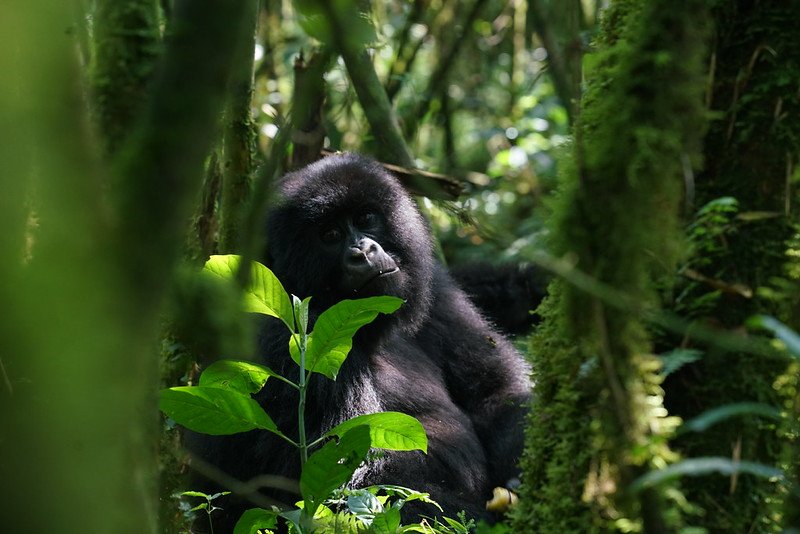
12 Day Uganda And Rwanda Wildlife And Gorillas Safari
Twelve days across Uganda and Rwanda: Ziwa rhinos, Murchison Falls, Kibale chimpanzees, Queen Elizabeth, gorillas in Bwindi and golden monkeys in the…
Uganda & Rwanda · Murchison Falls, Kibale, Queen Elizabeth, Bwindi, Volcanoes National Park & Kigali
View itinerary 12 Day Uganda And Rwanda Wildlife And Gorillas Safari
8 Day Masai Mara And Rwanda Gorillas Fly-In Safari
Eight days pairing three nights in the Masai Mara with mountain gorilla trekking in Rwanda's Volcanoes National Park, linked by flights rather…
Kenya & Rwanda · Masai Mara National Reserve, Kigali & Volcanoes National Park
View itinerary 8 Day Masai Mara And Rwanda Gorillas Fly-In Safari
9 Day Serengeti Wildebeest And Rwanda Gorillas Fly-In Safari
Nine days pairing three Serengeti nights positioned for the Great Migration with mountain gorilla trekking and golden monkeys in Rwanda, linked by…
Tanzania & Rwanda · Serengeti National Park, Kigali & Volcanoes National Park
View itinerary 9 Day Serengeti Wildebeest And Rwanda Gorillas Fly-In SafariGolden Monkey Tracking Tours in the Bamboo Zone
Golden monkey tracking is the park’s most popular second activity and works well as a day two addition to a gorilla trekking safari. Golden monkeys are found only in the Virunga region, a bright orange and gold guenon that lives in the bamboo belt on the lower slopes, mostly around Sabyinyo.
The walking is easy compared with the gorillas, usually an hour or less on reasonably flat ground, and you also get an hour with the troop. What you do not get is stillness. Where a gorilla family settles and lets you watch, golden monkeys crash through bamboo at speed, drop, regroup and vanish again. Photographers find them frustrating and everyone else finds them entertaining.
Troops here can run to several dozen animals. Habituation work has been going on for years, and the sightings are reliable in a way that suits travellers who want a second primate morning without another hard climb.
Mount Bisoke Hiking Safari to the Crater Lake
The Mount Bisoke hike is the park’s headline climb and the one most people can actually do. Bisoke stands at 3,711 metres on the Rwanda and Congo border, a dormant volcano with a crater lake roughly 400 metres across sitting in its summit.
Budget six to seven hours in total, commonly around four up and two down. The trail is not technical and there is no scrambling, but the last third turns into deep mud on a steep gradient, and in the wet season it becomes a genuine slog. Trekking poles help more than fitness does. Gaiters help more than poles.
Wildlife on the way is a bonus rather than a promise. Golden monkeys are seen frequently on the lower bamboo section, buffalo and forest elephant leave sign that guides will point out, and gorilla families sometimes range across the trail, though no ranger will pretend that is likely on any given day. At the top, weather permitting, you look down into the crater lake and across to Mikeno in the Congo. Weather does not always permit. Cloud closes the summit often, and the descent is the same mud in reverse.
Mount Karisimbi Trekking and Two Day Climbing Expeditions
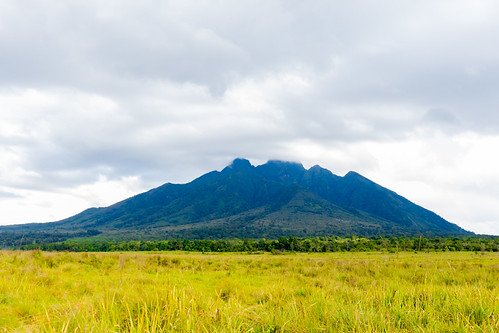
Karisimbi is the serious one. At 4,507 metres it is the highest peak in the Virunga chain and the fifth highest in Africa, and a Karisimbi trekking expedition takes two days rather than one, with a night camped at around 3,700 metres on the saddle below the summit.
Day one climbs through bamboo, then hagenia woodland, then the strange low afro alpine zone of giant lobelia and senecio. It is cold at camp and it will almost certainly rain on you at some point. Day two starts before dawn for the summit push, which is where altitude begins to tell on people who have flown in from sea level a few days earlier.
Anyone considering this hike should be walking regularly at home. The reward is a view across the whole massif at sunrise and the sense of having been somewhere very few visitors go, since the great majority of people who come to the park never leave the gorilla trails. Bring a proper sleeping bag and layers, and let the operator arrange porters and camp gear rather than carrying your own.
Dian Fossey Tomb Hiking Trail and the Karisoke Story
The Dian Fossey tomb hike is a half day trail into the saddle between Bisoke and Karisimbi, where the American primatologist set up the Karisoke Research Centre in 1967 and worked until her death. She is buried there, in the gorilla graveyard she dug herself, alongside Digit and other animals she had known individually.
A short drive from the headquarters takes you to the trailhead, then the walk climbs steadily for roughly two to three hours through hagenia forest before reaching the site. The original research camp is gone, though the foundations and the graves remain, and guides tell the story properly rather than as a movie summary.
It suits people who have read about Fossey or watched Gorillas in the Mist and want the context that a single trekking hour cannot give. The newer Ellen DeGeneres Campus of the Dian Fossey Gorilla Fund near Kinigi covers the science side, with exhibits on the research that has run continuously in these mountains for over fifty years.
Trackers reach the gorilla families before dawn and stay with them all day. By the time your group leaves the briefing, someone already knows roughly where you are going.
Musanze Caves Tours and Twin Lakes Trips Near the Park
Two easy half days sit just outside the park boundary, and both work well on an arrival afternoon or a spare morning between treks.
Musanze Caves tour. A lava tube system formed by the same volcanic activity that built the Virungas, running for a couple of kilometres beneath the town. Guided walks go in with lamps past bat colonies and collapsed roof openings that throw light down into the tunnels. Wear boots, since the floor is uneven basalt.
Twin Lakes trip to Burera and Ruhondo. Two crater lakes east of Musanze with the volcanoes rising behind them. Canoe trips, shoreline walks and village visits are the usual options, and it is the best low effort scenery day in the region.
Buhanga Eco Park walk. A small patch of ancient forest near Musanze tied to the coronation rituals of Rwandan kings. Short, shaded, and interesting for the cultural history rather than the wildlife.
Gorilla Guardians cultural village tour. A community run project outside Kinigi, staffed partly by former poachers, covering traditional medicine, archery, dance and Intore performance. Straightforward and locally owned.
Birding Safaris in the Virunga Forest
Birding safaris in Volcanoes National Park are a quieter proposition and often get bolted onto a golden monkey morning. Something in the order of 180 to 200 species have been recorded across the Rwandan section of the Virungas, with a solid list of Albertine Rift endemics among them.
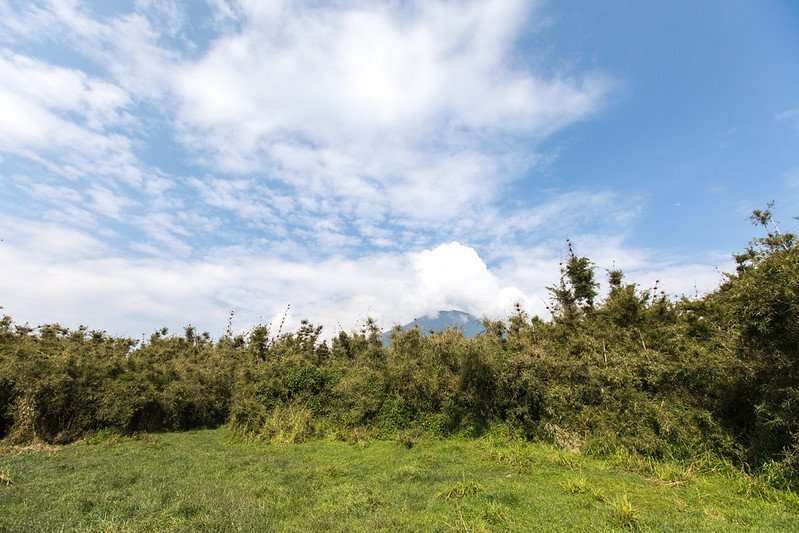
Targets include the Rwenzori turaco, Rwenzori double collared sunbird, handsome francolin, dusky crimsonwing and the Rwenzori batis. The bamboo and hagenia zones hold most of the interest, and the swamp near the base of Sabyinyo is worth working slowly. Birders should not expect Nyungwe‘s variety here, since that forest holds a longer list, but the endemics you do find are the ones that matter.
Take a guide who birds. General trekking guides know the mammals cold and the birds unevenly, and the difference on a slow morning is considerable.
Best Time for a Volcanoes National Park Safari
The park stays open all year and gorilla trekking runs every day, so the question is really about mud, permits and crowds rather than access.
June to September. The long dry season and the busiest stretch. Firmest trails, clearest views of the peaks, and the highest demand on permits, so book many months ahead. September brings Kwita Izina, the annual gorilla naming ceremony held near Musanze.
Mid December to February. The short dry season, and a good second choice. Similar walking conditions with slightly fewer people. Gorilla infants are often visible in February following the calving period.
March to May. The long rains. Volcanic soil turns to deep mud, the Bisoke and Karisimbi hikes get hard, and afternoon downpours are routine. Permits are easier to secure and the forest is at its greenest. Trekking is still perfectly possible with the right kit and a porter.
October and November. Short rains, usually showers rather than all day rain. A reasonable compromise window, with better permit availability than the dry peak and manageable conditions on the trails.
Whichever month you pick, the park sits between roughly 2,400 and 4,500 metres, so it is cold at dawn and cold again after dark. Layers, waterproofs, garden gloves for the nettles and boots with grip are the standard kit list, and the gloves are not a joke.
Getting to Volcanoes National Park from Kigali
The drive from Kigali International Airport to Musanze takes about two to two and a half hours on good tarmac, running north through terraced hills that get steadily steeper. From Musanze town it is another twenty minutes or so to Kinigi park headquarters, and most lodges sit within half an hour of the briefing point.
There is no public transport from Musanze up to Kinigi, so trekkers without a booked vehicle end up arranging a private transfer at short notice. Because the drive from the capital is short, a fair number of visitors land in the morning, transfer straight to Musanze and trek the next day, which keeps a gorilla trip down to three days in total if time is tight. Helicopter transfers cut the road time to around twenty minutes for those who want it.
Accommodation runs the full range, from guesthouses in Musanze town through mid range lodges around Kinigi to the high end camps on the park edge. Whatever tier you choose, proximity to the briefing point matters more than it sounds at six in the morning in the dark.
Gorilla permits are capped each day and the good lodges are small, so the honest advice for Volcanoes National Park is simply to start early. Intare Safaris is Rwandan, works this park constantly, and can tell you which families have been ranging low, what a wet week actually does to the Bisoke trail, and where to stay so you are not driving an hour before dawn.
Send Intare Safaris a note with your dates and rough budget, and you will get a straight answer from a person about what is available and what is realistic, not a template quote.