Tourist activities in Rwanda centre on mountain gorilla trekking safaris in Volcanoes National Park, chimpanzee trekking in Nyungwe Forest, Big Five game drives in Akagera and golden monkey tracking in the Virunga bamboo, with volcano hikes, canopy walks, boat safaris, coffee tours and Kigali city tours filling out most itineraries. Rwanda is a small country in East Africa’s Albertine Rift, and its parks sit close enough together that a single week can cover forest, savannah and lake.
The distances are the thing that changes how a trip here works. From Kigali it is around two hours to the gorillas and roughly the same east to the savannah, on tarmac the whole way, with no internal flights needed. That compactness means most visitors do more different things in Rwanda than they would in a comparable week almost anywhere else on the continent.
Mountain Gorilla Trekking Safaris in Volcanoes National Park
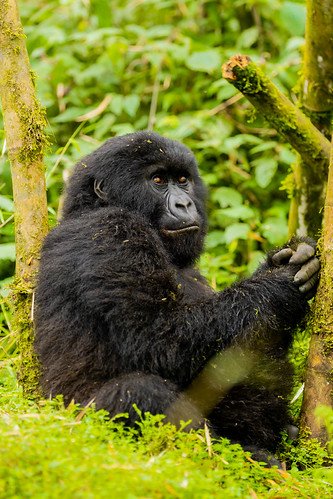
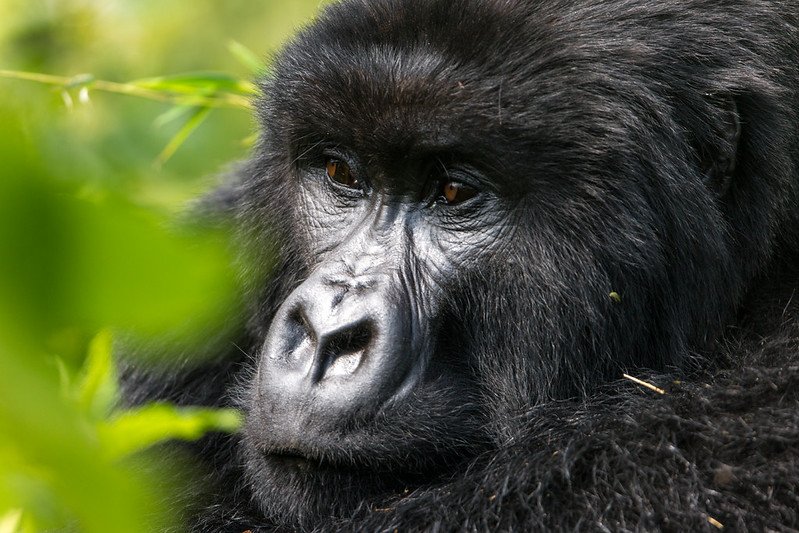
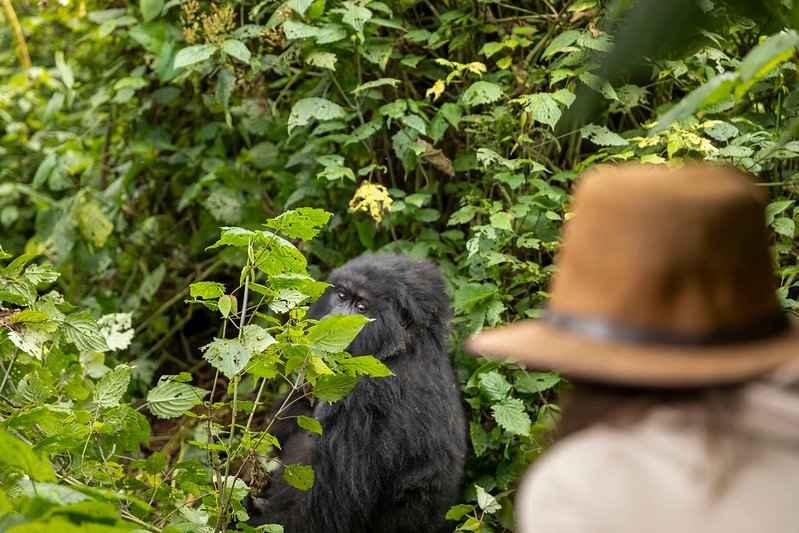
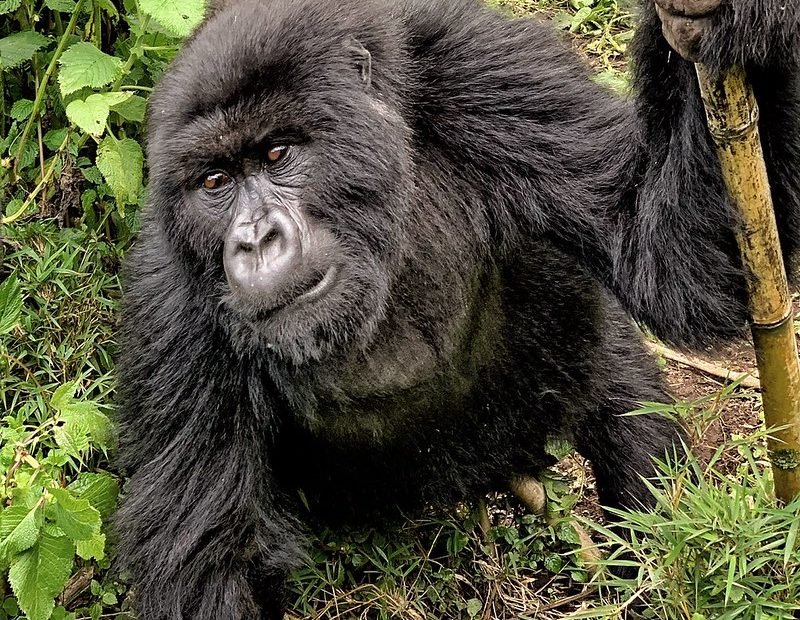
Mountain gorilla trekking is the activity that brings most visitors to Rwanda, and it happens in Volcanoes National Park along the Virunga chain in the northwest. Briefing runs at seven in the morning at Kinigi headquarters, after which rangers split everyone into groups of eight and assign each group a gorilla family based on fitness and where the trackers have found them overnight.
Around a dozen habituated families are open to visitors. Walking time swings between half an hour and four or five hours depending on where the gorillas have moved, and once you reach them you get an hour. Minimum age is fifteen. Hiring a porter at the trailhead is the single most useful thing most trekkers do, both for the climbing and because the work supports households on the park boundary.
Permits are capped daily and demand runs well ahead of supply in the dry months, so this is the one activity in Rwanda that dictates the shape of the whole trip. Book it first and build everything else around the date you get.
Full guide: Gorilla Trekking in Rwanda
Chimpanzee Trekking Safaris in Nyungwe Forest
Chimpanzee trekking runs in Nyungwe Forest National Park in the southwest, a UNESCO World Heritage rainforest of close to 1,000 square kilometres. Treks start very early, sometimes before five, because chimps are noisiest and easiest to locate as they leave their nests.
Two semi habituated communities are visited, one in the separated Cyamudongo block and a larger group nearer Uwinka. Be realistic about what a sighting looks like. Chimps move fast and high, and a strong morning can mean twenty minutes of watching them feed in a fig tree rather than a settled hour on the ground. Some treks find nothing.
A smaller chimpanzee community lives in Gishwati Mukura National Park on the Kivu ridge, where tracking is harder still because those animals are not habituated. That one suits patient travellers on a longer circuit rather than anyone booking a single chimp morning.
Full guide: Chimpanzee Trekking in Rwanda
Golden Monkey Tracking Tours in the Virunga Bamboo
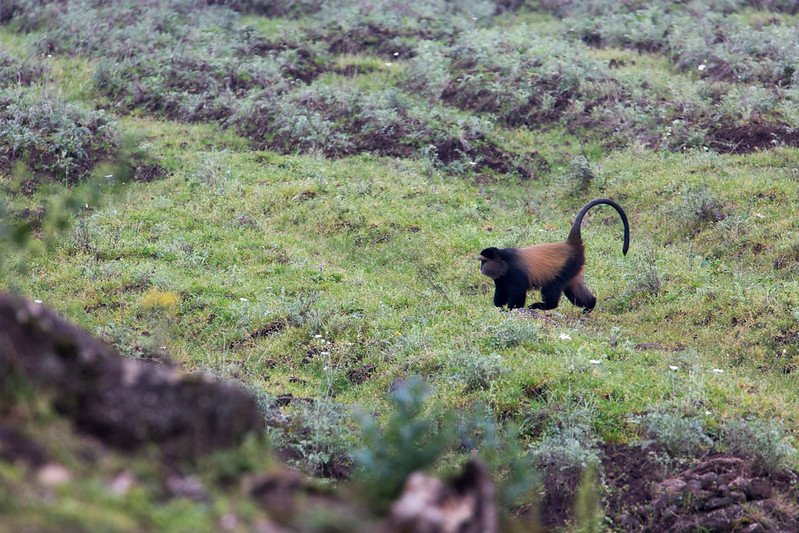
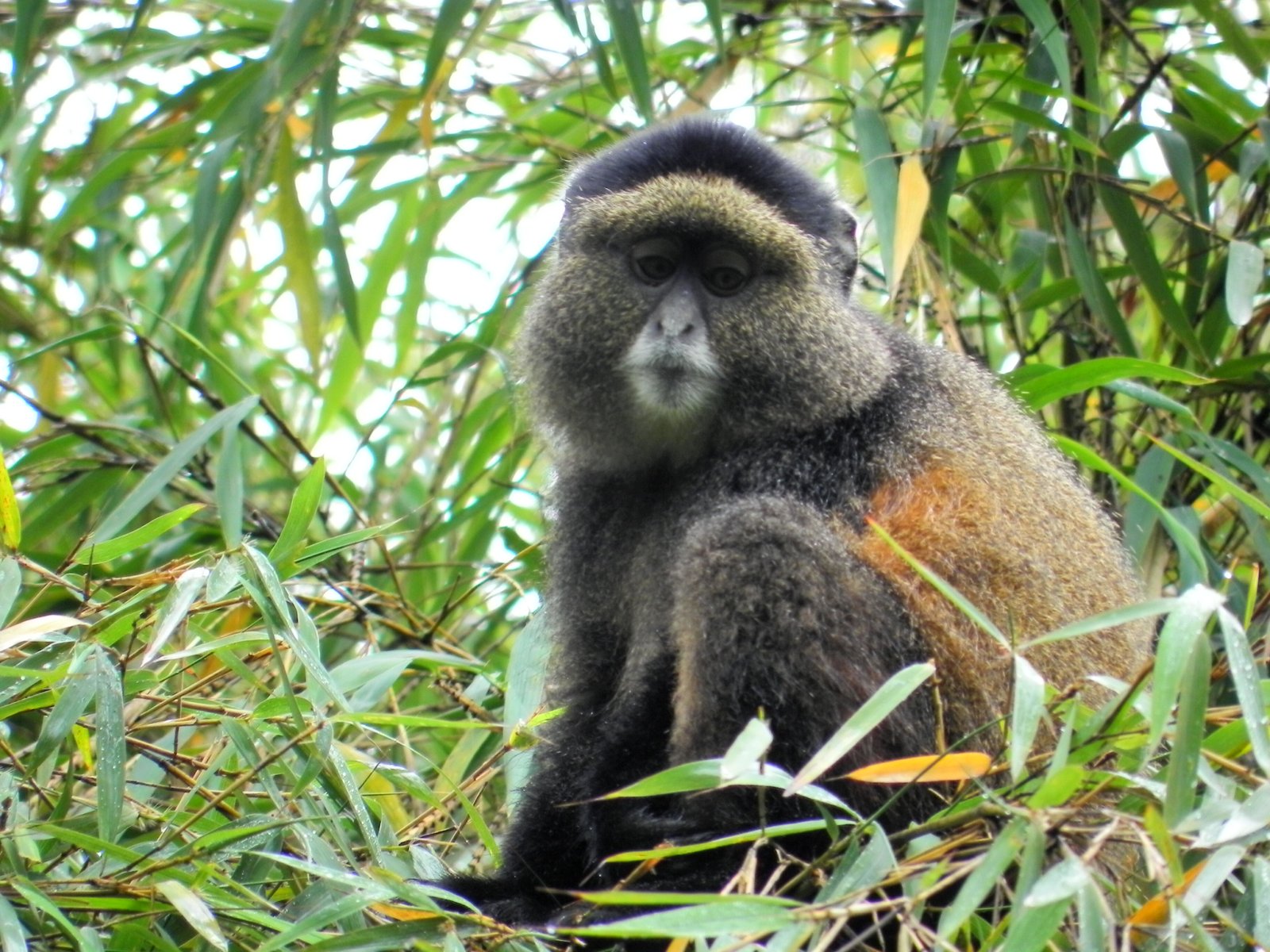
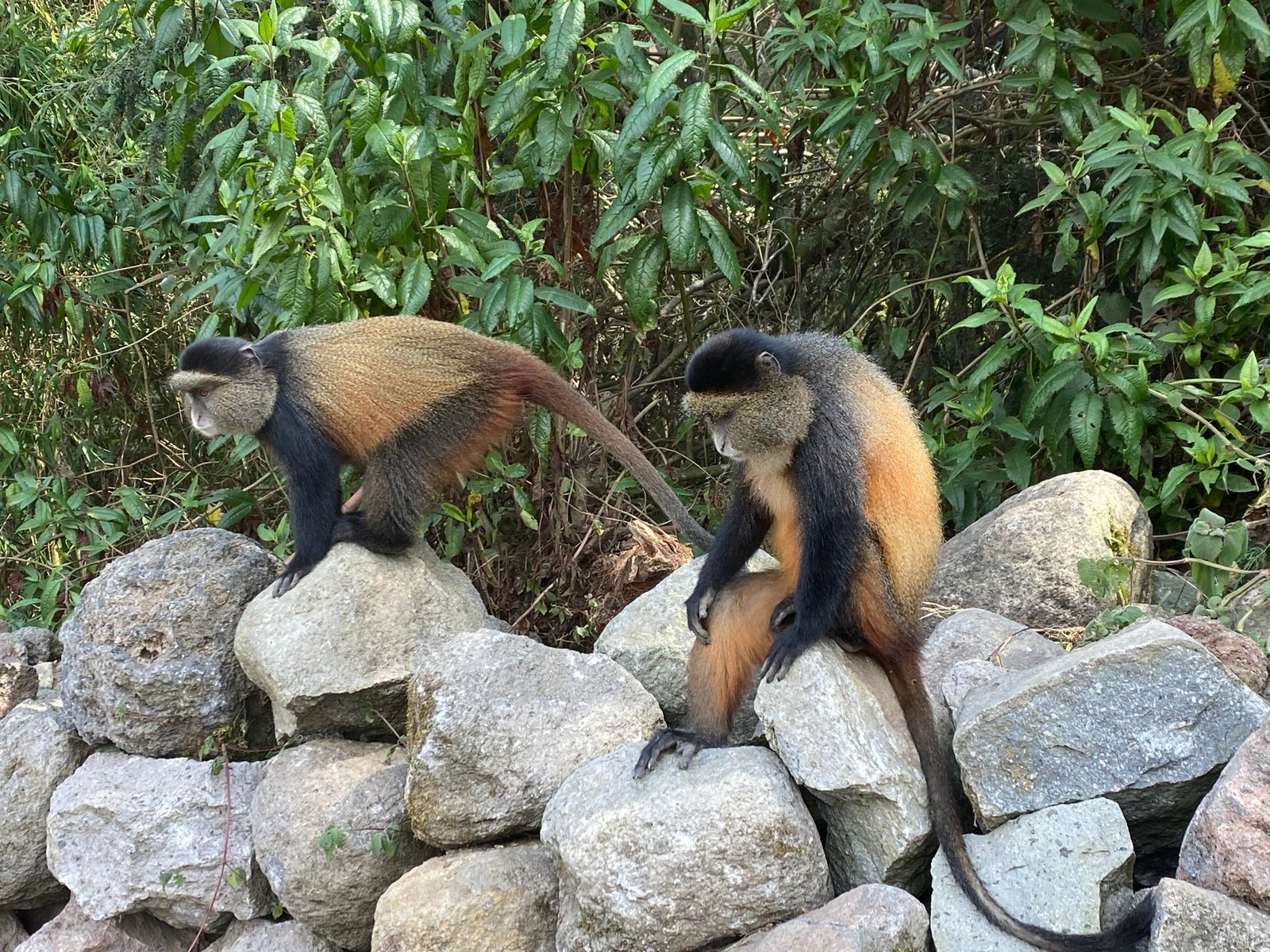
Golden monkey tracking is the most popular second activity in Volcanoes National Park and works well as a day two addition to a gorilla trek. Golden monkeys live only in the Virunga region, a bright orange guenon that feeds in the bamboo belt on the lower slopes around Sabyinyo.
The walk is easy, usually an hour or less on fairly level ground, and you get an hour with the troop. What you do not get is stillness. Where gorillas settle and let you watch, golden monkeys crash through bamboo, drop, regroup and vanish. Photographers find them maddening. Everyone else finds them funny.
The minimum age is lower than for gorillas, which makes this the practical option for families travelling with younger children.
Full guide: Golden Monkey Trekking in Rwanda
Big Five Game Drive Safaris in Akagera National Park
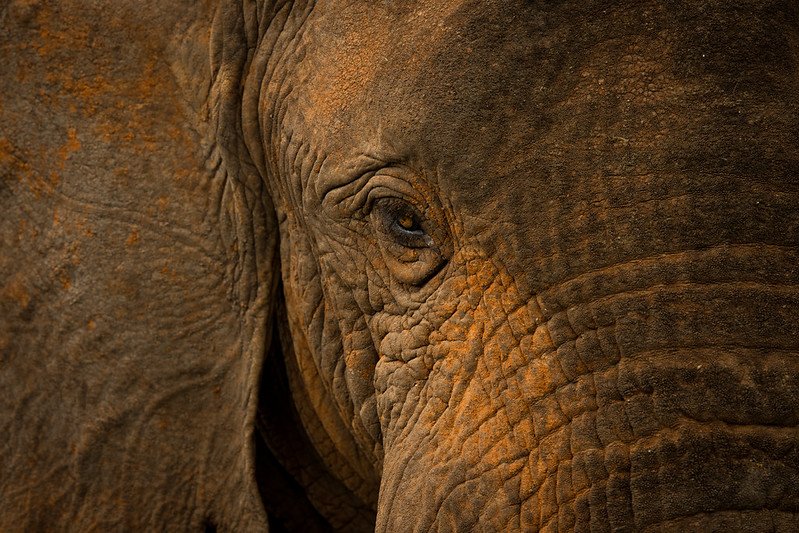
Game drive safaris in Akagera National Park cover Rwanda’s only savannah, 1,122 square kilometres of acacia woodland, open plains, papyrus swamp and lakes along the Tanzanian border. Lions were brought back in 2015 and rhinos followed from 2017, restoring the Big Five to a park that had lost both.
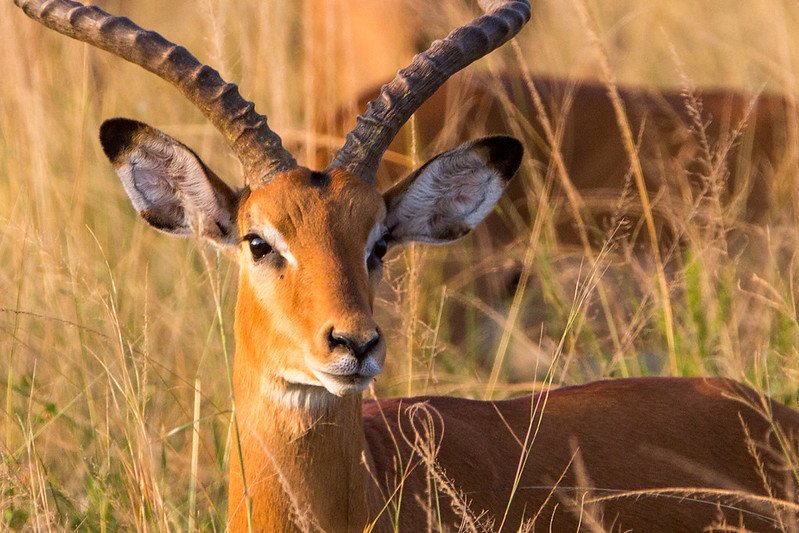
Morning drives run from around half past six, afternoon drives from midday. The northern plains around the Mutumba hills give the best odds on lion, elephant, buffalo and rhino, while the south holds more hippo, waterbuck and impala near the lakes. Leopard is present but largely nocturnal and seen by relatively few visitors, which any decent guide will say before you set out.
Night game drives run in the southern sector for guests staying inside the park, using filtered spotlights to look for bushbabies, genets, civets, hyena and, with luck, leopard. Walking safaris and ranger led rhino tracking are available from some of the camps.
Two nights inside Akagera is the sweet spot. One night limits you to the southern sector and a rushed loop north, while two lets you drive the northern plains properly and still fit a boat safari and a night drive.
Full guide: Game Drive Safaris in Rwanda
Boat Safaris on Lake Ihema and Lake Kivu Tours
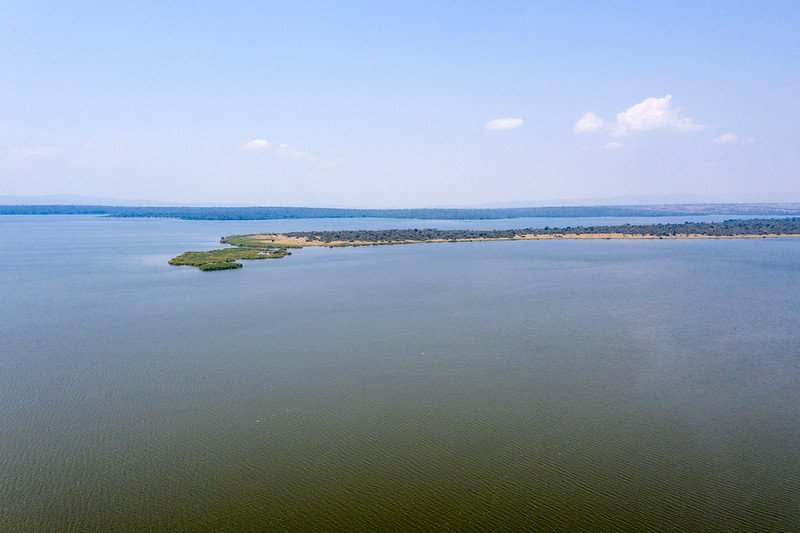
Boat safaris come in two very different forms in Rwanda. In Akagera, scheduled departures on Lake Ihema run mid morning, early afternoon and at sunset, lasting one to two and a half hours. The lake holds one of the densest hippo populations in East Africa, along with large Nile crocodiles, and elephant and buffalo come down to drink in the late afternoon. Fish eagles, pelicans and kingfishers work the papyrus edge.
Lake Kivu in the west is a different proposition entirely, a freshwater lake of around 2,700 square kilometres shared with the Democratic Republic of Congo and the sixth largest in Africa. Boat trips out to the islands, kayaking along the shoreline and swimming are the draws here, run mostly from Rubavu in the north and Karongi in the middle.
Kivu is where people go to stop moving. After several early starts and a lot of climbing, two nights on the lakeshore between the volcanoes and Nyungwe fixes most of the fatigue a Rwanda itinerary generates.
Full guide: Rwanda Boat Trips
Volcano Hiking and Trekking Adventures in the Virungas
Volcano hiking is the most underrated group of activities in the country. Mount Bisoke at 3,711 metres is the standard day climb, roughly four hours up and two down, finishing at a crater lake in the summit. It is not technical, though the upper third turns to deep mud on a steep gradient and trekking poles help more than fitness.
Mount Karisimbi at 4,507 metres is the serious one, a two day trek with a night camped at around 3,700 metres and a pre dawn summit push. Anyone considering it should already be walking regularly at home.
Shorter options include the hike to Dian Fossey‘s tomb in the saddle between Bisoke and Karisimbi, where she set up the Karisoke Research Centre in 1967 and where she is buried alongside the gorillas she knew individually. Away from the Virungas, Bigugu peak in Nyungwe and Mount Kigali above the capital both make good half day walks.
Full guide: Hiking in Rwanda
Canopy Walkway and Zipline Tours in Nyungwe
The canopy walkway tour at Uwinka is the first structure of its kind in East Africa, a suspended bridge running roughly 160 metres between towers at around 60 to 70 metres above the forest floor. Access is on the Igishigishigi trail and the full guided round trip takes about two hours.
The bridge flexes underfoot in the middle span, so anyone with a real fear of heights should think about it honestly first. From up there the canopy runs unbroken to the horizon.
A zipline now runs across the valley at Uwinka in three linked sections totalling around 1,850 metres, at heights of 20 to 50 metres, and a rope course with tyres, nets and swinging logs sits alongside it. Together they make Nyungwe the best park in Rwanda for travellers who want adventure activities rather than only wildlife.
Full guide: Nyungwe Forest National Park Rwanda
Birding Safaris Across Rwanda’s National Parks
Birding safaris in Rwanda are strong enough to justify a trip on their own, and the country’s position along the Albertine Rift is why. Each park delivers a different list.
Nyungwe Forest. Around 300 species with 25 to 30 Albertine Rift endemics. The Rwenzori turaco, great blue turaco, red collared babbler and Grauer’s warbler are the birds people travel for. Karamba trail near Gisakura is the classic walk.
Akagera National Park. Over 500 species across wetland, lakeshore, woodland and savannah. The shoebill in the papyrus is the target, though sightings are never guaranteed. Grey crowned crane, papyrus gonolek and goliath heron are more dependable.
Volcanoes and Gishwati Mukura. Smaller lists, roughly 180 to 200 species in the Virungas and around 232 recorded at Gishwati, but with high endemic value. Regal sunbird, handsome francolin, strange weaver and Rwenzori batis among them.
Migrants push numbers up from around November through April. Take a specialist birding guide rather than a general park guide; the difference in what gets found over a morning is considerable.
Full guide: Birding in Rwanda
Coffee and Tea Plantation Tours in Rwanda
Coffee tours have quietly become one of the better half days in the country. Rwanda grows high altitude arabica that has built a serious international reputation, and most of the interesting visits are at the washing stations and plantations rather than the mills in Kigali.
Kinunu, on the Kivu shoreline south of Rubavu, is the best known. It buys cherries from hundreds of smallholders farming plots often smaller than a quarter of a hectare, and the tour walks you through hand sorting, pulping, overnight fermentation, flotation grading and drying on raised beds facing the lake, finishing with a tasting. It can be reached by boat or bicycle, which makes it a good pairing with the Congo Nile Trail.
Huye Mountain Coffee in the south runs a similar visit tied to a farmer cooperative, and several women led cooperatives near Kigali offer plantation and roasting visits. On the tea side, the Gisakura and Gisovu estates on the Nyungwe boundary run factory and field tours where pickers work the contour rows Monday through Saturday.
Full guide: Rwanda Coffee Tours
Kigali City Tours and Cultural Village Experiences
Kigali city tours deserve more than the airport transfer most itineraries give them. The Kigali Genocide Memorial at Gisozi is the resting place of more than 250,000 victims of the 1994 genocide against the Tutsi, and the exhibition is careful and clear rather than sensational. Allow around three hours and expect the visit to affect the rest of your day.
Beyond it, the city has a strong art scene at the Inema Arts Centre, the Kandt House and Ethnographic collections, and Kimironko market for agaseke peace baskets. Walking tours of the Nyamirambo neighbourhood run by the Nyamirambo Women’s Centre take you through salons, tailors and family kitchens, and end with a meal you help cook.
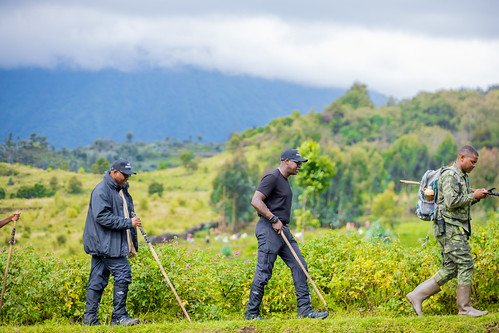
Outside the capital, the Gorilla Guardians village near Kinigi, founded by a former park warden and staffed partly by ex poachers, covers Intore dance, traditional medicine, archery and cooking. The King’s Palace Museum at Nyanza holds the reconstructed royal court and the long horned inyambo cattle, and the Ethnographic Museum at Huye has one of the better collections on the continent.
Full guide: Kigali City Tours
Congo Nile Trail Cycling and Kayaking Trips
The Congo Nile Trail runs for roughly 227 kilometres along the Rwandan shore of Lake Kivu between Rubavu and Rusizi, and it is the best multi day active option in the country. Cyclists usually take five days, hikers closer to ten, and plenty of people ride or walk only a section over two or three days.
The route moves through fishing villages, coffee terraces, banana plantations and eucalyptus stands, with the lake below and the Congo hills across the water. It is dirt for most of its length, hilly throughout, and the riding is harder than the profile suggests.
Kayaking is the gentler version. Guided paddling trips run out of Rubavu, Karongi and Kinunu, some for a couple of hours and others island hopping across several days with camping on the shore. Either way, this is the part of a Rwanda trip where you stop being a spectator.
Full guide: Lake Kivu Tours
Best Time for Tourist Activities in Rwanda
Every park stays open all year and no activity closes seasonally. Timing changes how hard the walking is and how easily animals are spotted.
June to September, long dry season. The peak window. Firm trails for trekking and hiking, thin grass in Akagera so game gathers near water, and the heaviest demand on gorilla permits. Book several months ahead. September brings the Kwita Izina gorilla naming ceremony near Musanze.
Mid December to February, short dry season. Similar conditions with slightly fewer people. Gorilla infants are often visible in February after the calving period.
March to May, long rains. Hardest months for volcano hiking and gorilla trekking, with deep mud on the volcanic soil. Best months for chimpanzee trekking, since chimps feed lower. Permits are easier to secure.
October and November, short rains. Afternoon showers rather than all day weather. Migrant birds arrive, parks are quiet and photography light is better. A sensible compromise window.
Full guide: Best Time to Visit Rwanda
Planning and Getting Around Rwanda
Almost everything starts at Kigali International Airport. Volcanoes National Park is around two hours north through Musanze, Akagera about two hours east to the southern gate, Lake Kivu roughly three hours west, and Nyungwe five to six hours southwest, though a forty minute flight to Kamembe cuts that considerably. Gishwati Mukura sits between the volcanoes and Nyungwe on the Kivu road.
Most nationalities can get a visa on arrival, and the East Africa Tourist Visa covers Rwanda, Uganda and Kenya on one document, which matters if you plan to pair gorilla trekking with Bwindi or the Maasai Mara. Roads are good by regional standards, a four wheel drive is worth having in the wet months, and plastic bags are banned countrywide, so leave them at home.
The order of activities matters more than people expect. Front loading the hard walking while you are fresh and finishing on Akagera or Lake Kivu leaves most travellers in far better shape than the reverse.
Rwanda packs a lot into a short trip, which is exactly why the sequencing and the booking order decide whether it feels well paced or rushed. Intare Safaris is based in Rwanda and runs all of these activities year round, from gorilla permits and Akagera game drives through to the quieter things like Kinunu coffee mornings and Kivu paddling. They will tell you honestly which activities are worth your days and which ones to drop.
Send Intare Safaris your dates and a rough idea of what appeals, and a real person will come back with a route that fits how you actually like to travel.
Full guide: How to Book Your Safaris in Rwanda