Serengeti National Park covers roughly 14,750 square kilometres of northern Tanzania and is the largest and best known safari destination in East Africa. It protects the greater part of the Great Migration, a year round circuit of about 1.5 million wildebeest along with several hundred thousand zebra and gazelle, and it holds one of the richest predator populations on the continent. The park divides into five regions, each with its own season, and where you go matters more than when you come.
The name comes from the Maa word siringet, meaning endless plains, and standing on the short grass south of Naabi Hill you understand why. The Serengeti was listed as a UNESCO World Heritage Site in 1981 and it works alongside Kenya’s Masai Mara as a single ecosystem that pays no attention to the border running through it.
The Great Migration Through the Serengeti
The single most useful thing to know about the Great Migration is that it is not an event. It is a continuous circular movement driven by rainfall and grazing, and the herds are somewhere in the ecosystem every day of the year. What changes is where.
Roughly speaking, the herds calve on the southern plains from December through March, move northwest through the central Serengeti in April and May, mass in the Western Corridor around the Grumeti River in June, push north to the Mara River from July, spread across the northern Serengeti and the Masai Mara through August and September, then turn south again in October and November to arrive back on the short grass for the rains.
Timing shifts every year with the rainfall, sometimes by several weeks. Any operator quoting fixed dates is guessing.
What follows from that is simple. A Serengeti safari must be built around the region the herds are likely to be in for your dates, not around a single lodge chosen for its photographs. Getting that wrong is the most common and most expensive mistake in Tanzanian trip planning.
Nobody can guarantee a river crossing. Some visitors spend three days at the Mara River and see nothing. Others arrive and watch one within an hour. A guide who knows the herds and the crossing points improves the odds considerably, and nothing makes it certain.
Safari packages visiting Serengeti National Park
10 Day Tanzania Northern Circuit Fly-In Safari
Ten days across Tanzania with four Serengeti nights reached by light aircraft, plus Tarangire, Lake Manyara and a full day on the…
Tanzania · Arusha, Tarangire, Lake Manyara, Ngorongoro Crater & the Serengeti
View itinerary 10 Day Tanzania Northern Circuit Fly-In Safari
6 Day Tanzania Northern Circuit Safari
Six days across Tanzania's northern circuit: Tarangire elephants, Lake Manyara, two days in the Serengeti and the Ngorongoro Crater floor, with Olduvai…
Tanzania · Tarangire, Lake Manyara, Serengeti National Park & the Ngorongoro Crater
View itinerary 6 Day Tanzania Northern Circuit Safari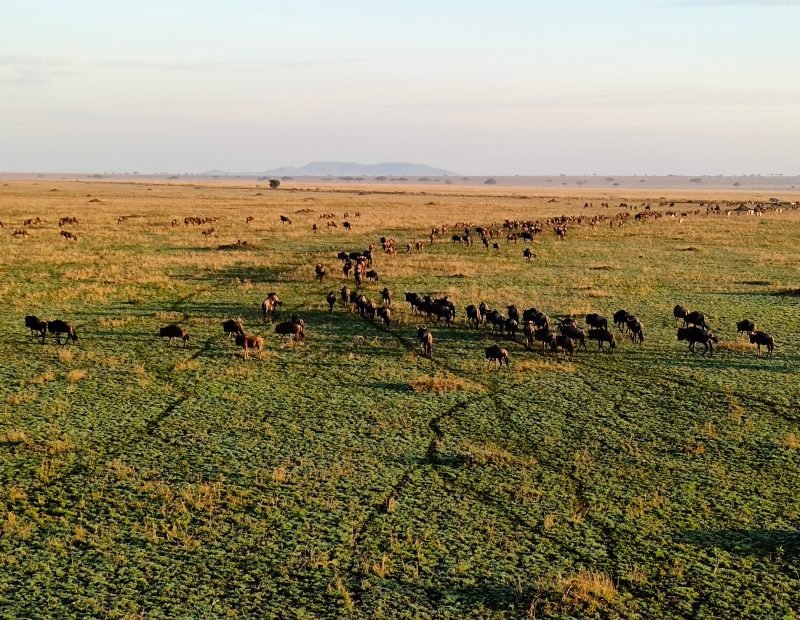
8 Day Serengeti Migration And Ngorongoro Safari
Eight days on Tanzania's northern circuit with three Serengeti nights positioned for the Great Migration, plus Tarangire, Lake Manyara and the Ngorongoro…
Tanzania · Tarangire, Lake Manyara, Serengeti National Park & the Ngorongoro Crater
View itinerary 8 Day Serengeti Migration And Ngorongoro Safari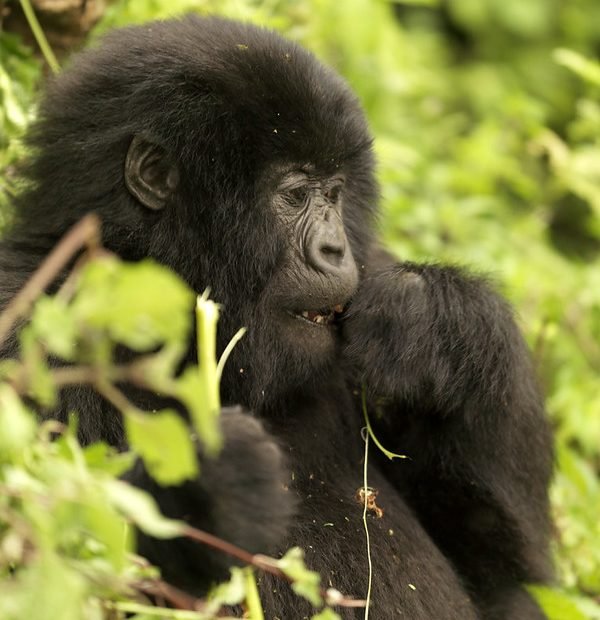
9 Day Serengeti Wildebeest And Rwanda Gorillas Fly-In Safari
Nine days pairing three Serengeti nights positioned for the Great Migration with mountain gorilla trekking and golden monkeys in Rwanda, linked by…
Tanzania & Rwanda · Serengeti National Park, Kigali & Volcanoes National Park
View itinerary 9 Day Serengeti Wildebeest And Rwanda Gorillas Fly-In SafariCalving Season on the Southern Plains and Ndutu
Between roughly late December and March the herds gather on the short grass plains of the southern Serengeti and around Ndutu, and what follows may be the most concentrated wildlife spectacle in Africa.
Around half a million wildebeest calves are born within a few weeks, with something in the order of eight thousand a day at the peak in late January and February. The synchrony is a survival strategy: so many calves arrive at once that predators cannot take them all.
Every predator in the region converges. Lion prides, cheetah on the open plains, hyena clans and leopard all work the herds, and the short grass means you watch hunts unfold across open ground rather than glimpsing them in cover.
Ndutu itself sits technically inside the Ngorongoro Conservation Area rather than the national park, but it is reached on the same circuit and most calving itineraries base there. Mobile camps move in for the season.
For photographers this is the strongest window of the year. Visibility is exceptional, the action is intimate rather than distant, and a long lens does more work here than a wide one.
Grumeti River Crossings in the Western Corridor
The Western Corridor stretches from the central Serengeti out towards Lake Victoria, and the herds pass through it in a bunched column during roughly May to July on their way north.
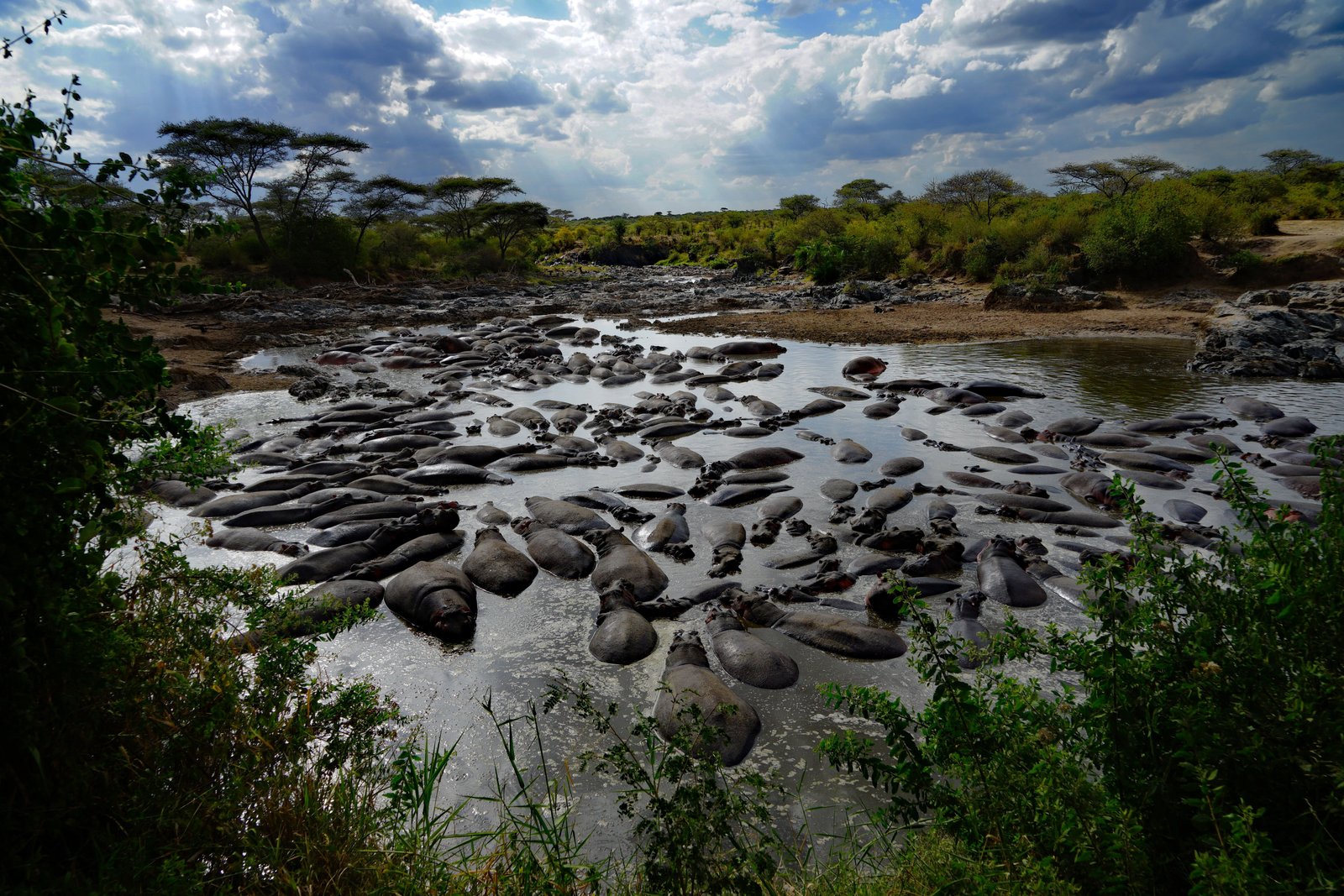
The Grumeti River runs through this country and holds some of the largest Nile crocodiles in Africa, animals that have grown enormous on an annual delivery of wildebeest. Crossings here are less predictable and less photographed than those on the Mara, and they draw a fraction of the vehicles.
That is the appeal. June in the Western Corridor can give you crossings with almost nobody else present, which is impossible in the north in August. The trade off is that the crossings are shorter, more scattered and harder to catch, since the river is narrower and the herds can cross at many points.
Outside the migration months the corridor is quiet, with resident game, riverine forest and good birding. Several private concessions operate on this side, offering activities the national park does not permit.
Mara River Crossings in the Northern Serengeti
From July through October the herds concentrate in the northern Serengeti around Kogatende and the Lamai Wedge, on both sides of the Mara River, moving back and forth across it as grazing dictates.
This is the crossing everybody has seen on television. Herds mass on the banks, hesitate for hours, then pour down the ledges into water holding a large crocodile population, with the survivors scrambling up the far side.
What the footage does not show is the waiting, or the vehicles. Peak season at the main crossing points draws serious traffic, though the northern Serengeti still handles it better than the Kenyan side of the same river.
The north is remote and most visitors fly in to Kogatende rather than driving, since the road from Seronera is long. Camps here are mostly seasonal and they book out nine to twelve months ahead for July through September, which is not an exaggeration.
Outside the crossing months the north is empty and rather wonderful, with resident elephant, good leopard country and almost no other vehicles.
Eight thousand calves born a day at the peak of calving. A million and a half animals moving in a column that can stretch forty kilometres. The numbers stop being abstract the moment you see the herds reach the horizon in both directions.
Big Cat Safaris in the Seronera Valley and Central Serengeti
The central Serengeti around Seronera is the park’s year round heart and the reason it works in any month, migration or not.
The Seronera river valley holds permanent water, which sustains resident prey, and with it resident predators. Lion prides here are large and well established. Leopard are found with unusual reliability along the riverine forest, often draped in the big sausage trees, and Seronera has a reputation as one of the better leopard destinations in Africa. Cheetah work the open ground to the south and east.
Granite kopjes rise from the plains across this region, weathered outcrops that hold water in their hollows and act as lookouts and den sites. Lion on a kopje at sunrise is the picture people carry away from the Serengeti.
Seronera has the park’s main airstrip and the widest spread of accommodation, which makes it the standard first time base. It is also the busiest part of the park, and vehicles do gather at big cat sightings.
Hot Air Balloon Safaris Over the Serengeti
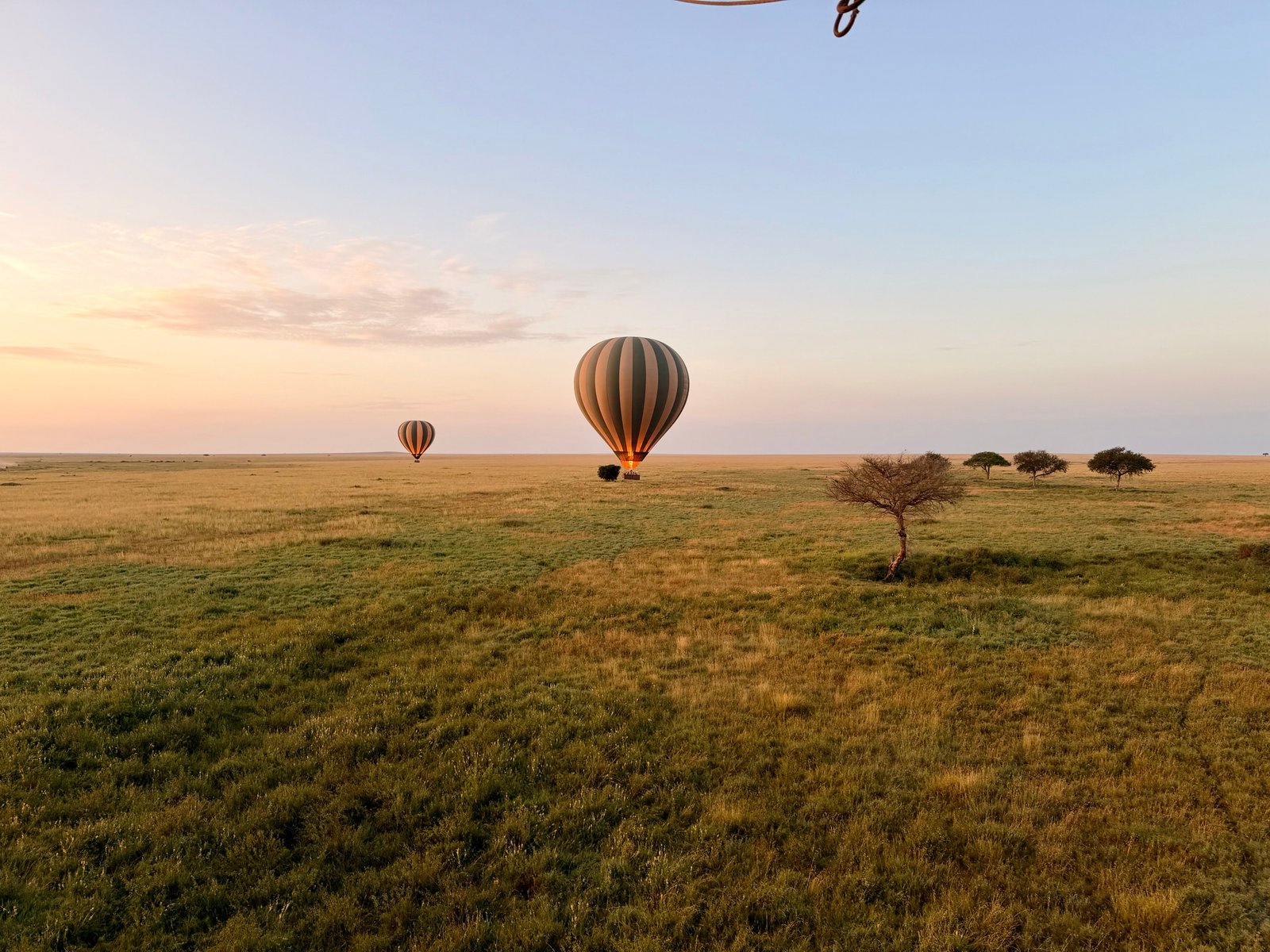
Balloon safaris launch before dawn and are among the most established in Africa. You lift off as the light comes up, drift low over the plains where the wind allows, and land to a bush breakfast cooked in the open.
Flights operate from several regions, most commonly Seronera and the southern plains, and seasonally from the north and the Western Corridor. During migration months the view of herds spread across the grass in dark rivers is something no vehicle can offer.
Book well ahead in high season. Flights depend on weather and are occasionally cancelled, and the early start means leaving camp in the dark, which is worth knowing before you commit.
Walking Safaris and the Eastern Serengeti
The eastern Serengeti, running towards the Gol Mountains and the Loliondo boundary, is the least visited part of the park and the most starkly beautiful.
Open plains give way to rocky hills, and this is where researchers work on cheetah and where the herds pass briefly on their way south in October and November. Visitor numbers are very low year round.
Walking safaris are permitted in designated areas of the Serengeti with armed rangers, and in the private concessions bordering the park they are standard. Walking changes the scale of the place entirely, working at the level of tracks, dung, plants and birds rather than large mammals viewed from a vehicle.
Night drives, off road driving and fly camping are similarly restricted inside the national park and available in the neighbouring concessions, which is the same pattern seen in Kenya’s conservancies and worth factoring into where you sleep.
Birding Safaris in the Serengeti
Around 500 bird species have been recorded, and the Serengeti is a strong birding destination that most visitors treat as background to the mammals.
The plains hold ostrich, kori bustard, secretary bird, southern ground hornbill and a long list of larks, pipits and cisticolas. Raptors are exceptional, with martial eagle, bateleur, tawny eagle and six vulture species, and vulture behaviour at a kill repays proper watching.
Kopjes and woodland give hornbills, barbets, rollers and the Fischer’s lovebird, a regional near endemic. The rivers and swamps add herons, storks, jacanas and kingfishers, and Lake Ndutu holds flamingos in the calving months.
Migrants arrive from November through April, which coincides with the green season and gives the strongest lists of the year.
Where to Stay: Lodges, Mobile Camps and Private Concessions
Accommodation choice matters more in the Serengeti than in almost any other park, because a fixed lodge in the wrong region during migration season leaves you driving for hours to reach the herds.
Permanent lodges. Concentrated around Seronera in the centre, with a few in the north and west. Comfortable, reliable and open year round, and the sensible choice for travellers focused on resident big cats rather than the migration. Weakest option if you are chasing herds.
Mobile tented camps. Seasonal camps that move with the herds, setting up in the south for calving and the north for crossings. Simpler than a lodge and considerably better positioned. The standard answer for a migration focused trip, and they book out furthest ahead.
Private concessions. Adjoining land outside the park boundary, particularly in the west and the Loliondo area to the east. Fewer vehicles, and they allow night drives, walking safaris and off road driving, none of which the national park permits.
Camping and public campsites exist for budget travellers, and a growing number of itineraries mix a night or two of mobile camping with lodge nights either side.
Best Time for a Serengeti Safari, Month by Month
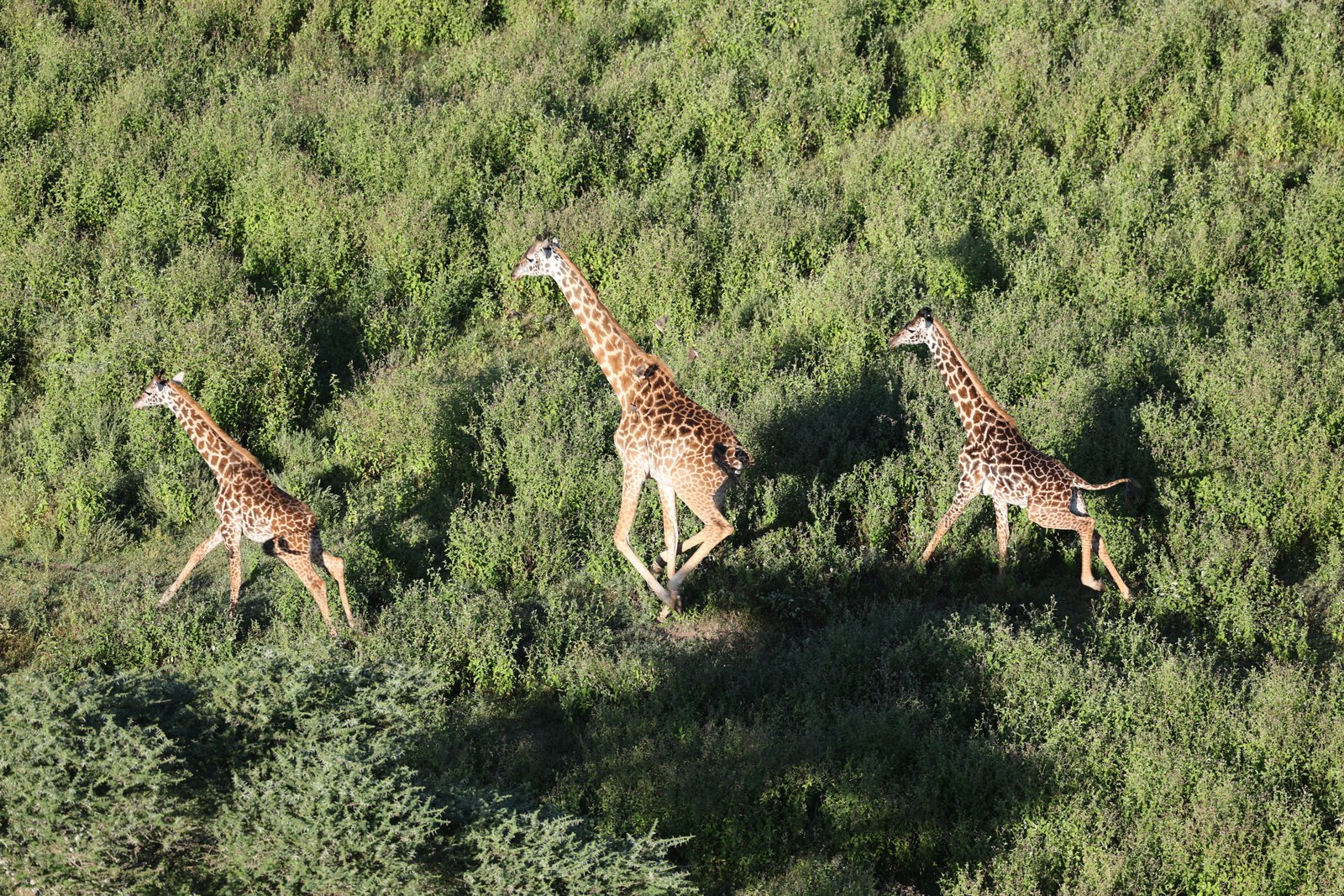
The Serengeti works in every month. What changes is which region you should be in.
December to March. Calving on the southern plains and at Ndutu, peaking late January and February. Intense predator activity and exceptional open plains photography. Base south.
April and May. The long rains and the green season. Herds move north through the central Serengeti. Fewest visitors, lowest rates, superb light and dramatic skies. Some roads become difficult.
June and July. Herds mass in the Western Corridor and begin crossing the Grumeti, then push north. Quiet crossings with few vehicles in June. Base west, then north.
August to October. Mara River crossings in the north around Kogatende and Lamai. The peak season, the highest prices and the heaviest bookings. Base north and book far ahead.
November is the transition, with the short rains starting and the herds moving back south through the central and eastern Serengeti. It is a quiet, good value month with decent game viewing and arriving migrant birds.
Getting to the Serengeti and Planning Your Route
Most visitors reach the Serengeti from Arusha, either by road across the Ngorongoro Conservation Area or by light aircraft to one of the park’s airstrips, which include Seronera, Kogatende, Grumeti, Kirawira, Lobo, Kusini and Ndutu. Flights take roughly forty five to ninety minutes depending on the destination.
The road route takes most of a day and passes Lake Manyara and the Ngorongoro Crater, which is why the northern Tanzanian circuit usually combines all three. Driving in and flying out, or the reverse, gives you the road scenery without the second long day.
For anyone based in Rwanda, the routing is a scheduled flight from Kigali to Kilimanjaro International Airport, then a light aircraft or road transfer onward. That connection makes gorilla trekking and the migration realistic on one trip, which very few itineraries attempt.
A useful strategy for longer stays is flying to one region and driving out through another, for example flying into Kogatende in crossing season and driving south via Seronera to exit through Ngorongoro.
The Serengeti punishes generic planning more than any park in East Africa, because being in the wrong region in the right month means missing the thing you came for. Intare Safaris operates across Rwanda, Uganda, Kenya and Tanzania and can position you where the herds are likely to be for your dates rather than where the standard itinerary puts everyone.
Send Intare Safaris your travel window, even a rough one, and they will tell you which part of the Serengeti it points to and whether shifting by a fortnight would change your trip.