Amboseli National Park covers 392 square kilometres in southern Kenya on the Tanzanian border, directly beneath Mount Kilimanjaro. It is best known for large elephant herds moving across open plains with the mountain behind them, and for holding the most studied wild elephant population in the world, numbering around 1,800 animals. The park is a UNESCO Biosphere Reserve and sits within a wider ecosystem of roughly 8,000 square kilometres including Maasai community conservancies.
Amboseli is Kenya’s second most visited park after the Masai Mara, and it does something no other park does. Elephants at close range against Africa’s highest mountain is the single most reproduced image in East African safari photography, and this is the only place it can be taken.
Elephant Safaris in Amboseli National Park
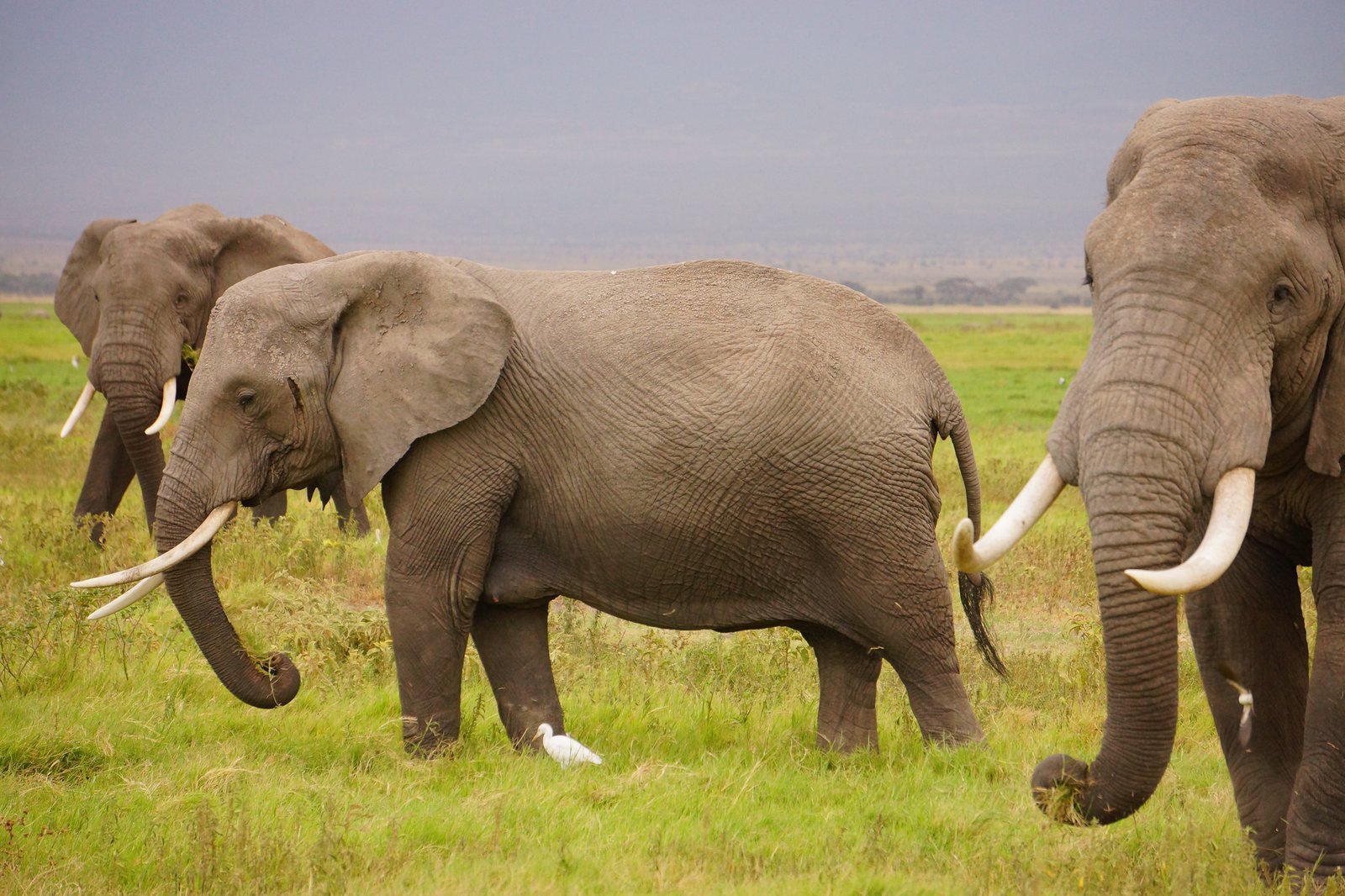
Elephants are the reason to come and Amboseli’s are unusual in several ways. The population has been followed continuously since the early 1970s by the Amboseli Elephant Research Project, the longest running study of wild elephants anywhere, which means individual animals and family lines are known by name across five decades of records.
That long protection shows. Amboseli holds some of the last great tuskers in Africa, bulls carrying ivory that reaches almost to the ground, animals that have survived because poaching pressure here has been comparatively low and monitoring has been constant.
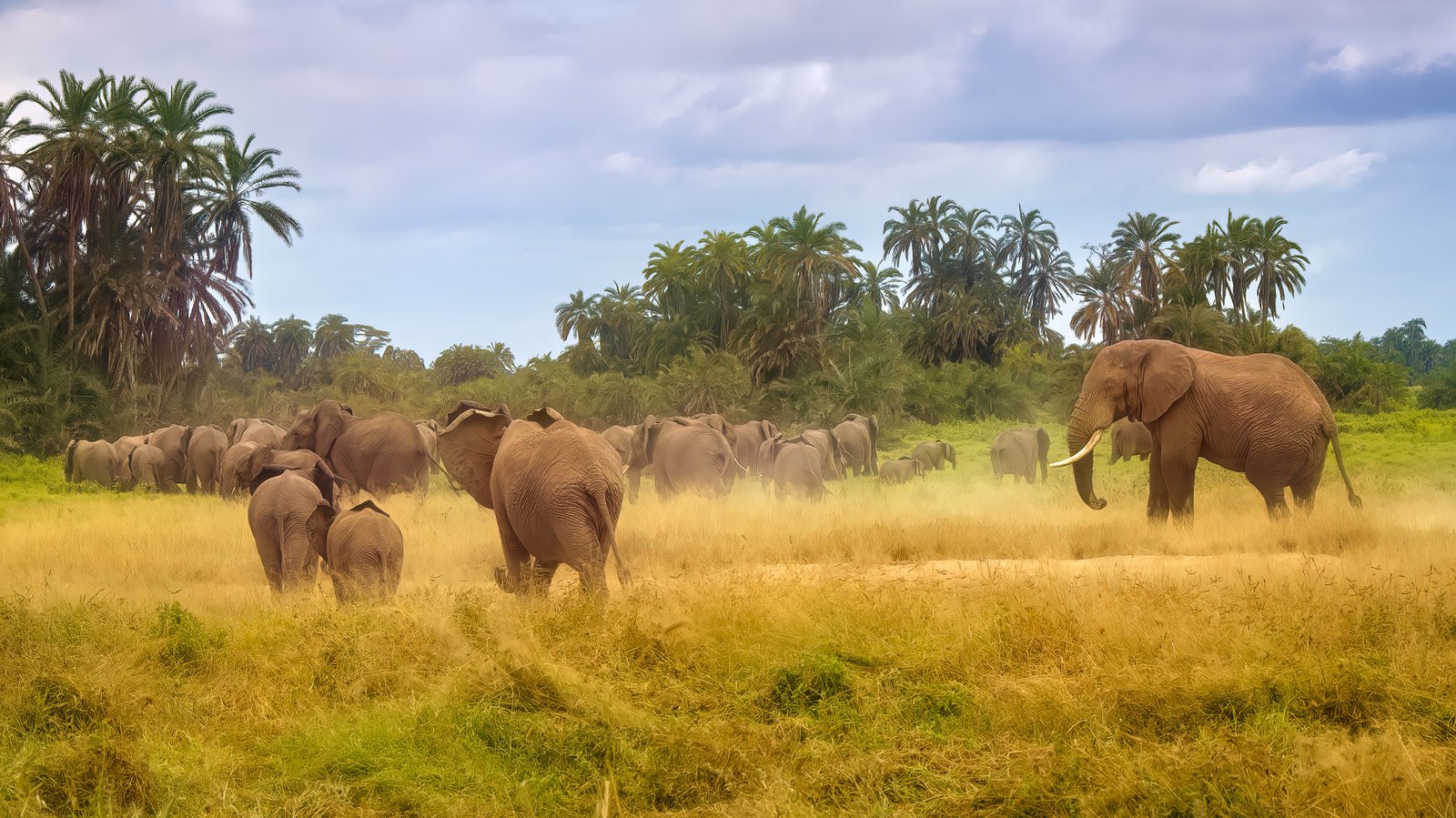
Herds move between the swamps and the surrounding plains on established routes, often crossing directly in front of vehicles. Groups of a hundred or more gather at water in the dry season. Because the terrain is flat and largely open, you watch them travelling across country rather than glimpsing them through bush, which is a fundamentally different way of seeing elephants.
Give them right of way and switch the engine off. The best elephant viewing in Amboseli happens when a family walks past a stationary vehicle rather than when a vehicle chases a family.
Amboseli has no rhino and leopard are rarely seen, so this is not a Big Five park. Treat it as the finest elephant destination in East Africa and pair it with the Masai Mara or Tsavo for the rest. Booking it expecting a full Big Five list leads to a disappointing three days.
Safari packages visiting Amboseli National Park
6 Day Masai Mara, Lake Nakuru And Amboseli Safari
Six days across Kenya: rhino at Lake Nakuru, big cats in the Masai Mara and elephants beneath Kilimanjaro in Amboseli, with a…
Kenya · Lake Nakuru, the Masai Mara & Amboseli National Park
View itinerary 6 Day Masai Mara, Lake Nakuru And Amboseli Safari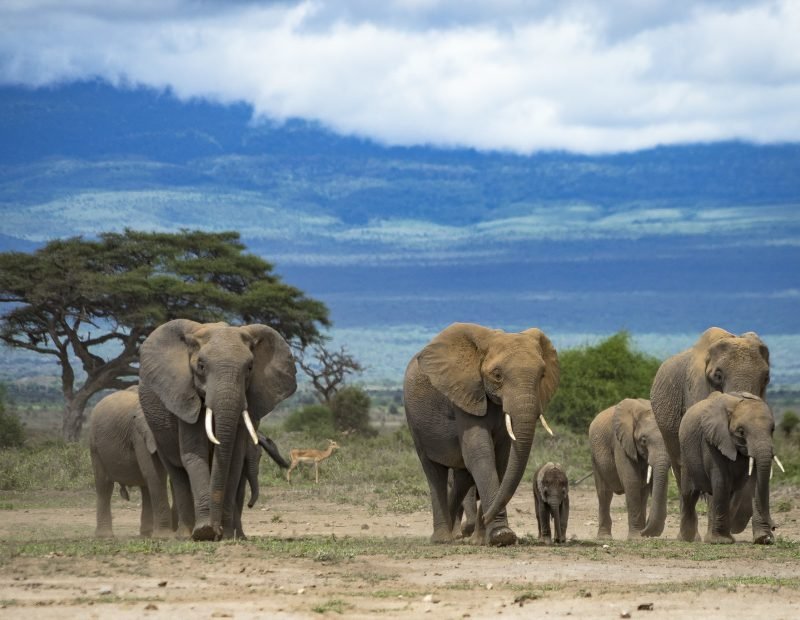
8 Day Kenya Classic Safari
Eight days across Kenya: Amboseli beneath Kilimanjaro, a walking safari on Crescent Island, cycling in Hell's Gate, rhino at Nakuru and three…
Kenya · Amboseli, Lake Naivasha, Hell's Gate, Lake Nakuru & the Masai Mara
View itinerary 8 Day Kenya Classic Safari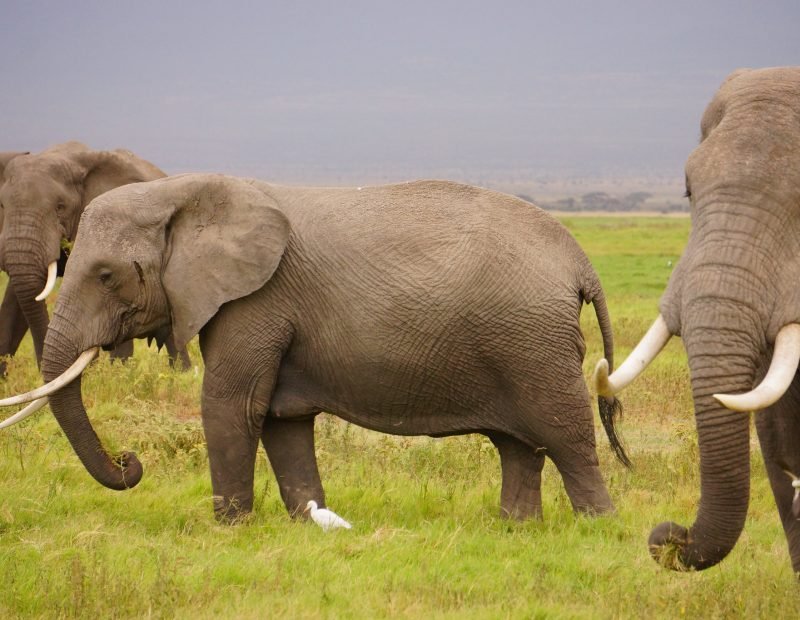
10 Day Kenya In Depth Safari
Ten days across Kenya including Samburu and its Special Five, the Rift Valley lakes, three nights in the Masai Mara and a…
Kenya · Samburu, Lake Nakuru, Lake Naivasha, the Masai Mara & Amboseli
View itinerary 10 Day Kenya In Depth SafariMount Kilimanjaro Views and When to See Them
Kilimanjaro rises to 5,895 metres about seventy kilometres south of the park, and although the mountain itself is in Tanzania, it dominates the Amboseli skyline completely.
Timing is everything. Through the middle of the day the summit is usually hidden in cloud, and visitors who arrive at midday often leave believing the mountain is a marketing invention. The reliable windows are the first hour after sunrise and the last hour before dark, when the cloud lifts or thins and the snowcap appears above the plains.
Being out early is not optional here in the way it might be elsewhere. Camps run drives from first light for exactly this reason, and the best elephant and mountain photographs are made within about forty minutes of sunrise.
The clearest months are the dry seasons from June to October and again in January and February. During the long rains the summit is often obscured for days.
Observation Hill, a volcanic outcrop rising from the plains, is one of the few places in the park where visitors can leave the vehicle. The climb takes a few minutes and gives a full circle view over the swamps, the dry lakebed and, weather permitting, the mountain.
The Swamps: Enkongo Narok, Longinye and Ol Okenya
Amboseli’s central paradox is that it is one of Kenya’s driest parks and yet it holds permanent wetlands, and the explanation is the mountain.
Snowmelt and rainfall on Kilimanjaro percolate down through porous volcanic rock and travel underground for decades before emerging as springs on the Amboseli plains. Those springs feed the swamps at Enkongo Narok, Longinye and Ol Okenya, which stay green through the harshest dry season and sustain the entire ecosystem.
Everything is connected to this water. Elephants wade chest deep to feed on the sedges, often disappearing almost entirely into the reeds. Hippo lie in the deeper channels. Buffalo graze the margins in large herds, and the predators follow.
The swamps are also where the birding concentrates, with pelicans, herons, egrets, African jacana, kingfishers and, at times, flamingos on the shallow alkaline pans.
The contrast between these green wetlands and the bone dry, dust blown plains around them is what makes Amboseli look unlike anywhere else in Kenya.
Game Drive Safaris and Other Wildlife
Game drives in Amboseli are straightforward because the country is flat and open, which makes spotting easy and long lens photography productive.
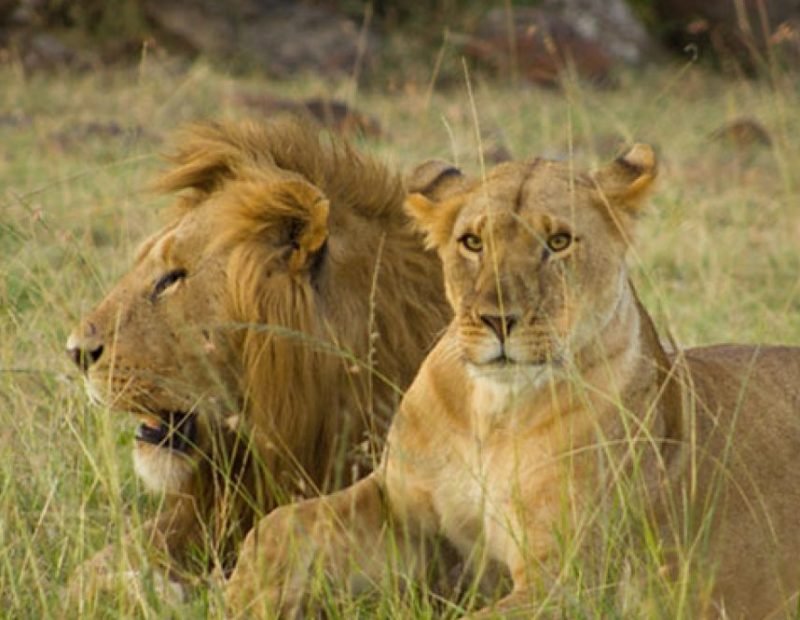
Beyond elephants, the park holds Maasai giraffe, common zebra, blue wildebeest, buffalo, impala, Grant’s and Thomson’s gazelle, waterbuck, warthog and hippo. Lion are present and seen with reasonable frequency, cheetah work the open plains, and spotted hyena are common. Leopard exist but sightings are unusual.
The dry lakebed of Lake Amboseli fills only in the wettest years and otherwise forms a pale expanse that throws up dust devils and gives the park its characteristic haze. Herds crossing that dust in low morning light is the other signature Amboseli image.
Five distinct habitats sit within the boundary: open plains, acacia woodland, rocky thorn bush, lava strewn slopes and the swamps. That variety in a park of under 400 square kilometres is why sightings come quickly here.
The water in these swamps fell as snow on Kilimanjaro decades ago and has been travelling underground ever since. Everything alive in Amboseli depends on a mountain in another country.
Birding Safaris in Amboseli
Over 500 species have been recorded, and Amboseli is designated an Important Bird Area, which surprises visitors who came only for elephants.
The swamps and pans carry the water species: great white and pink backed pelican, greater and lesser flamingo when conditions suit, yellow billed stork, sacred ibis, African jacana, herons and a wide wader list. Sinet Delta on the eastern side is the best single birding spot in the park.
Dry country species fill the plains, including kori bustard, secretary bird, ostrich, various sandgrouse and larks, and a strong raptor list with martial eagle, tawny eagle, steppe eagle on migration and several vultures.
Migrants swell the numbers considerably from November through April, which coincides with the greener months. A birding guide is worth arranging if the list matters to you, since standard game drive guides here focus almost entirely on the elephants.
Maasai Culture and the Amboseli Conservancies
The land surrounding the park belongs to Maasai communities, and the wider ecosystem depends on those community lands staying open as wildlife corridors.
Several conservancies operate on the periphery, among them Kimana, Selenkay, Elerai and Tawi. As in the Mara, these offer things the national park does not permit: night drives, walking safaris and off road driving, along with far fewer vehicles. Kimana in particular sits on a critical corridor between Amboseli and Tsavo and Chyulu Hills.
Cultural visits to Maasai bomas are offered from most camps, covering homestead layout, cattle keeping, beadwork and traditional ceremonies. As elsewhere, visits arranged through conservancy camps where the community holds the lease tend to be more genuine than those at the park gates.
Human and wildlife conflict is a live issue here, particularly around elephants raiding crops, and community guides speak about it openly. That conversation gives useful context for anyone who has spent two days photographing the same animals.
Photography in Amboseli: Getting the Kilimanjaro Shot
More people come to Amboseli mainly to photograph than to almost any other Kenyan park, and the conditions here reward planning.
The classic frame is elephants in the foreground with Kilimanjaro behind, and it demands two things to line up at once: animals in the right position and a summit clear of cloud. That combination happens most often within about forty minutes of sunrise, occasionally again at dusk, and almost never in between.
Lens choice matters more than usual. A long telephoto compresses the mountain and makes it loom, which is the look most people want, so a 200mm to 400mm range does the work. A wide lens flattens Kilimanjaro into a low ridge and is the commonest mistake first time visitors make.
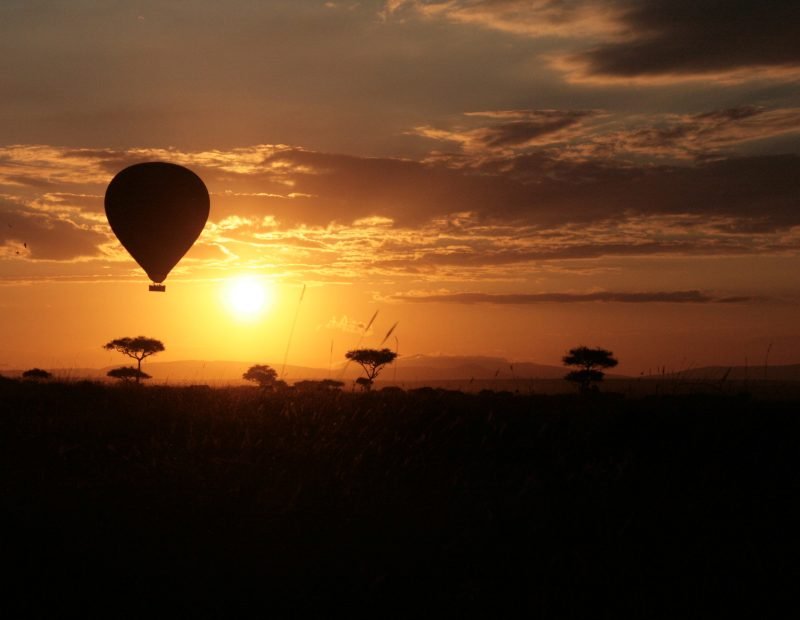
Dust is both the hazard and the asset. It gets into everything, so bring covers and clean gear nightly, but it also gives Amboseli the amber haze that makes backlit herds work so well. Shooting into low sun through dust, with elephants moving across the frame, is the other picture this park is known for.
Practically: sit still and let animals come to you rather than repositioning, keep the engine off, use a beanbag on the window frame, and be out of camp before first light rather than after breakfast.
Where to Stay in and Around Amboseli
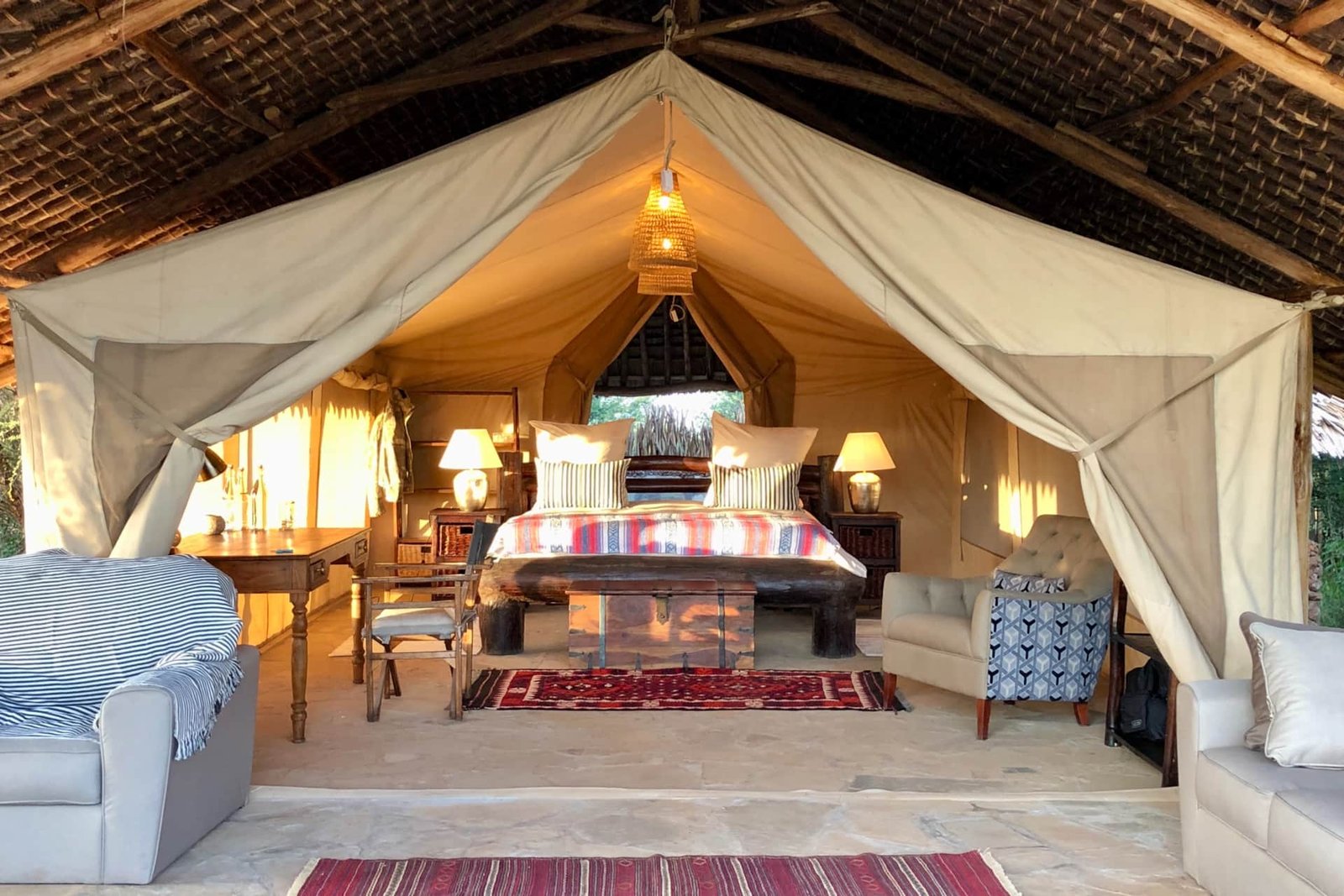
Lodges and camps operate both inside the park and on the surrounding community land, and the two offer different days.
Staying inside puts you closest to the swamps and the elephant routes, and lets you reach Observation Hill and the main circuits before the day visitors arrive from Nairobi. Several established lodges sit near the central swamps with mountain views from the rooms.
Conservancy camps on the periphery, in areas such as Kimana, Selenkay and Elerai, trade that proximity for exclusivity and for activities the national park does not allow, principally night drives, walking safaris and off road driving. For photographers and returning safari travellers this is usually the better trade.
Budget camps and community run options cluster near the gates, and Kimana town outside the eastern boundary has simpler accommodation for independent travellers.
Best Time for an Amboseli Safari
Amboseli is dry, dusty and warm for most of the year, sitting at around 1,150 metres. Season affects both game viewing and mountain visibility, which is unusual and worth planning around.
June to October, long dry season. The strongest window. Wildlife concentrates around the swamps as surrounding water dries up, Kilimanjaro is at its clearest, and the dust makes for dramatic light. Peak visitor numbers from August.
January and February, short dry season. Excellent mountain visibility, good game viewing and fewer people than the mid year peak. Many photographers prefer these months for exactly that combination.
March to May, long rains. Green country, dispersed wildlife and a Kilimanjaro summit that is often hidden for days at a time. Rates drop and the park is quiet. Birding improves considerably.
November and December, short rains. Light rain, green plains, arriving migrants and lower rates. The mountain is still often visible in the early morning, which makes this a reasonable compromise window.
Whatever the month, dust is a constant. Bring protection for camera gear, and a buff or scarf is more useful here than in most parks.
Getting to Amboseli National Park
Amboseli lies in Kajiado County around 230 kilometres southeast of Nairobi, which works out at roughly four to five hours by road. The route is tarmac to Emali and then a rougher stretch to the gates, and a high clearance vehicle is the sensible choice.
Scheduled and charter flights run from Nairobi’s Wilson Airport to Amboseli airstrip in about forty five minutes, which is how most visitors on shorter itineraries arrive.
The park’s position makes it easy to combine. Tsavo West lies immediately east, the Chyulu Hills sit between them, and the Tanzanian border is close enough that Amboseli pairs naturally with Kilimanjaro region itineraries. From Rwanda, the routing is a scheduled flight from Kigali to Nairobi and a connection from Wilson.
A two night stay is the practical minimum, giving two dawn drives and two separate chances at the mountain. Three is better if you also want a conservancy night for walking or night drives.
Amboseli rewards travellers who are in position before sunrise and who understand what the park does and does not offer. Intare Safaris runs Kenya alongside its Rwandan operations and can build Amboseli into a route with the Mara, Tsavo or the northern Tanzanian circuit, or pair it with gorilla trekking on a single East African trip.
Tell Intare Safaris whether the elephants, the mountain or the photography matters most, and they will time your drives and choose your camp so you are looking at Kilimanjaro at the hour it is actually visible.