Murchison Falls National Park is Uganda’s largest protected area, covering close to 3,900 square kilometres in the northwest and split in two by the Victoria Nile. It takes its name from the waterfall at its centre, where the entire river is forced through a gorge barely seven metres wide before dropping around 43 metres. The park is built around three activities: the Nile launch cruise, game drives on the Buligi circuit north of the river, and the hike to the top of the falls.
Wildlife numbers here are the highest of any Ugandan park, with 76 mammal species and over 450 birds recorded. It is also the most reliable big game park in the country, which is why it appears on almost every Uganda itinerary alongside the gorillas in the far southwest.
Murchison Falls and the Top of the Falls Hike
The falls themselves are the reason the park exists and they justify the reputation. The Victoria Nile, which has already run more than a thousand kilometres from Lake Victoria, meets a narrow cleft in the rift escarpment and is compressed from a river fifty metres across into a channel of about seven, before dropping into what early explorers called the devil’s cauldron.
The volume is what registers first, then the noise, which carries a long way through the bush. A permanent rainbow sits in the spray on sunny mornings, and the Fajao viewpoint at the top puts you directly above the gorge.
The top of the falls hike takes around 45 minutes to an hour from the boat landing below, climbing the gorge side on a marked path. It is steep and it gets slippery in the spray, so boots matter, but it is short and most reasonably fit visitors manage it easily.
The best way to do this is to combine it with the launch cruise. Ask to be dropped at the trailhead rather than returned to Paraa, and arrange for your driver to collect you at the top. That single piece of sequencing turns two activities into the most efficient half day in the park.
You can also drive to the top of the falls without the boat, which suits anyone short on time or unable to manage the climb. The view is the same. What you miss is coming at it from below, and the sense of scale that comes from looking up at it first.
Safari packages visiting Murchison Falls National Park
8 Day Uganda Big Five And Primates Safari
Eight days across four Ugandan parks: rhino at Ziwa, the Nile launch cruise at Murchison, chimpanzees at Kibale, the Kazinga Channel and…
Uganda · Ziwa, Murchison Falls, Kibale Forest, Queen Elizabeth & Bwindi
View itinerary 8 Day Uganda Big Five And Primates Safari
10 Day Best Of Uganda Safari
Ten days across Uganda at a sensible pace: Ziwa rhinos, Murchison Falls and the shoebill delta, Kibale chimpanzees, Queen Elizabeth, Ishasha and…
Uganda · Entebbe, Ziwa, Murchison Falls, Kibale, Queen Elizabeth, Ishasha & Bwindi
View itinerary 10 Day Best Of Uganda Safari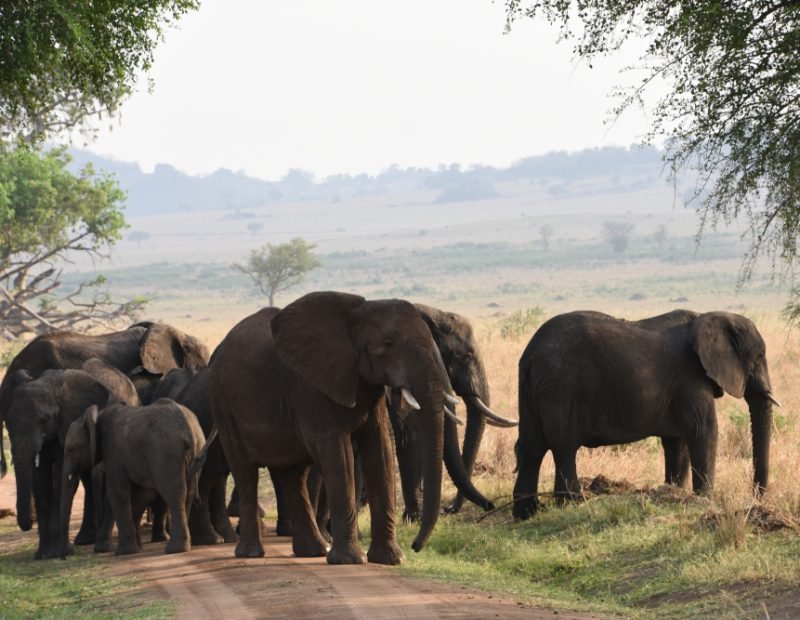
12 Day Uganda In Depth Safari
Twelve days across Uganda including a fly-in to remote Kidepo Valley, rhino at Ziwa, Murchison Falls, Kibale chimpanzees, Queen Elizabeth, Ishasha and…
Uganda · Kidepo Valley, Ziwa, Murchison Falls, Kibale, Queen Elizabeth, Ishasha & Bwindi
View itinerary 12 Day Uganda In Depth Safari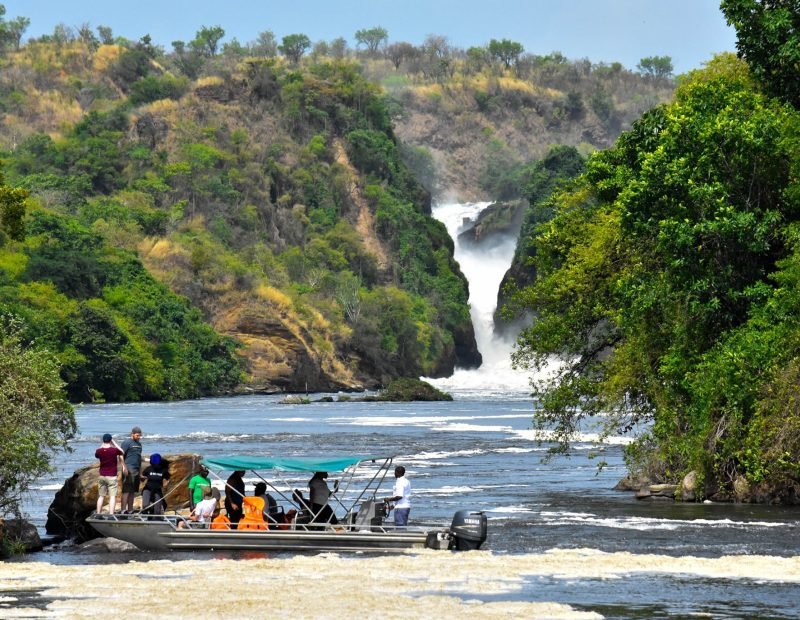
3 Day Murchison Falls Safari
Three days at Murchison Falls from Entebbe: rhino tracking on foot at Ziwa, the Nile launch cruise, the hike to the top…
Uganda · Murchison Falls National Park & Ziwa Rhino Sanctuary
View itinerary 3 Day Murchison Falls Safari
12 Day Uganda And Rwanda Wildlife And Gorillas Safari
Twelve days across Uganda and Rwanda: Ziwa rhinos, Murchison Falls, Kibale chimpanzees, Queen Elizabeth, gorillas in Bwindi and golden monkeys in the…
Uganda & Rwanda · Murchison Falls, Kibale, Queen Elizabeth, Bwindi, Volcanoes National Park & Kigali
View itinerary 12 Day Uganda And Rwanda Wildlife And Gorillas SafariNile Launch Cruise to the Base of the Falls
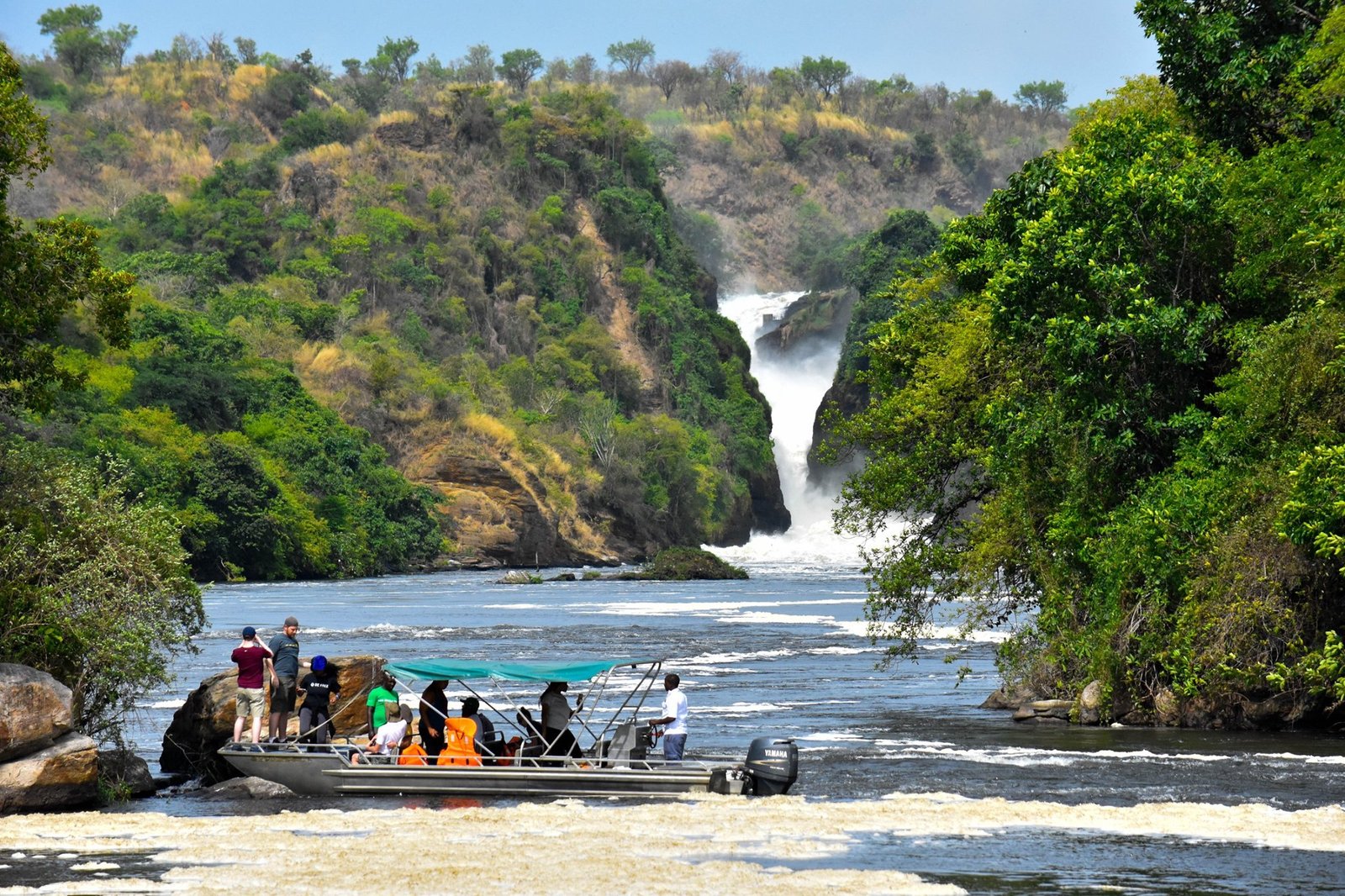
The launch cruise upstream from Paraa is the activity the park is built around, and it has been running since the late 1950s. Boats work against the current for roughly three hours there and back, stopping wherever there is something to look at, which is more or less continuously.
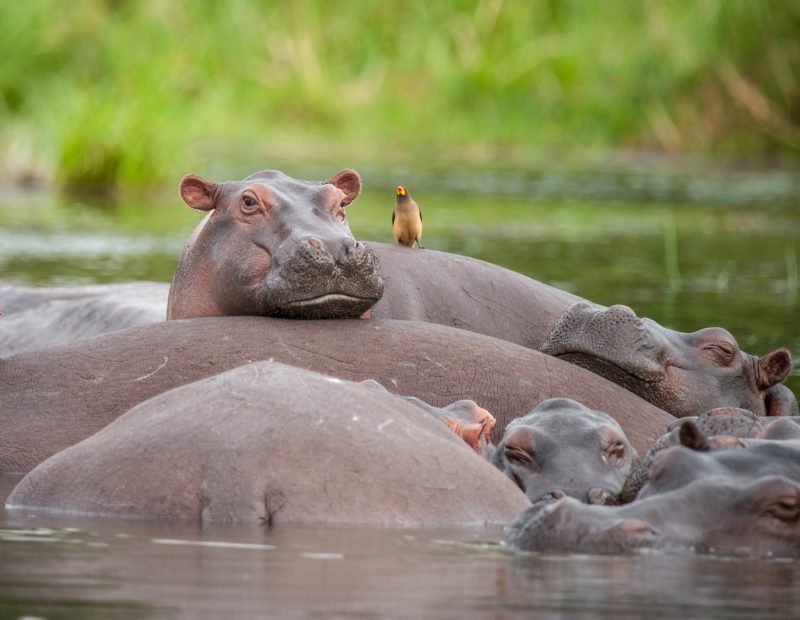
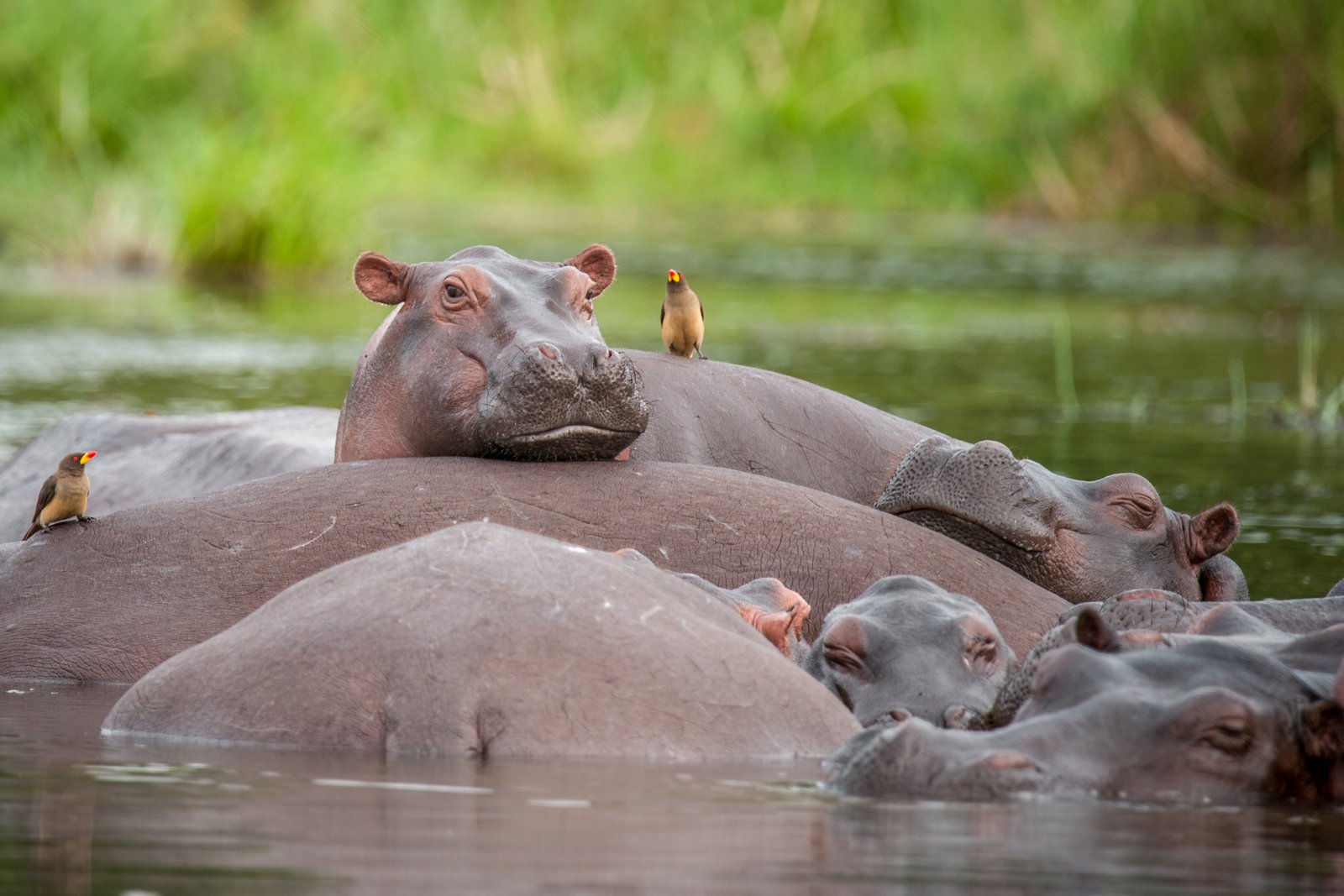
Hippo pods line the route in serious numbers. Nile crocodiles, some of them very large, lie on the sandbanks. Elephant and buffalo come down to drink on both banks, waterbuck and bushbuck work the margins, and the birding from the water is constant.
The cruise ends about a hundred metres from the base of the falls, where the boat holds position in the churn and the spray reaches you. Seeing that volume of water from below, rather than looking down at it, is the part people remember.
Double deck boats are used and departures run morning and afternoon. Afternoon cruises give better light and more animals at the water. Private charters are available and worth it for photographers who want control over position and timing.
Nile Delta Boat Cruise and the Shoebill
The second boat trip runs the other way, downstream from Paraa some twenty kilometres to where the Victoria Nile spreads into papyrus channels and enters Lake Albert. It takes around three hours, sometimes longer, and it is a completely different outing from the launch cruise.
This is the best shoebill water in Uganda and possibly in Africa. The bird stands motionless in the papyrus waiting for lungfish, and it often follows hippo trails through the floating vegetation because the disturbed water makes fishing easier. Guides know which channels have produced recently.
Sightings are never guaranteed and the dry season improves the odds considerably, as receding water concentrates both fish and birds.
Beyond the shoebill, the delta gives elephant, buffalo and Rothschild’s giraffe on the banks, plus a heavy waterbird list including African skimmers, pelicans, saddle billed storks and herons. Morning departures suit birders. Late afternoon runs work as a sundowner cruise, and the light across the delta is the best in the park.
Game Drive Safaris on the Buligi Circuit
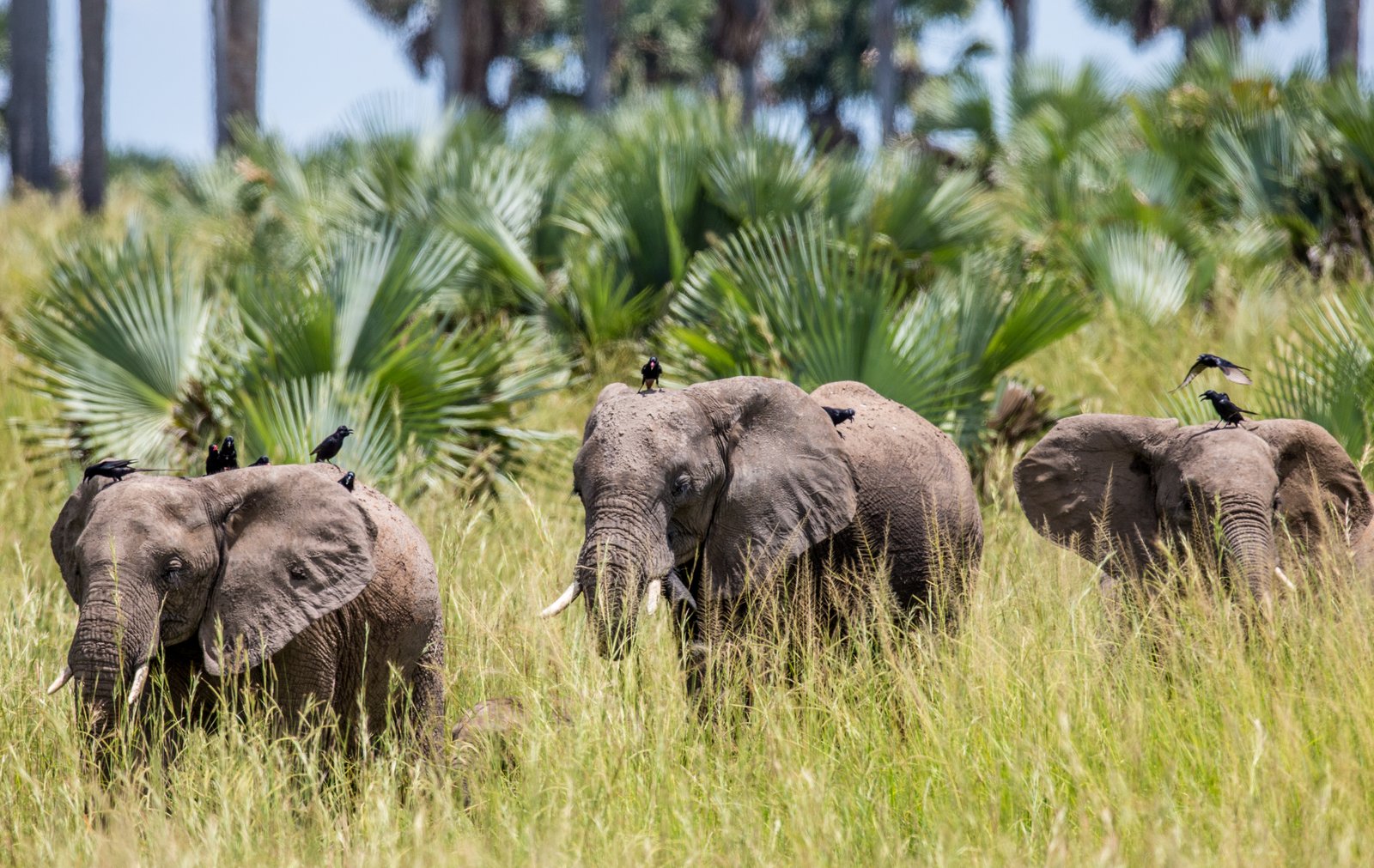
North of the river, the Buligi circuit gives the strongest game viewing in Uganda. Buligi is a peninsula roughly ten kilometres wide, a triangle of open grassland studded with Borassus palms between the Victoria Nile flowing into Lake Albert and the Albert Nile flowing out of it.
A dawn start here is the best wildlife morning most visitors will have in the country. Elephant number well over a thousand across the park. Uganda kob run into five figures. Buffalo herds reach into the low thousands, and the lion population sits at roughly 150 to 200 animals across fifteen to twenty prides.
Rothschild’s giraffe are the species that makes this park distinctive. Once close to extinction, the Murchison population has recovered strongly and now numbers well over a thousand, making this the stronghold for the subspecies. Herds of them moving between palms in early light is the defining image of the park.
Several tracks make up the circuit. The Queen’s Track, at around ten kilometres, is the shortest and smoothest and often the most productive for game. The Albert Nile Track runs twelve kilometres north through acacia patches that suit birders. Leopard is present and occasionally seen, and hyena work the plains.
Access is by ferry across the river at Paraa, which runs to a schedule, so check crossing times when planning an early start.
The whole Victoria Nile, squeezed into a gap you could almost jump across, dropping forty three metres into a cauldron you can hear before you can see.
Chimpanzee Trekking in Budongo Forest
Budongo Forest sits in the southern part of the park and is one of the largest mahogany forests in East Africa, holding a chimpanzee population that has been studied for decades.
Chimpanzee trekking here runs from Kaniyo Pabidi, with morning and afternoon departures. Communities are habituated and sightings are reasonable, though this forest is dense and the chimps range widely, so the walking can be long.
Budongo also offers a chimpanzee habituation experience for those wanting a full day with a group still going through the process, alongside researchers.
Birding here is excellent and Budongo is a well known site for forest species, including the chocolate backed kingfisher, Puvel’s illadopsis and several greenbuls that are difficult elsewhere. The Royal Mile, a straight forest track near Busingiro, is one of the most famous birding walks in Uganda.
Because Budongo sits on the southern access road, it slots into the drive rather than requiring a detour.
Rhino Tracking at Ziwa on the Way
Ziwa Rhino Sanctuary lies on the road between Kampala and Murchison Falls and is the only place in Uganda to see wild rhino, which were poached out of the country entirely during the 1970s and 1980s.
Tracking is done on foot with rangers, walking through the bush to find a group and observing from a safe distance. Coming across a rhino at ground level rather than from a vehicle is a different experience entirely, and the guides explain the breeding programme and the plan to eventually reintroduce animals into national parks.
Ziwa also holds shoebill in its swamp, reachable by canoe, plus good general birding and night walks.
Practically, Ziwa is what completes the Big Five for anyone doing the Ugandan circuit, since rhino exist nowhere else in the country. It breaks the long drive north usefully and takes about two hours.
Birding Safaris in Murchison Falls National Park
Over 450 species have been recorded, and the mix of river, delta, savannah and forest gives a varied list within a small area.
The delta. Shoebill above all, plus African skimmer, goliath heron, saddle billed stork, great white pelican and papyrus specialists in the channels. The single best birding session in the park.
The savannah. Abyssinian ground hornbill, secretary bird, black bellied bustard, silverbird, red throated bee-eater colonies nesting in the riverbanks and a strong raptor list including martial eagle.
Budongo Forest and the Royal Mile. Forest specialists in numbers, with chocolate backed kingfisher, Puvel’s illadopsis, white thighed hornbill and Ituri batis among the targets. A different list entirely from the open country.
Timing. Migrants swell numbers from November through April. The dry months improve shoebill odds on the delta as water recedes. October and November balance the two reasonably well.
Hot Air Balloon Safaris and Sport Fishing
Two activities set Murchison apart from most Ugandan parks.
Hot air balloon safaris launch before dawn over the plains north and west of Paraa, drifting over the Borassus country with giraffe, elephant and kob below, and finishing with a bush breakfast. Uganda has few balloon operations and this is the most established, which makes it a genuine reason to choose Murchison over another savannah park.
Sport fishing runs on the Nile below the falls, principally for Nile perch, which reach very large sizes in the turbulent water at the base of the drop, along with tigerfish. It is catch and release under permit, arranged with the wildlife authority, and the setting alone justifies the morning even for people who do not usually fish.
Karuma Falls at the eastern end of the park is worth a stop on the drive in, a long stretch of rapids rather than a single drop.
Best Time for a Murchison Falls Safari
Murchison sits at low altitude and is the warmest of Uganda’s main parks. Season affects the roads and the sightings more than the comfort.
December to February, dry season. The strongest window. Grass is short on Buligi, animals concentrate along the river, and the receding delta water improves shoebill odds. Hot by midday.
June to September, second dry period. Also very good, with firm tracks and reliable game viewing. Busier, since it overlaps with peak gorilla trekking further south.
March to May, long rains. Tall grass makes spotting harder and some tracks become difficult. Green country and better light, with migrants arriving and lower rates. Boat cruises run regardless.
October and November, short rains. Afternoon showers, quiet park and arriving migrants. A reasonable compromise for anyone combining wildlife with birding.
Getting to Murchison Falls National Park
Murchison is in the northwest, which makes it the furthest of Uganda’s main parks from the gorilla country in the southwest, and that distance drives most itinerary decisions.
From Entebbe or Kampala the drive is around 300 kilometres and five to six hours to the southern gates, usually broken at Ziwa Rhino Sanctuary. Budongo Forest sits on the same road.
Domestic flights run from Entebbe to Pakuba, Chobe and Bugungu airstrips inside or beside the park, cutting the day to roughly an hour and a half. For travellers with limited time this is the sensible option, and it makes a two night Murchison stay realistic.
From Kigali the drive is long, normally two days with an overnight en route, so most Rwanda based itineraries that include Murchison use a domestic flight from Entebbe or Kajjansi rather than driving the whole way.
Paraa is the hub, with park headquarters, the boat jetty and the ferry linking the north and south banks. Accommodation runs from campsites and community bandas through mid range lodges to high end camps on both sides of the river, and staying north of the ferry saves you a crossing before a dawn game drive.
Murchison is the park where routing decides how much of it you actually see, since a badly planned visit can lose half a day to ferry timings and driving. Intare Safaris runs the Uganda circuit alongside its Rwandan operations and can work out whether flying in makes more sense than driving for your dates, and how Murchison fits with Kibale, Queen Elizabeth and the gorillas.
Let Intare Safaris know how many days you have in Uganda and whether the falls, the shoebill or the big game matters most, and they will build the north into your trip without wasting your time on the road.