
5 Day Uganda Gorillas And Chimpanzees Safari
Uganda · Kibale Forest, Queen Elizabeth Ishasha Sector & Bwindi Impenetrable National Park
- 5 days, 4 nights
- Customisable itinerary
- Private departure
Trip overview
Both great apes in five days, in the two forests that do them best. Chimpanzees at Kanyanchu in Kibale, where the community has been tracked since the early 1990s and the odds are the strongest in the region, then south through the Ishasha sector with a game drive for the tree climbing lions, and mountain gorillas in Bwindi. We finish in Kigali rather than Entebbe, which turns a ten hour departure drive into four or five and is the single change that makes this trip work at five days.
Customise this trip for a perfect match
-
Private and tailor-made Your own vehicle, driver guide and pace. Nothing on this page is fixed — days can be swapped, added or dropped.
-
Routed by people who drive it Every itinerary here was planned by someone who has driven the road, and the planner who answers you is the one who builds it.
-
Licensed and accredited Registered with the Rwanda Development Board and a member of the Rwanda Tours and Travel Association.
-
Support while you travel One number reaches the Kigali office around the clock for the whole time you are on the ground.
A draft itinerary costs nothing and commits you to nothing. Tell us what you would change and a planner rewrites it as many times as it takes.
The route
- Start and finish
- Starts in Entebbe, ends in Kigali
- Length
- 5 days, 4 nights
- How it runs
- Both great apes, one border crossing
- Countries
- Uganda
Itinerary
Day 1
Entebbe To Kibale Forest National Park
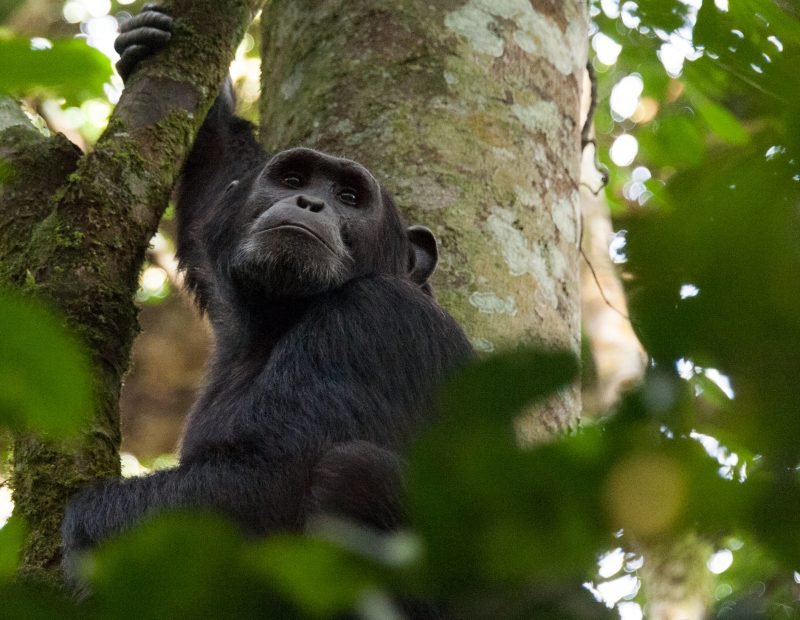
Our driver guide collects you at Entebbe and we head west, out through Kampala and on towards Fort Portal, roughly 320 kilometres over five to six hours with lunch on the way. The country changes steadily, cultivated hills giving way to tea estates, with the Rwenzori range showing on the horizon in clear weather. Nearing Kibale we drop into the crater lake country, dozens of steep sided volcanic craters holding deep green water among banana groves and tea. Kibale protects around 795 square kilometres of moist evergreen rainforest and holds thirteen primate species, the highest density in East Africa, which is why it gets called the primate capital. We check you in near Kanyanchu or on a crater rim and go through tomorrow with you over dinner. One thing worth knowing: Kibale briefs in the morning rather than before dawn, unlike the chimp forests in Rwanda, so tonight is a reasonable one and you will not be leaving in the dark.
Day 2
Chimpanzee Trekking At Kanyanchu And The Bigodi Wetland
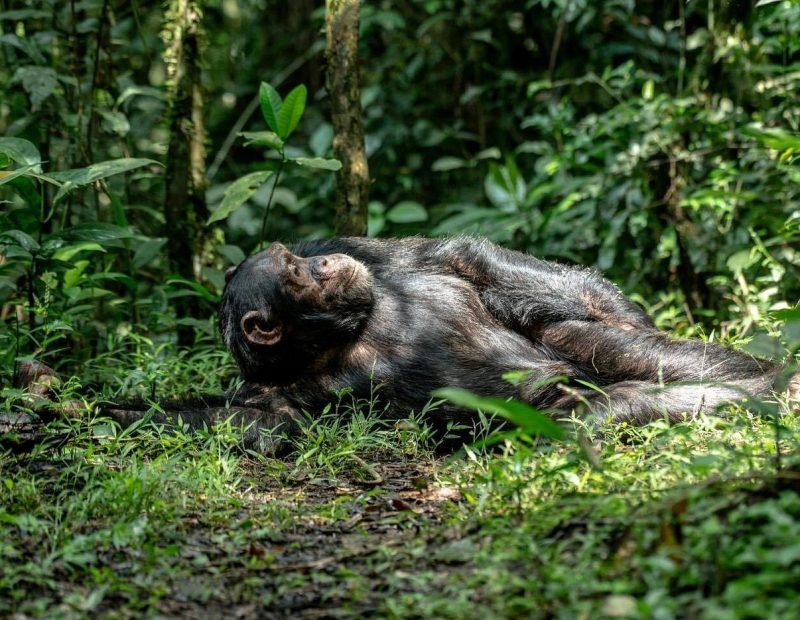
To the Kanyanchu visitor centre for the morning briefing, then into the forest with Uganda Wildlife Authority rangers who track by listening for pant hoots and finding the nests built the previous evening. The ranger carries a rifle, which is for warning off forest elephant rather than the primates. Roughly 1,500 chimpanzees live in Kibale, the largest population in Uganda, and the Kanyanchu community has been tracked since 1993. The ground here is gently rolling rather than the steep ridges of other chimp forests, so the walking is brisk rather than punishing, and the whole trek runs around three hours with one hour with the community once they are found. In the afternoon, Bigodi Wetland Sanctuary just outside the park, community managed with revenue funding local schools and healthcare, holding eight primate species and around 138 birds. The great blue turaco is the one everybody wants and usually gets.
Day 3
South Through Queen Elizabeth And The Ishasha Sector To Bwindi
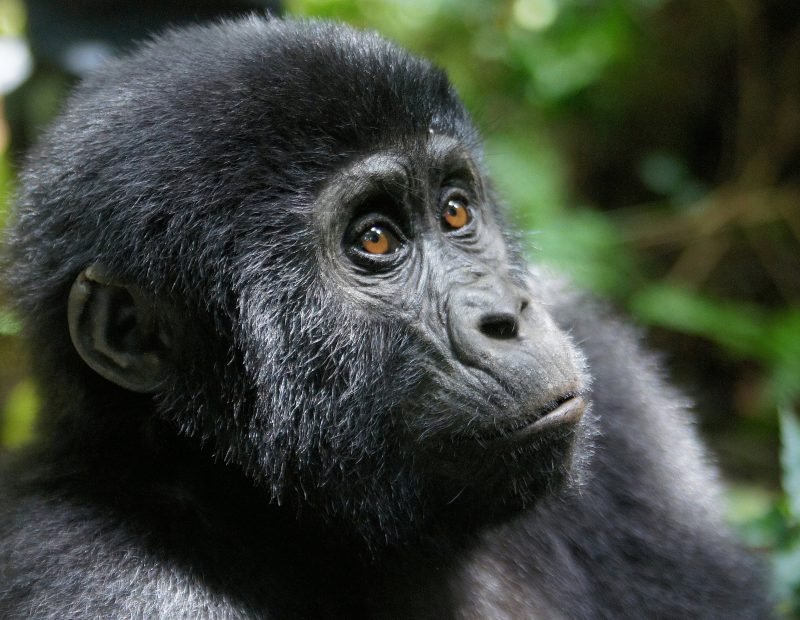
The transfer day, and we make it earn its keep by driving through a national park rather than around one. South from Kibale towards Queen Elizabeth, then into the remote Ishasha sector for a game drive on the way through. Lions here habitually climb trees and drape themselves along the branches of large fig and acacia through the heat of the day, behaviour seen regularly in only a handful of places on earth, and the males carry dark manes. Nobody can promise you one, since it depends where the prides are that week, but working the fig trees with a picnic lunch is a good deal better than six hours of tarmac. Topi are common here and scarce elsewhere in the park, along with elephant and buffalo. Total driving time runs six to seven hours including the game drive. We reach Bwindi in the late afternoon and check in near your allocated sector. Pack your daypack tonight.
Day 4
Mountain Gorilla Trekking In Bwindi
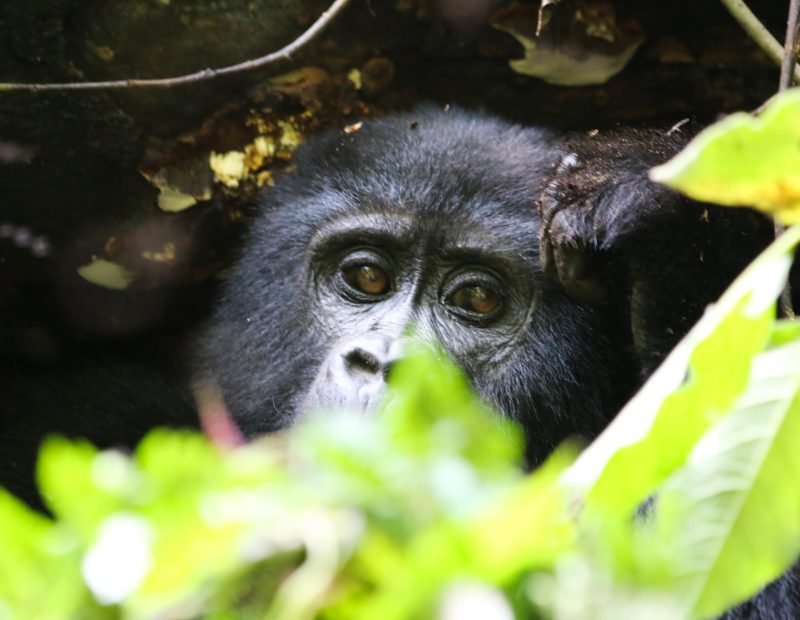
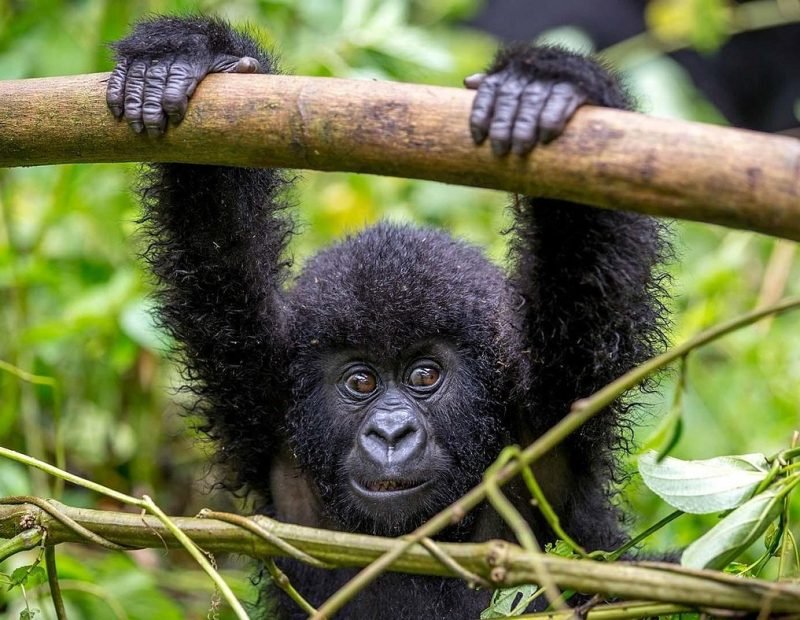
Breakfast early, then to the sector briefing station for half past seven. Uganda Wildlife Authority rangers cover the rules and split everyone into groups of eight trekkers per gorilla family: keep the minimum distance, which Uganda’s guidance now sets at around ten metres, no flash, no eating in their presence, voices low, and nobody treks with a cold. Trackers went out at first light and are already with the families. Then into the forest, and Bwindi is harder walking than most people expect, a constant sequence of steep ridges and deep valleys with rangers cutting through the tangle ahead of you. Treks run anywhere from one to six hours. Bwindi covers about 331 square kilometres, has been continuously forested for something like 25,000 years and shelters roughly 459 mountain gorillas, close to half the world population. When you reach the family, one hour. Hire a porter; on this ground it is close to compulsory.
Day 5
Batwa Cultural Walk And Return To Kigali
A slower morning before the border. The Batwa lived in this forest as hunter gatherers for thousands of years and were moved out when the park was gazetted in 1991. The Batwa cultural walk is led by Batwa guides who demonstrate hunting techniques, fire making, medicinal plant use and shelter building, and who talk about life inside the forest and what changed afterwards. It is genuinely informative and it is not a comfortable story, which is as it should be. Afterwards we take the road south to the Cyanika or Katuna border, where our guide handles the vehicle paperwork and walks you through immigration, then on through the Rwandan hills to Kigali. Total driving time runs four to five hours including the crossing, which is why we end here rather than back at Entebbe, where the same day would run to ten. Drop off at the airport for an evening flight, or at your hotel if you are staying on. If you would rather finish in Uganda we can route you to Entebbe instead, though it costs you most of a day.
Send them the itinerary before you decide. Everything on this page prints on to a few clean pages with the photographs and the day notes intact.
Quickly customise this itinerary
What is and is not included
Included
- Uganda gorilla trekking permit for Bwindi Impenetrable National Park, one per person
- Chimpanzee trekking permit for Kibale Forest National Park
- Park entry fees for Kibale, Queen Elizabeth and Bwindi
- Game drive through the Ishasha sector on the transfer day
- Bigodi Wetland Sanctuary guided walk and the Batwa cultural walk
- All road transfers in our 4×4 safari vehicle with a pop up roof and a driver guide
- Airport pickup at Entebbe and drop off at Kigali International Airport
- Vehicle documentation and assistance at the border crossing
- Two nights at Kibale and two at Bwindi at your chosen tier
- Meals as shown, packed lunch on the Ishasha day and drinking water in the vehicle
- Park ranger and tracker fees for both treks, and all government taxes and levies
Not included
- International flights into Entebbe and out of Kigali
- Ugandan and Rwandan visas, or the East Africa Tourist Visa covering both
- Travel insurance, including cover for trekking at altitude
- Porter hire at both trailheads, payable on the day and strongly recommended
- The full day chimpanzee habituation option at Kibale, which replaces the standard trek on request
- Gorilla habituation in the Rushaga sector, quoted separately
- Tips for our guide, rangers, trackers, porters and lodge staff
- Drinks, laundry and personal items
- Anything not listed under What’s Included
Before you book
Why Would You Want To Do This Safari?
Because the two great apes are nothing like each other and doing both in one week makes each one clearer. Gorillas settle, feed and let you watch, and the hour passes in near silence. Chimps move fast, climb, call across the forest and are gone, and you come out of Kibale with dirt on your knees and a much better sense of what habituation actually means. Uganda is the best country in which to do both, because Kibale gives the most dependable chimp sightings anywhere in the region and Bwindi holds roughly half the world’s mountain gorillas across more habituated families than any other park. The routing is the other argument. Driving through Ishasha on the transfer day turns six hours of road into a game drive with a shot at tree climbing lions, and ending in Kigali rather than Entebbe saves you most of a day. Five days is tight, and this is the shape that makes it work.
Is This 5 Day Uganda Safari Enough?
For both great apes, yes, and this is the shortest sensible itinerary that covers them properly. Each forest gets a full day, the transfer between them is broken by a game drive rather than driven straight through, and the finish in Kigali removes the long haul back east. What five days cannot include is Queen Elizabeth itself. You drive through Ishasha but you do not get the Kasenyi plains, the Kazinga Channel boat cruise or the crater drive, which are the park’s three signature outings and need two nights of their own. Adding them makes this a seven day trip and is the most common upgrade we book. The other addition is habituation. Kibale offers a full day with a community still being habituated, and Bwindi’s Rushaga sector offers four hours with a gorilla family under the same arrangement, limited to four visitors a day. Either deepens the trip considerably without adding a night.
How Much Will This Safari Cost?
Two permits sit at the centre of this trip, both set by the Uganda Wildlife Authority and identical wherever you book, with the gorilla permit the larger by a wide margin. It remains meaningfully below the Rwandan equivalent, which is why so many travellers cross for it. Beyond the permits, accommodation is the main variable: Kibale runs from community bandas to high end crater lake lodges, and Bwindi from rest camps to lodges on the forest edge, with sector choice affecting both price and how far you drive on trekking morning. Group size counts, since a vehicle and driver guide shared between four costs each of you far less than between two. Visas are extra and the East Africa Tourist Visa covers both countries on one document. Send our team your dates and numbers for a firm quote with permits held.