
9 Day Serengeti Wildebeest And Rwanda Gorillas Fly-In Safari
Tanzania & Rwanda · Serengeti National Park, Kigali & Volcanoes National Park
- 9 days, 8 nights
- Customisable itinerary
- Private departure
Trip overview
The Great Migration and the mountain gorillas in nine days, which is only possible by air. Three nights in the Serengeti, with the camp positioned by season for wherever the herds should be, reached by light aircraft rather than a five hour drive. Then a flight to Kigali and two nights at Volcanoes National Park for a gorilla trek and a golden monkey morning. Around 1.5 million wildebeest at one end of the trip and an hour at seven metres from a gorilla family at the other.
Customise this trip for a perfect match
-
Private and tailor-made Your own vehicle, driver guide and pace. Nothing on this page is fixed — days can be swapped, added or dropped.
-
Routed by people who drive it Every itinerary here was planned by someone who has driven the road, and the planner who answers you is the one who builds it.
-
Licensed and accredited Registered with the Rwanda Development Board and a member of the Rwanda Tours and Travel Association.
-
Support while you travel One number reaches the Kigali office around the clock for the whole time you are on the ground.
A draft itinerary costs nothing and commits you to nothing. Tell us what you would change and a planner rewrites it as many times as it takes.
The route
- Start and finish
- Starts at Kilimanjaro, ends in Kigali
- Length
- 9 days, 8 nights
- How it runs
- Three flights, three Serengeti nights
- Countries
- Cross-Border, Rwanda, Tanzania
Itinerary
Day 1
Arrival At Kilimanjaro And Arusha
Our driver guide meets your flight at Kilimanjaro International Airport and takes you the short distance to Arusha, which sits at around 1,400 metres beneath Mount Meru and is considerably pleasanter than starting with a long drive. The afternoon is yours. If you land early we can fill it: the cultural heritage centre and the Arusha Declaration Museum both give useful context for the country, and the coffee estates on the lower slopes of Meru run plantation visits. Otherwise, sleep off the flight. Our guide will run through the nine days with you over dinner, confirm your flight times and check what you have packed, particularly warm layers for early Serengeti mornings, dust protection for camera gear and boots for the gorilla trek later in the week, which should already be worn in rather than new. Light aircraft carry strict luggage limits, usually around fifteen kilograms in a soft bag with no rigid frame, so we will check that too.
Day 2
Fly To The Serengeti
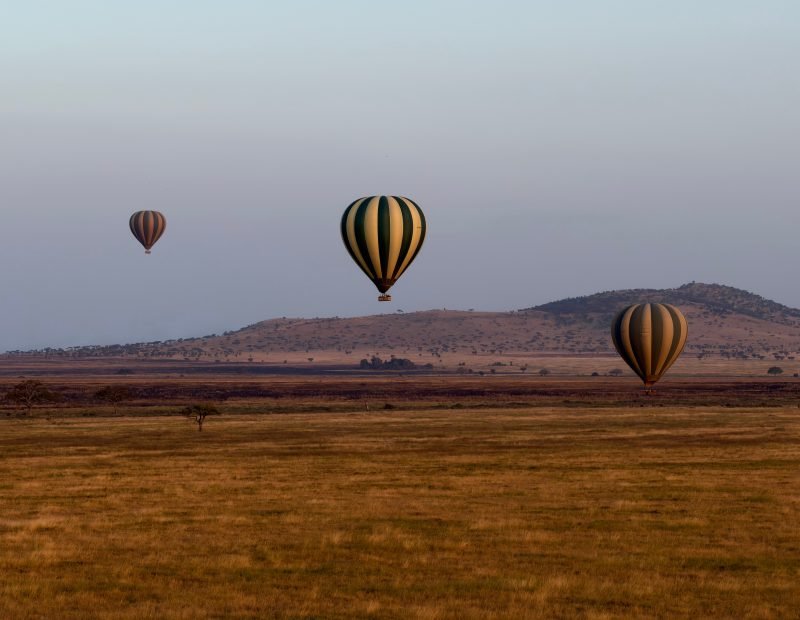
A transfer to the airstrip and a light aircraft flight straight into the region of the Serengeti where the herds should be for your dates. The flight takes roughly an hour and a half depending on the destination, against a full day by road, and the view on the way in explains the park better than any description. The Serengeti covers roughly 14,750 square kilometres and was listed by UNESCO in 1981. The name comes from the Maa word siringet, meaning endless plains. Your camp meets the plane at the strip and you are game viewing by early afternoon. Granite kopjes rise from the grass, weathered outcrops that hold rainwater in their hollows and serve as lookouts and den sites for lion. Dinner in camp, with our guide planning tomorrow around the most recent sightings rather than a fixed route. Our guide will talk you through what to expect before you set out.
Day 3
A Full Day In The Migration Region
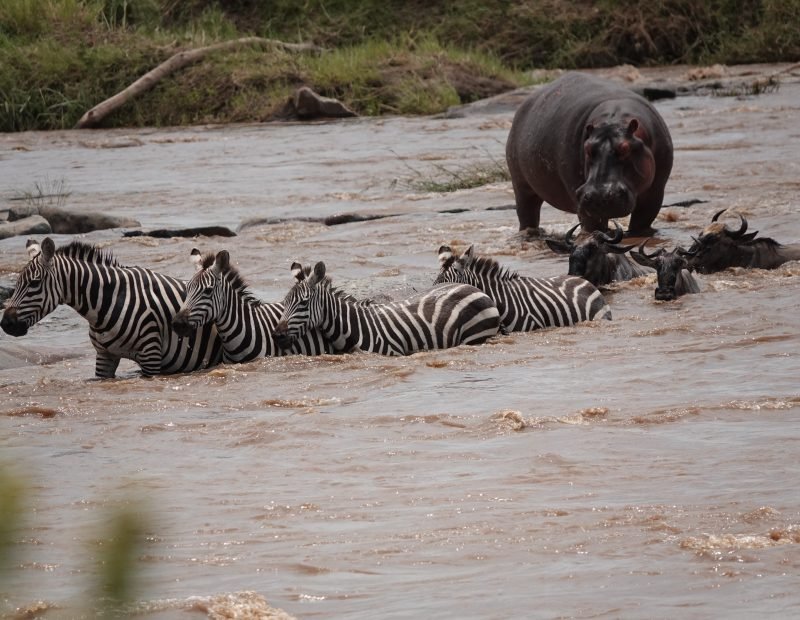
The Great Migration is a continuous circuit driven by rainfall rather than a fixed event, so where we work depends entirely on your dates. From December to March the herds calve on the southern plains around Ndutu, where roughly half a million calves are born within a few weeks, as many as eight thousand a day at the peak, and every predator in the region converges on them. From around May to July they mass in the Western Corridor and cross the Grumeti, where the crocodiles have grown enormous on an annual delivery. From July to October they work the Mara River in the north around Kogatende and Lamai. Around 1.5 million wildebeest move with several hundred thousand zebra and Thomson’s gazelle alongside them. Nobody can promise a river crossing, since herds gather at a bank for hours and then walk away, but three nights in the right region gives you the time to wait properly.
Day 4
A Second Full Day In The Serengeti
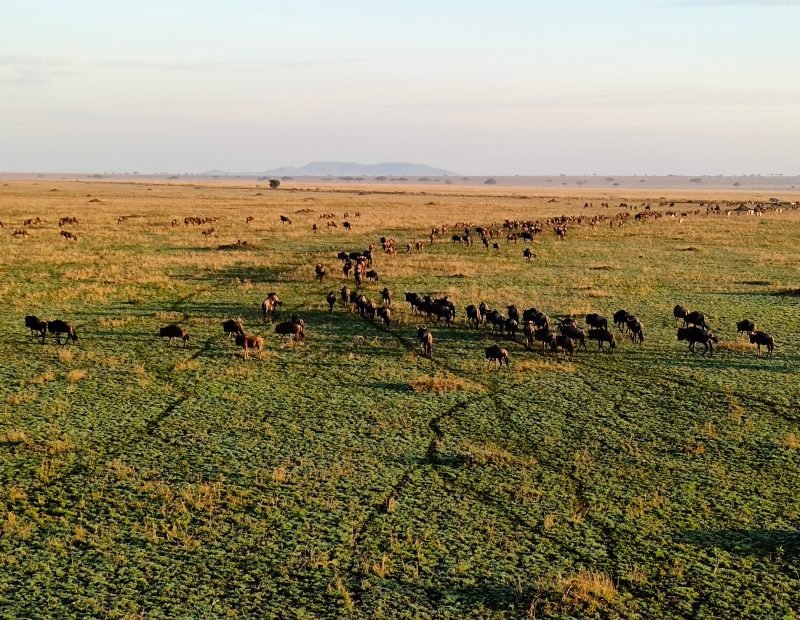
Time is what a three night stay buys, and today is where it pays. Herds gather at a riverbank for hours and then walk away; predators hunt at dawn and sleep by nine. Having a second full day in the same region means you can wait, and waiting is how the good sightings happen. If the migration is quiet we work the resident wildlife, which is exceptional in its own right: the Seronera river valley holds permanent water and with it resident prides, leopard along the riverine forest often draped in the big sausage trees, and cheetah on the open ground. A hot air balloon flight is worth arranging in advance for one of these mornings, launching before dawn, drifting low over the plains and finishing with a bush breakfast cooked in the open. It needs booking well ahead in high season and is weather dependent, so occasionally cancelled. Timings shift a little with the season, and we adjust on the day rather than sticking to a schedule.
Day 5
The Serengeti To Kigali By Air
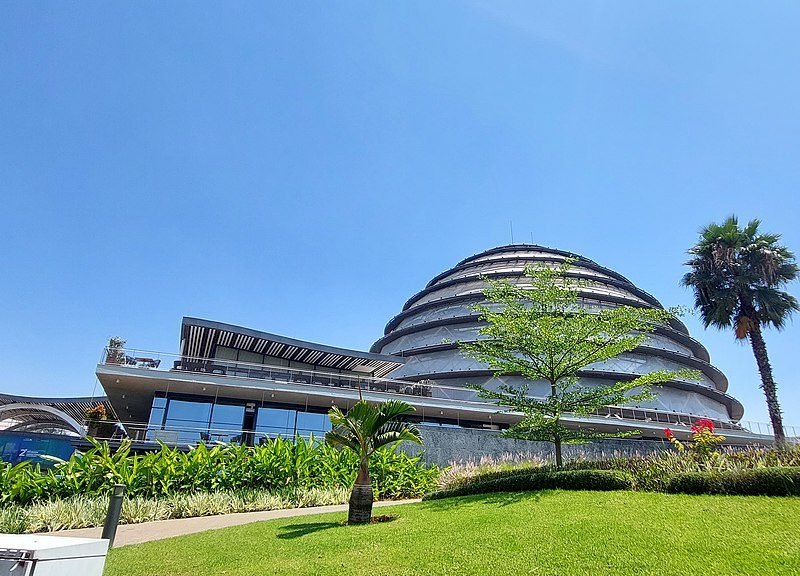
One last game drive at dawn, when the light is at its best and the predators are still moving, then back to camp for breakfast and a shower before the transfer to the airstrip. The flight to Kilimanjaro takes roughly an hour and a half and gives you a final look at the plains from above, with the herds and the kopjes shrinking beneath you. From Kilimanjaro we connect you onward to Kigali, a little over an hour, and you land in Rwanda in the afternoon. The change is complete: from open Tanzanian plains to a small hilly country of terraced ridges. We take you to the Kigali Genocide Memorial at Gisozi, resting place of more than 250,000 victims of the 1994 genocide against the Tutsi. Allow three hours for the memorial and expect it to stay with you; nobody should go from Gisozi straight out to dinner. Overnight in the capital.
Day 6
Kigali To Volcanoes National Park
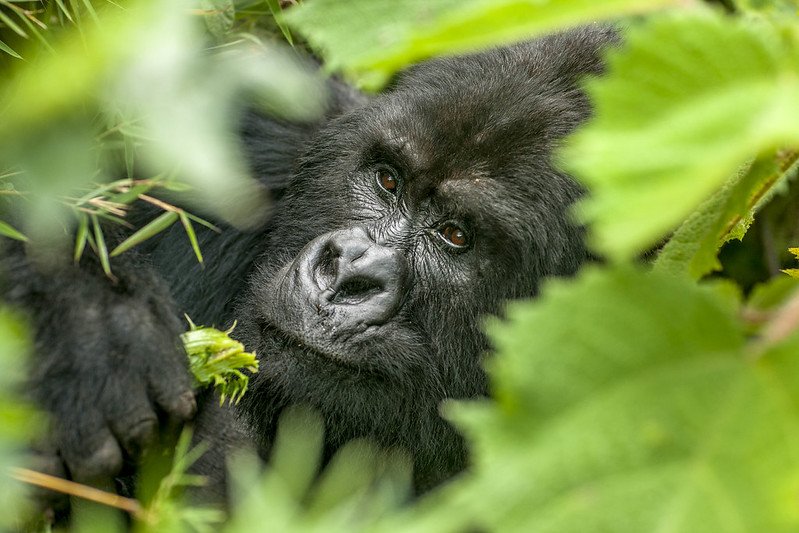
North out of the capital, the road climbing through hills terraced to the ridgeline with beans, potatoes and pyrethrum, past roadside markets and bicycle taxis stacked with bananas. After two to two and a half hours the Virunga chain appears ahead, five volcanoes with cloud usually sitting on the shoulders of Sabyinyo and Muhabura. In the afternoon we visit the Gorilla Guardians village near Kinigi, founded by a former warden of Volcanoes National Park who wanted paid work for people who had been poaching inside it. You get Intore dance and drumming, traditional medicine, archery and banana beer, and more usefully the conversation about what poaching paid and what tourism replaced it with. Check in near Kinigi, close to park headquarters so tomorrow does not start with an extra hour in the vehicle. Dinner early, boots by the door, bag packed tonight rather than in the dark, since you will be leaving before five.
Day 7
Mountain Gorilla Trekking In Volcanoes National Park
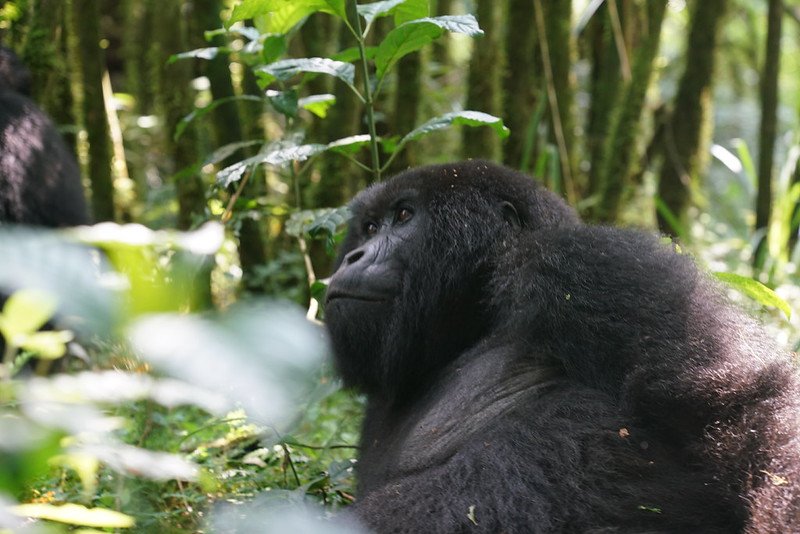
You leave in the dark. Kinigi is cold at six, mist on the peaks, dancers performing while everyone assembles and coffee going round. Trackers went out at first light and are already sitting with the families, radioing positions back, which is why treks now take a fraction of the time they once did. The briefing runs at seven. Rangers split you into groups of eight trekkers per gorilla family and go through the rules: seven metres back, no flash, mask on during the hour, nobody treks with a cold. Then out through farmland to the boundary wall and into bamboo and nettles. Volcanoes National Park was gazetted in 1925 and is the oldest national park in Africa, and the massif holds more than half the world’s mountain gorillas. You get one hour, and it goes faster than anyone expects. Hire a porter at the trailhead; it is the best decision most trekkers make. Afternoon at the lodge with your feet up.
Day 8
Golden Monkey Tracking And The Twin Lakes
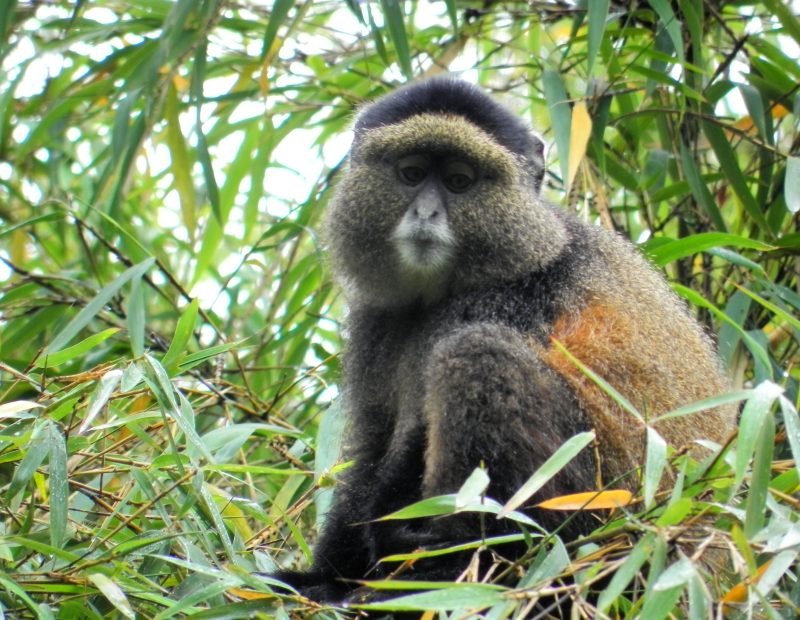
A gentler day and a good counterpoint to yesterday. We start at Kinigi for the seven o’clock briefing and golden monkey tracking in the lower bamboo at the foot of Sabyinyo, a bright orange and gold guenon found only in the Virunga region and nowhere else on earth. Two habituated troops are open to visitors, each running to around eighty to a hundred animals, and the walking is easy compared with yesterday, usually under an hour on level ground. You get an hour with them, though stillness is not part of the arrangement; where the gorillas settled and let you watch, these crash through bamboo, drop, regroup and vanish. Photographers find them maddening and everyone else laughs a great deal. In the afternoon, the Twin Lakes at Burera and Ruhondo, where a local boat works the shoreline with the volcanoes standing behind the water. It is the most relaxed half day in northern Rwanda and asks nothing of your legs.
Day 9
Musanze To Kigali And Departure
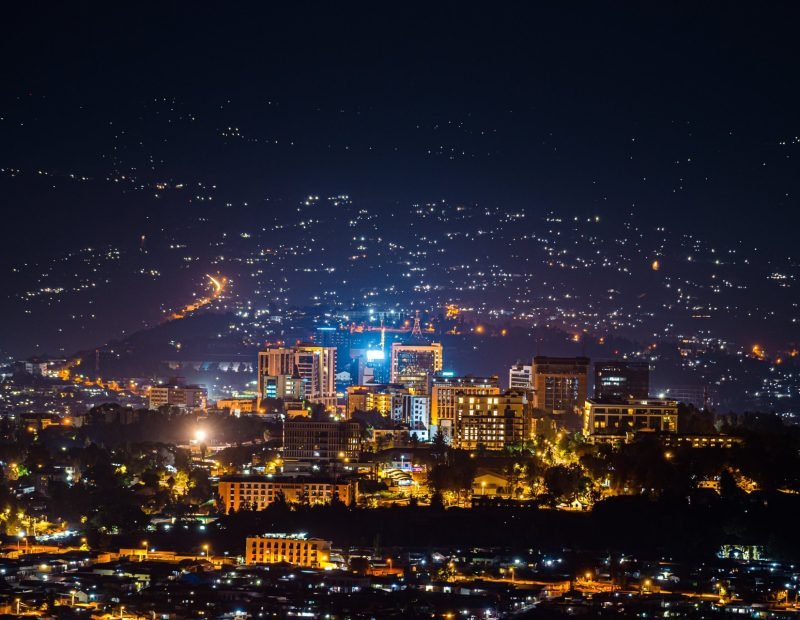
A last morning in the north. The Musanze caves are the usual choice, a lava tube system running a couple of kilometres beneath the town, formed by the same volcanic activity that built the Virungas, with lamps taking you past bat colonies and collapsed roof openings that throw shafts of light into the tunnels. Wear the boots you trekked in, since the floor is uneven basalt. Then the drive south to Kigali, two to two and a half hours through the terraced hills, arriving early afternoon. If your flight is in the evening we finish at Kimironko market for agaseke peace baskets and imigongo, the geometric relief paintings from the southeast, or at the Inema Arts Centre, founded by two self taught painter brothers and now the best known gallery in the region, where resident artists work on site. Drop off at Kigali International Airport. Take binoculars; there is more to see than the headline animals.
Send them the itinerary before you decide. Everything on this page prints on to a few clean pages with the photographs and the day notes intact.
Quickly customise this itinerary
What is and is not included
Included
- Rwanda gorilla trekking permit for Volcanoes National Park, one per person
- Golden monkey tracking permit
- Light aircraft flights from Arusha into the Serengeti and back to Kilimanjaro
- Scheduled flight from Kilimanjaro to Kigali
- Serengeti park entry, all game drives, and camp positioned by season for the herds
- Private 4×4 safari vehicle with a pop up roof and a driver guide in both countries
- Airport pickup at Kilimanjaro and drop off at Kigali International Airport
- One night Arusha, three Serengeti, one Kigali and three near Volcanoes National Park, at your chosen tier
- Kigali Genocide Memorial entry, the Gorilla Guardians village visit and the Twin Lakes boat trip
- Meals as shown, park ranger and tracker fees for both treks, and all taxes and levies
Not included
- International flights into Kilimanjaro and out of Kigali
- Tanzanian and Rwandan visas
- Travel insurance, including cover for trekking at altitude
- Porter hire at the trailhead, payable on the day and strongly recommended
- Hot air balloon safari over the Serengeti, bookable well in advance
- Additional light aircraft transfers between Serengeti regions
- A second gorilla permit or the Dian Fossey tomb hike, quoted on request
- Musanze caves on the final morning and Ngorongoro Crater extensions
- Tips for our guide, rangers, trackers, porters, camp staff and pilots
- Drinks, laundry, personal items and anything not listed under What’s Included
Before you book
Why Would You Want To Do This Safari?
Because these are the two greatest wildlife spectacles on the continent and they sit inside a short flight of each other, yet almost nobody sells them together. A million and a half wildebeest moving across open plains, and an hour spent seven metres from a mountain gorilla family on a forested volcano. Nothing about them is alike. The flying is what makes nine days possible: driving from Arusha into the Serengeti costs most of a day each way, and the road route between Tanzania and Rwanda would take the better part of a week. Three Serengeti nights in the right region gives the migration a genuine chance rather than a single roll of the dice, and three nights at the volcanoes means the gorilla day sits between an arrival afternoon and a gentle golden monkey morning rather than between two transfers.
Is This 9 Day Safari Enough?
For the two headline events, yes, and the pacing is deliberately kind: an arrival day, three Serengeti nights, one travel day broken by the memorial, and three at the volcanoes. What it deliberately leaves out is the rest of the northern circuit. Ngorongoro, Tarangire and Lake Manyara each deserve their own days and adding them takes the trip past a fortnight; if you want the crater in particular, tell us and we will fit it before the Serengeti leg. One honest caveat about the migration, which applies whatever you book: the herds move on a rainfall driven circuit and the timing shifts by weeks each year, so any operator quoting fixed crossing dates is guessing. We position your camp on the best available information and tell you plainly what the odds look like for your dates.
How Much Will This Safari Cost?
This is the most expensive shape in our range and it is worth knowing why. The Rwandan gorilla permit is a large fixed line set by the Rwanda Development Board. Tanzanian park fees are substantial and government set, with the Serengeti among the highest in Africa. And three flights are what compress a fortnight into nine days. None of those three are negotiable, and together they set the floor. Above that floor, accommodation is the variable: the Serengeti runs from mid range tented camps to mobile camps that move with the herds, and the Virungas from Musanze guesthouses to some of the most expensive lodges on the continent. June to October carries peak rates in both countries. Send our team your dates and we will tell you where the herds should be and what is available.