Rwanda boat trips fall into two very different categories. Wildlife boat safaris run on Lake Ihema in Akagera National Park, where hippo pods, Nile crocodiles and shoreline birdlife sit within a few metres of the hull. Leisure boat trips run on Lake Kivu in the west, visiting Napoleon Island and its fruit bat colony, Peace Island and Monkey Island, with sunset cruises and kayaking from Karongi, Rubavu and Rusizi. Smaller boat outings work the twin lakes near Musanze and the wetland at Rugezi.
The distinction matters when you are planning. Akagera’s boats are a game viewing activity. Kivu’s boats are how you stop moving after a week of early starts and steep climbs. Most good Rwanda itineraries include one of each.
Safaris built around boat safaris
Boat Safaris on Lake Ihema in Akagera National Park
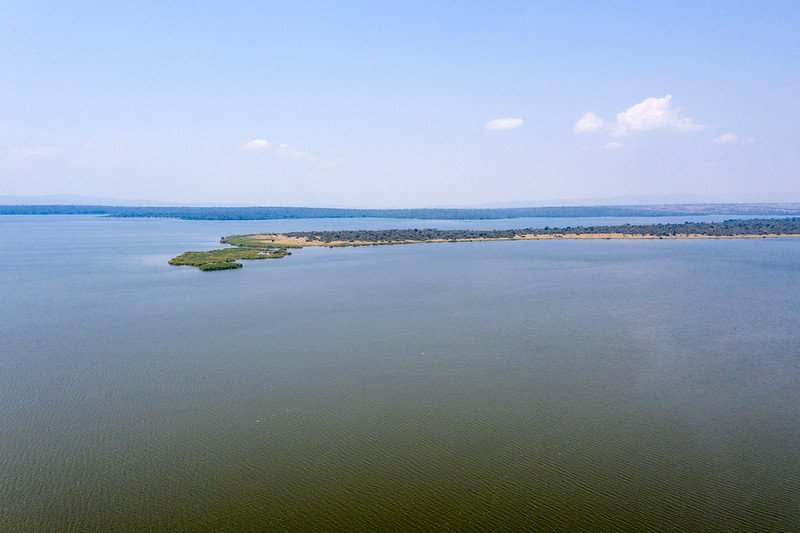
A boat safari on Lake Ihema is the activity visitors consistently rate highest in Akagera, and it is completely different in character from a game drive. Ihema is the second largest lake in Rwanda and sits in the park’s southern sector, close to the main gate and the lodges there.
Scheduled departures usually run mid morning, early afternoon and late afternoon, lasting somewhere between one and two and a half hours. The lake holds one of the densest hippo concentrations in East Africa, so much of the trip is spent within sight of large pods grunting and shifting in the shallows, close enough that the sound carries over the engine when it cuts.
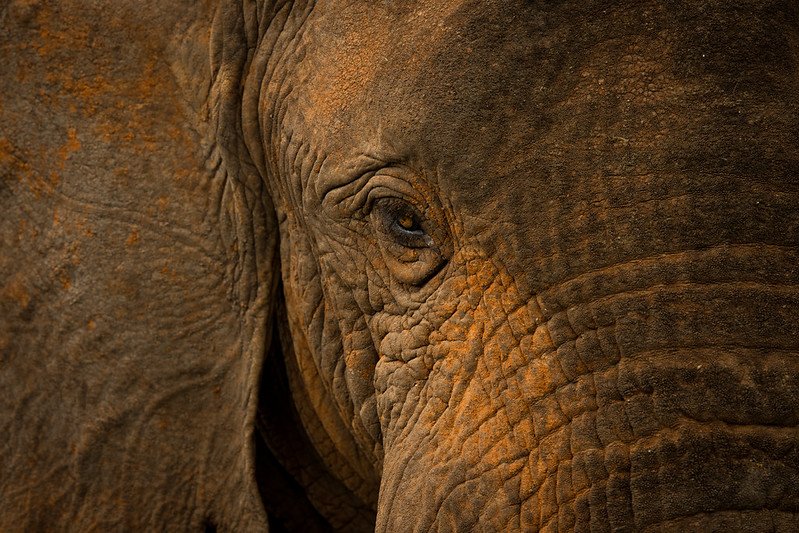
Nile crocodiles bask along the banks, some of them very large. Elephant and buffalo come down to drink at the shoreline in the late afternoon, which is why the sunset departure is the one to book if you have a choice.
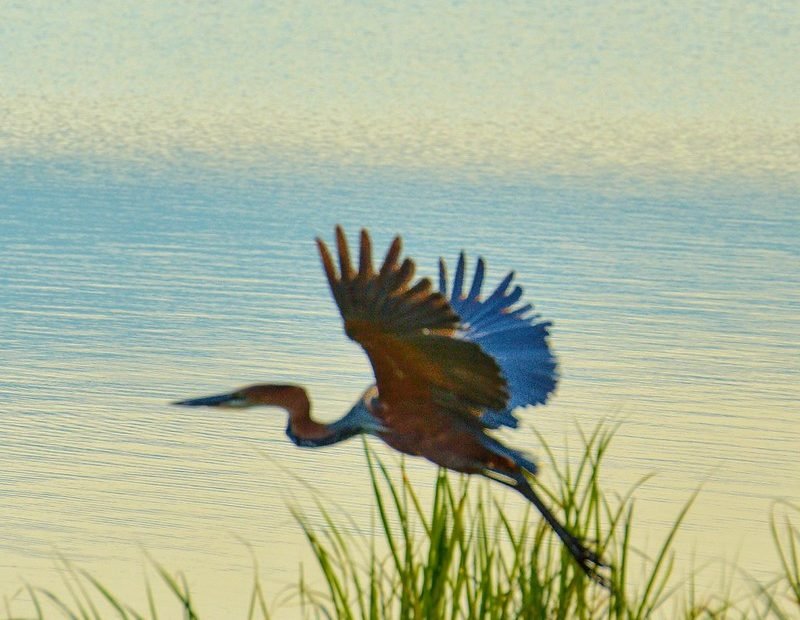
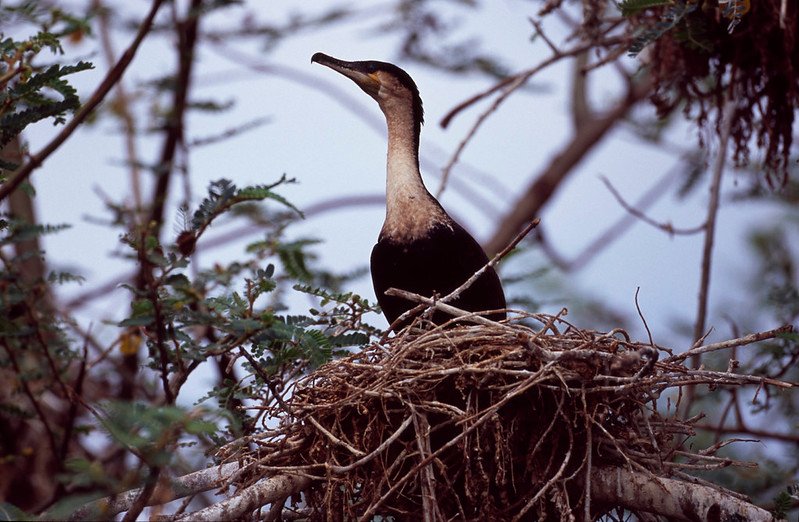
Birding from the water is excellent. African fish eagles work the papyrus fringe, along with great white pelicans, African openbills, cormorants, malachite and pied kingfishers, goliath herons and African jacanas walking the lily pads. The papyrus channels are also where the shoebill is looked for, though that takes luck and the right water levels.
Private boat charters are available and worth considering if you are photographing or birding. A scheduled departure moves on when the group is ready. A private boat lets you hold position relative to the light and stay with a subject, and it is the single best upgrade in Akagera.
Lake Rwanyakazinga and Northern Akagera Boat Trips
Guests staying in the far north of Akagera use Lake Rwanyakazinga instead of Ihema, and it is quieter still. The Magashi concession runs boat trips here on a lake that sees a fraction of Ihema’s traffic.
The wildlife is comparable, with its own hippo population, crocodiles and a strong shoreline bird list, but the experience is more private. Because the northern sector holds the better lion and rhino ground, guests up here tend to combine a boat morning with game drives across the Kilala and Mohana plains rather than treating the boat as the main event.
Access is the constraint. The northern gate is three to four hours from Kigali rather than two, and some camps finish the transfer with a short boat crossing to reach the property, which is a good introduction to the lake before you have even checked in.
Lake Kivu Boat Trips from Karongi, Rubavu and Rusizi
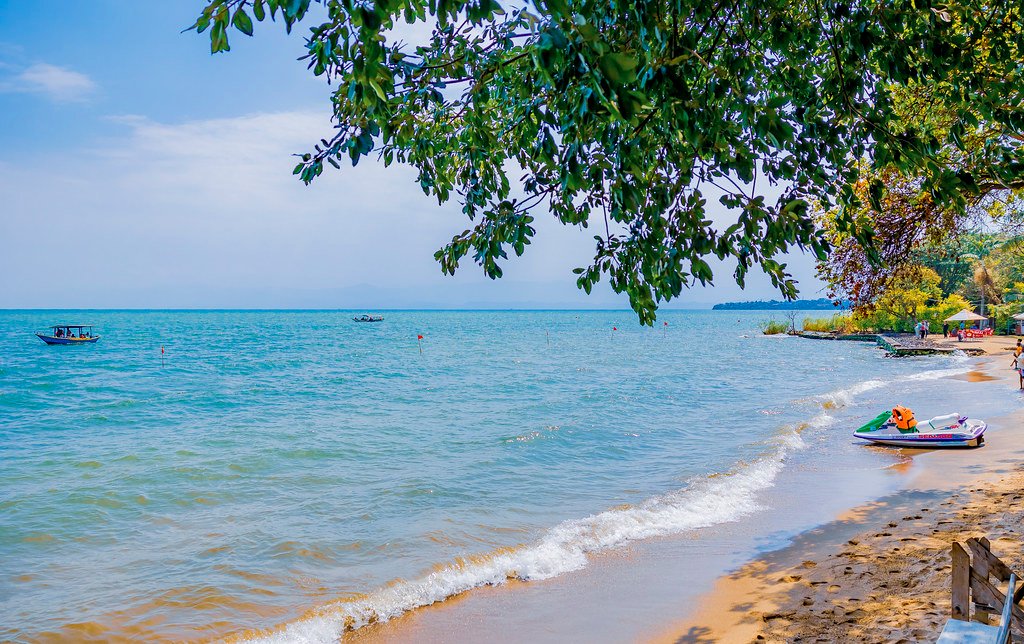
Lake Kivu is a different proposition entirely. It covers roughly 2,700 square kilometres, runs about 90 kilometres long and up to 48 kilometres wide, sits at around 1,460 metres and is the sixth largest lake in Africa, shared with the Democratic Republic of Congo.
The detail that surprises most visitors is what is not in it. Kivu holds no crocodiles and no hippos, and bilharzia is not a concern, which makes it one of the few African lakes where swimming, kayaking and paddling are straightforward. Its depths hold large volumes of dissolved methane, which Rwanda extracts for power generation, though this has no bearing on activity near the surface.
Three towns serve as bases. Rubavu, formerly Gisenyi, sits on the northern shore an hour from Volcanoes National Park and has the liveliest waterfront and the best beaches. Karongi, formerly Kibuye, sits halfway down with pine and eucalyptus hills behind it and the best island access. Rusizi, formerly Cyangugu, sits at the southern end near Nyungwe Forest and is the quietest of the three.
Boat trips run from all three, from one hour pottering to full day island hopping, on everything from traditional wooden craft to small motorboats and catamarans.
Napoleon Island and the Fruit Bat Colony
Napoleon Island, properly Nyamunini, is the most visited stop on Lake Kivu and takes its nickname from a profile that resembles Napoleon’s hat when seen from the water.
Boats leave from Karongi and the crossing takes around half an hour. On arrival there is a short but steep hike to the summit, perhaps twenty to thirty minutes, and the reward is a full circle view over the lake, the islands and the Congo hills on the far side.
The reason people come is the bats. A colony of thousands of fruit bats roosts in the trees on the island during the day, and the trail up passes directly beneath them. They wheel and shriek overhead as you climb, which is either the highlight of the trip or mildly alarming depending on your feelings about bats. It is a genuine wildlife spectacle and there is nothing quite like it elsewhere in Rwanda.
Vervet monkeys live on the island as well, and the birding on the climb is decent. Wear shoes with grip; the path is loose in places.
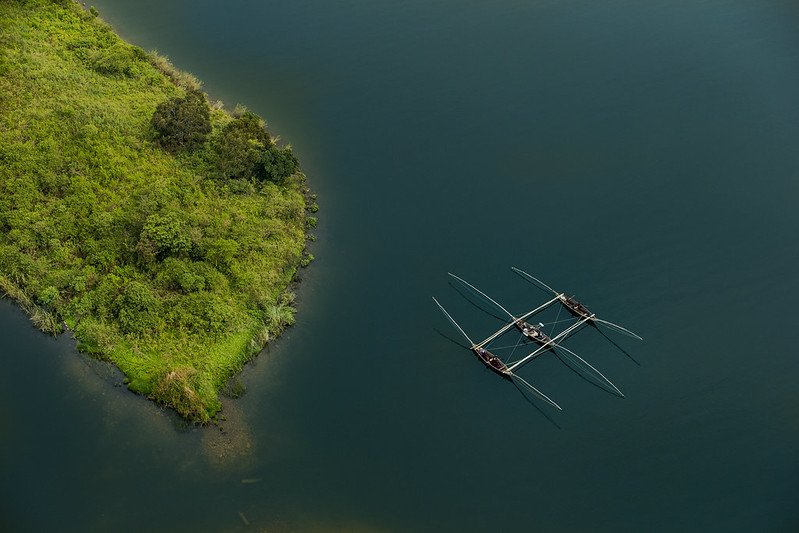
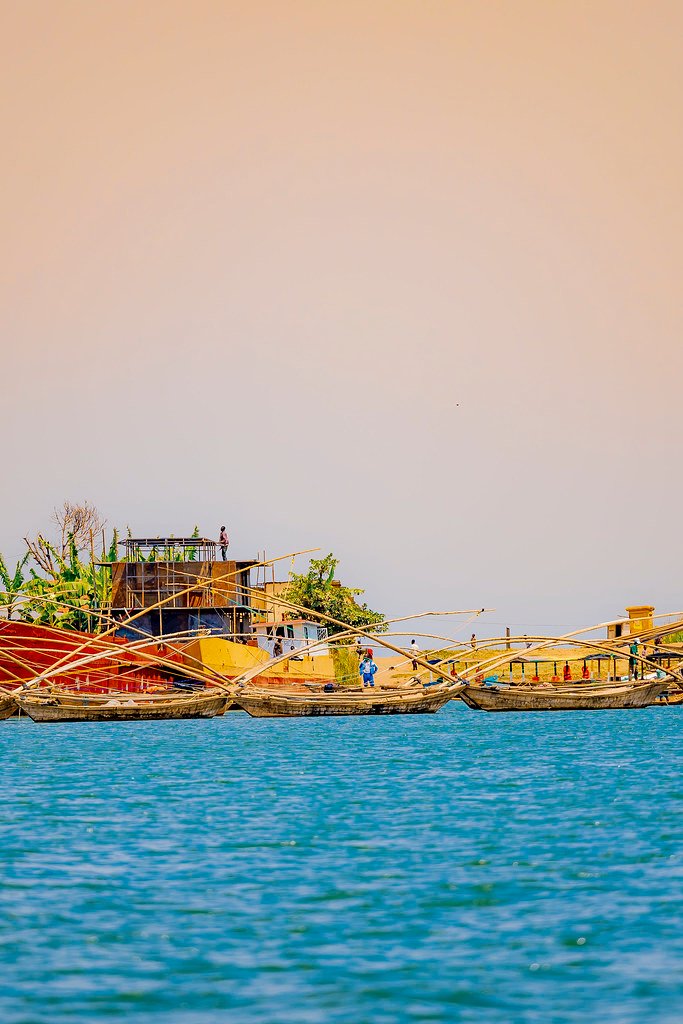
At dawn and again at dusk the singing of the fishermen carries right across the water, three canoes lashed together, paddles striking in time to keep the rhythm. It is the sound people remember longest from Lake Kivu.
Peace Island, Monkey Island and Kivu Island Hopping
Kivu holds a scatter of islands and a half day of hopping between them is the standard Karongi outing.
Amahoro Island, Peace Island. A relaxed stop where you can swim off the rocks, rest and eat grilled tilapia or sambaza cooked on the spot. This is where the boat trip turns into an afternoon rather than a tour.
Nyenyeri Island, Monkey Island. Vervet monkeys and a short walk to a viewpoint. Easy going and popular with families.
Fishing communities. Several islands hold small settlements, and boat crews will usually stop if you ask. These are working villages rather than displays, so go with a guide and ask before photographing.
The swimming cows. Cattle are moved between islands and the mainland by swimming them across, herded from canoes. If your trip coincides with a crossing it is a strange and memorable thing to watch.
Sunset Cruises and the Singing Fishermen of Lake Kivu
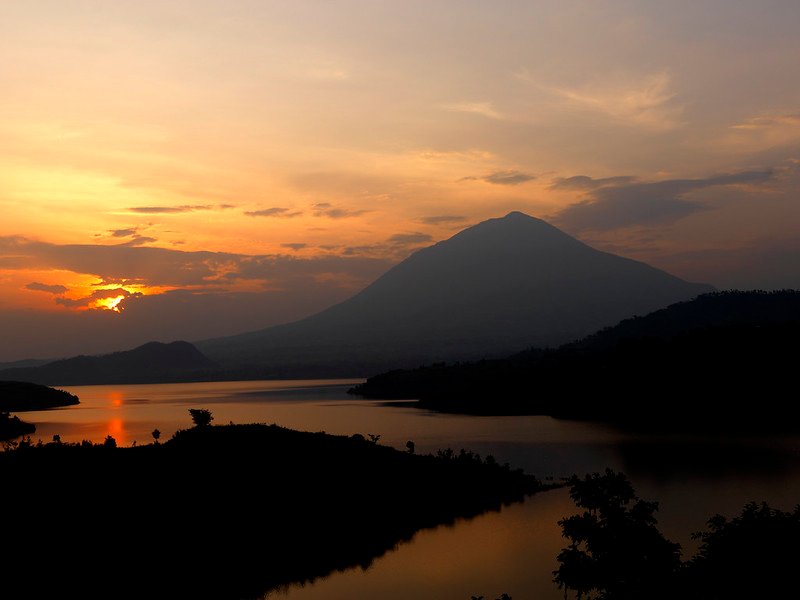
The sunset cruise is the most popular boat activity on Kivu and it earns its reputation. The lake sits high enough that evenings are cool, the light across the water in the last hour is long and warm, and the hills on both sides fall into silhouette.
What lifts it beyond a pleasant hour is the fishermen. Kivu’s night fishermen work in threes, canoes lashed together with long poles, and they paddle out at dusk singing in unison to keep time and to keep spirits up on the way to the deep water. They return at dawn doing the same. The sound carries a very long way across still water.
Some operators run a fisherman experience where you go out with the boats rather than watching from a distance, joining the crews for part of a night’s work with lamps used to draw sambaza to the surface. It is a long evening and not for everyone, but it is the most honest cultural activity on the lake.
Sunset departures tend to leave around an hour and a half before dark from Karongi and Rubavu. Take a jacket; it cools quickly once the sun drops behind the Congo hills.
Kayaking and Canoeing on Lake Kivu
Because there are no crocodiles or hippos, Kivu is one of very few African lakes where paddling yourself is normal. Guided kayaking trips run from Rubavu, Karongi and Kinunu, from a couple of hours along the shoreline to multi day expeditions with camping or guesthouse stops between beaches.
Short trips suit complete beginners and families, and guides carry everything. The longer routes shadow sections of the Congo Nile Trail, which means you can paddle one day and cycle or walk the next along the same stretch of shore.
One honest caveat: the weather on Kivu changes quickly and the water can get choppy with little warning, particularly in the afternoons. Guides read this well and will turn back or hug the shore when needed. Morning paddling is calmer than afternoon as a general rule.
Traditional dugout canoe trips are also offered in places, which are slower and less stable but a better window into how the lake is actually used.
Twin Lakes Boat Trips at Burera and Ruhondo
East of Musanze, the twin crater lakes of Burera and Ruhondo sit beneath the Virunga volcanoes, and boat trips here are the best low effort half day in northern Rwanda.
Local wooden boats and canoes work both lakes, taking visitors along shorelines lined with terraced farmland, past small islands and fishing settlements, with Muhabura and the other volcanoes rising behind. The scenery is the point rather than the wildlife, though the birding along the reed margins is worth having binoculars for.
Most trips combine an hour or two on the water with a village visit or a shoreline walk. It works well as an arrival afternoon before a gorilla trek, or as a gentle day after one, and it requires no permit and very little arranging.
Rugezi Marsh and Other Wetland Boat Outings
Boat trips in Rwanda are not just about scenery. At the southern end of Rugezi Marsh in the northwest, an area of open water called Lake Nyagafunzo can be worked by boat, and for birders this is one of the more productive mornings in the country.
Rugezi is Rwanda’s only Ramsar site, holding grey crowned cranes, Grauer’s swamp warbler and papyrus canary, and a boat gets you to white backed duck, lesser jacana and the commoner waterbirds that are hard to reach from the bank. It sits on the northern route, so it pairs naturally with a Volcanoes stay.
Lake Muhazi in the east is another option, a long narrow lake on the road towards Akagera with lakeside restaurants and boat hire, good for waterbirds and an easy stop to break the drive. Lake Nyamirundi near Kayove holds coffee farms reachable by a short paddle from the mainland, which combines a boat crossing with a plantation visit.
Best Time for Boat Trips in Rwanda
Boat trips run year round on both lakes and no season closes them. Conditions on the water shift more than the wildlife does.
June to September, long dry season. Calmest water, clearest skies and the best time for island hopping and long paddles. Akagera’s boat safaris are strongest now too, as shrinking water sources bring more animals to the shoreline.
Mid December to February, short dry season. Similar conditions with fewer visitors on Kivu. Good sunset light and settled mornings.
March to May, long rains. Choppier afternoons on Kivu and more cancellations for kayaking, though mornings are often fine. Akagera’s boats keep running and the greener shoreline photographs better.
October and November, short rains. Afternoon showers rather than sustained rain. Quiet on the water, migrant birds arriving, and reasonable conditions if you go out early.
On any lake, mornings are calmer than afternoons and late afternoon gives the best light. In Akagera, the sunset departure beats the others for both wildlife and photography.
Planning Boat Trips into a Rwanda Itinerary
Boat trips slot in easily because both lakes sit on routes people are already travelling. Akagera is two hours east of Kigali, so a boat safari fits alongside game drives on a two night stay. Lake Kivu runs the length of the western border, so Rubavu works as a stop after gorilla trekking, Karongi as a break on the drive south, and Rusizi as a base near Nyungwe.
The pattern that works well is gorillas in the north, two nights on Kivu to recover, then Nyungwe or back east to Akagera. Two nights on the lake is enough to do an island trip, a sunset cruise and a paddle without feeling rushed.
Practical notes: take sun protection, since glare off the water is strong at altitude even under cloud. Life jackets should be provided and worn. Book Akagera boat departures in advance during the dry season, as the sunset slots fill. And carry cash for island stops and fisherman experiences, which often sit outside the main booking.
Getting boat trips right in Rwanda mostly means picking the right departure time and the right base, and both are easy to get wrong from a distance. Intare Safaris is Rwandan, runs Akagera and the Kivu shoreline year round, and can arrange the private charter on Ihema or the fisherman evening at Karongi that turns a pleasant hour into the part of the trip people talk about afterwards.
Let Intare Safaris know your dates and whether you are after wildlife on the water or a genuine rest, and they will place the boat days where they do the most good in your itinerary.