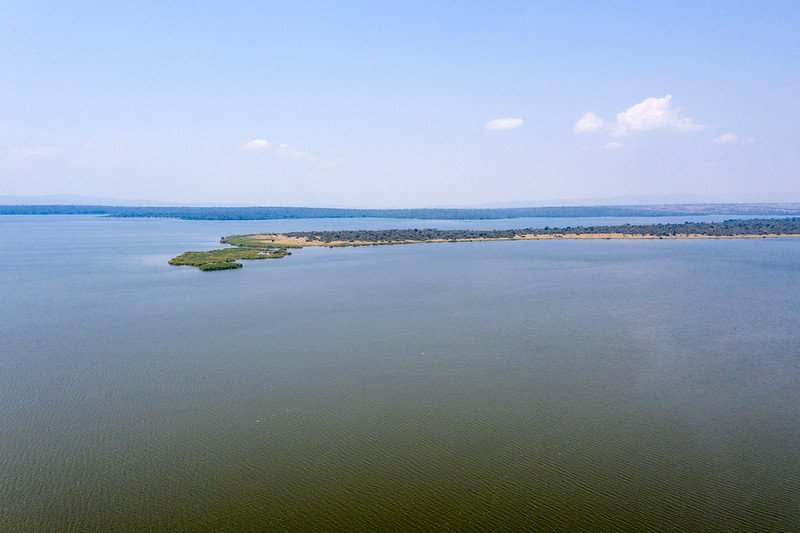
Lake Kivu tours are based in three lakeside towns on Rwanda’s western border: Rubavu in the north, Karongi in the centre and Rusizi in the south. Activities include island boat trips, kayaking, swimming, cycling and hiking sections of the Congo Nile Trail, coffee and tea plantation visits, hot springs and beach time. Kivu covers roughly 2,700 square kilometres, is the sixth largest lake in Africa, and is shared with the Democratic Republic of Congo.
Kivu is where a Rwandan itinerary changes gear. After early starts, steep volcanic slopes and a week of alarms before dawn, this is the part of the country where the plan is to do less. It is also the natural link between the volcanoes in the north and Nyungwe Forest in the south, which means it costs almost no travel time to include.
Safaris built around boat safaris
Lake Kivu Tours from Rubavu, Karongi and Rusizi
Which town you choose shapes the whole stay, and the three are genuinely different places rather than interchangeable resort towns.
Rubavu, formerly Gisenyi. The northern shore, around three hours from Kigali and only an hour or so from Volcanoes National Park. The busiest of the three, with the best beaches, a lively waterfront and the most places to eat and drink. The obvious choice for unwinding straight after a gorilla trek.
Karongi, formerly Kibuye. Halfway down the lake, set on a peninsula with pine and eucalyptus hills behind it and islands scattered offshore. Quieter than Rubavu, better for boat trips and island hopping, and the classic stop when driving between the volcanoes and Nyungwe.
Rusizi, formerly Cyangugu. The southern end, on the Congolese border opposite Bukavu, and about an hour from Nyungwe Forest. The quietest of the three and mainly used as a base for chimpanzee trekking rather than for the lake itself.
Two nights is the sensible minimum anywhere on Kivu. One night means arriving tired, sleeping and leaving, which defeats the purpose entirely.
Rubavu Tours on the Northern Shore
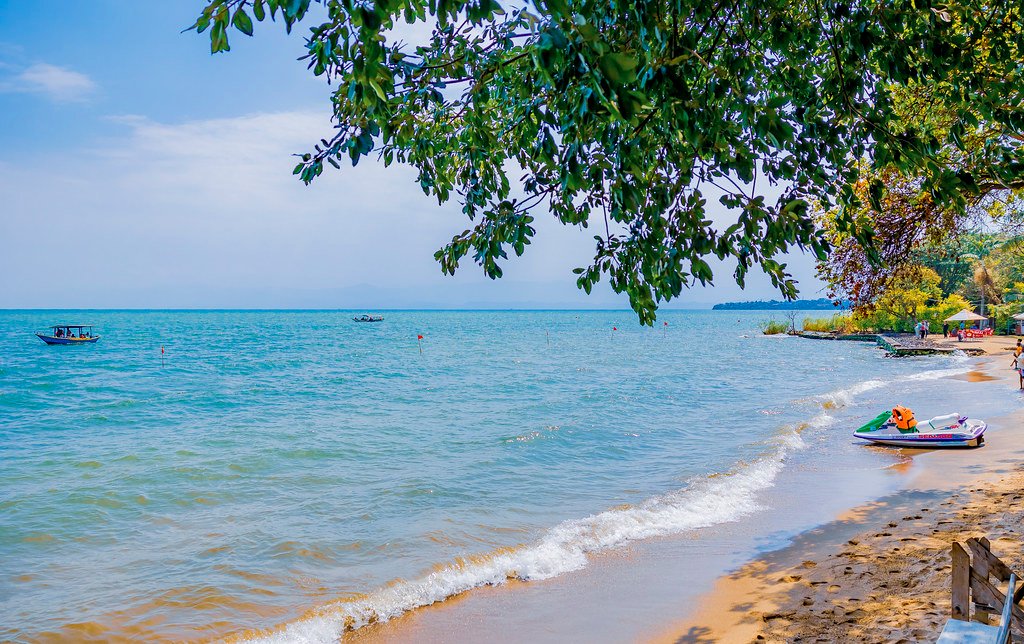
Rubavu was a colonial beach resort of some standing, and the waterfront still carries the evidence in a line of fading old mansions along the shore road, now sitting alongside hotels and bars. The public beach is the best stretch of sand on the Rwandan side of the lake, and the sunset walk along the front is the thing most visitors end up doing every evening they are here.
Because Rubavu sits only about an hour from Volcanoes National Park, it works as a base for gorilla trekking and a recovery stop afterwards. That combination is why more people stay here than anywhere else on the lake.
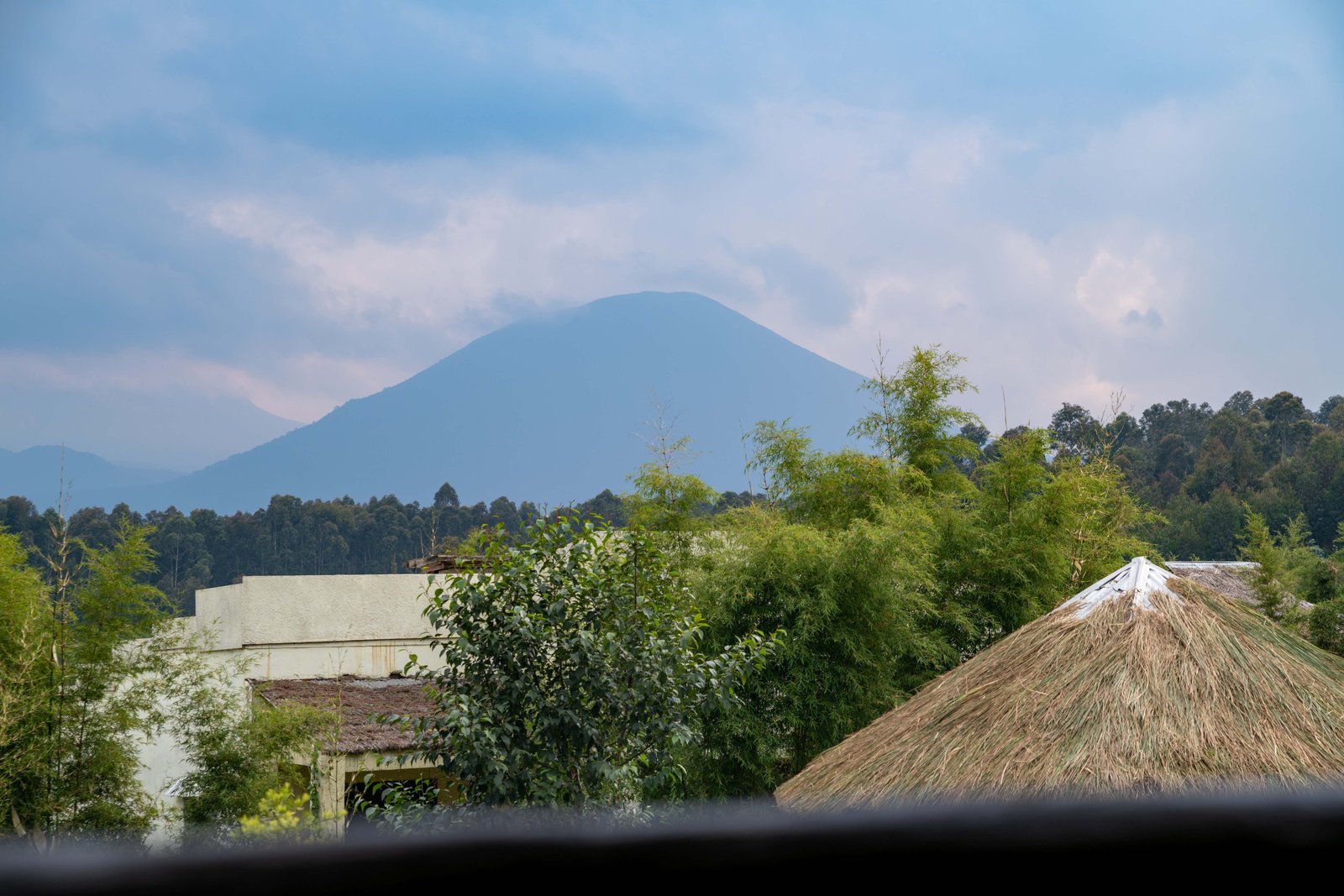
Nyiragongo, the active volcano across the border in the Congo, is visible from the town on clear nights, when the lava lake in its crater throws an orange glow onto the underside of the cloud. It is a strange thing to watch from a beach bar.
The town also has a brewery, a golf course, tea and coffee plantations on the hills behind, and fishing villages along the shore where visitors can see how the catch is preserved and sold.
Karongi Tours and the Islands
Karongi is the prettiest of the three towns and the best base for getting out on the water. The town sits on a peninsula with hills falling to the shore on both sides, and the scatter of islands offshore is what most boat trips work.
Napoleon Island, properly Nyamunini, takes its name from a profile resembling Napoleon’s hat. A half hour crossing and a short steep climb bring you to a full circle view over the lake, and the trail passes directly beneath a roosting colony of thousands of fruit bats. Amahoro, or Peace Island, is where boats stop for swimming and grilled fish. Nyenyeri, Monkey Island, holds vervets and an easy walk to a viewpoint.
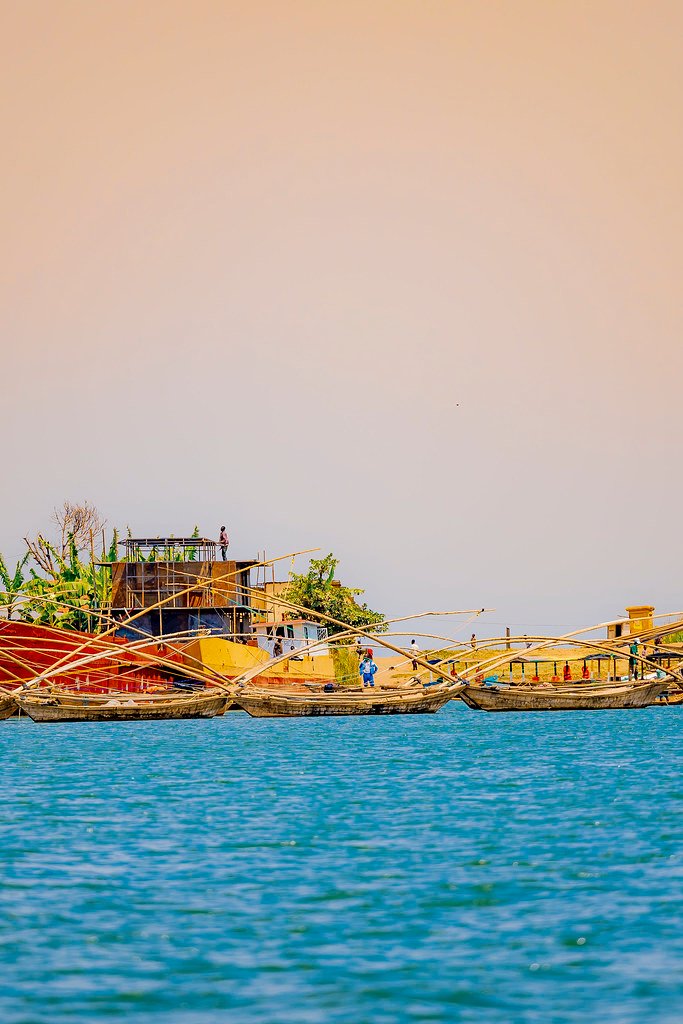
Karongi is also where the singing fishermen are best seen. At dusk they paddle out in threes, canoes lashed together with long poles, singing in unison to keep time, and return at dawn doing the same. Some operators run a fisherman experience where you go out with the boats rather than watching from the shore.
If the lake is the reason you are coming, base yourself at Karongi rather than Rubavu. If the lake is a rest stop between the gorillas and the rest of your trip, Rubavu is closer and easier. Both work; the mistake is picking one for the other’s reasons.
Rusizi Tours Near Nyungwe Forest
Rusizi sits at the southern tip of the lake, looking across at the Congolese city of Bukavu, and it sees the fewest tourists of the three towns. Most people who stay here are doing so because it puts them within an hour of Nyungwe Forest National Park and within reach of the Cyamudongo chimpanzee trek.
The lake here is quieter and less developed, with fewer boat operators and beaches, though the shoreline drives and the views across to the Congo are good. Kamembe airport is nearby, with a forty minute flight from Kigali, which makes this the easiest end of the lake to reach quickly.
Bugarama hot springs lie around sixty kilometres from the town in the far southwest corner of the country, in an area of lower altitude and warmer weather than anywhere else in Rwanda.
Treat Rusizi as a Nyungwe base with a lake attached rather than as a Kivu destination in its own right, and it does the job well.
Boat Tours and Island Hopping on Lake Kivu
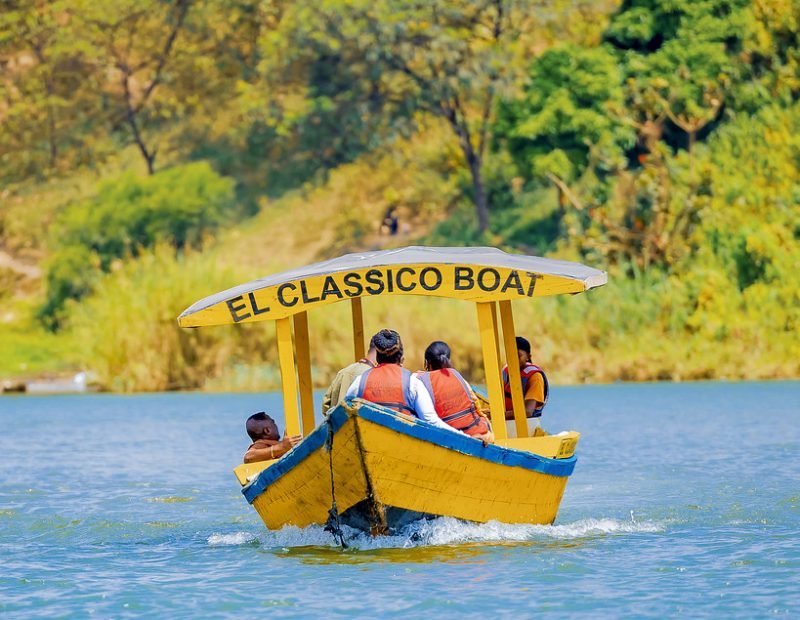
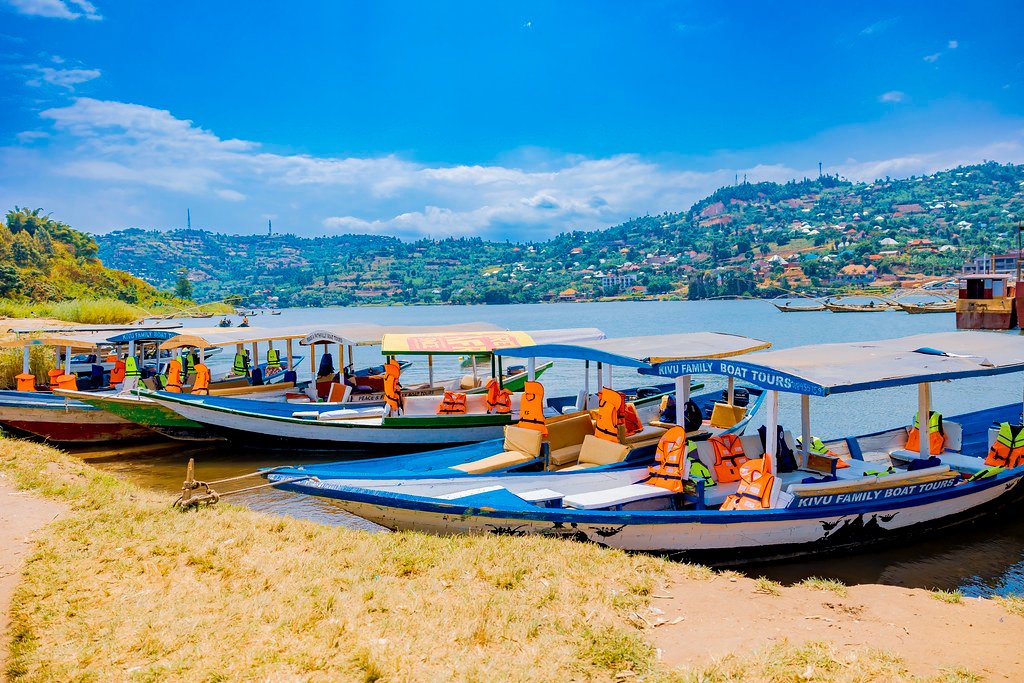
Boat trips run from all three towns and range from an hour of pottering along the shoreline to full day island hopping. Traditional wooden boats, small motorboats and catamarans all operate, and most hotels can arrange something at short notice.
The standard Karongi outing takes three to four hours and covers two or three islands with a stop for swimming and lunch. Sunset cruises leave around ninety minutes before dark and are the most popular option, since the light across the water in the last hour is the best of the day and the fishermen are heading out as you head back.
One sight worth asking about is the swimming cows. Cattle are moved between the islands and the mainland by swimming them across, herded from canoes, and if your trip coincides with a crossing it is memorable in a way no brochure prepares you for.
Take sun protection. Glare off the water at 1,460 metres is stronger than it feels, and people burn on Kivu who did not burn anywhere else in Rwanda.
Kayaking, Swimming and Water Sports on Kivu
The detail that makes Kivu unusual among African lakes is what is absent from it. There are no crocodiles and no hippos, and bilharzia is not a concern, which means swimming, kayaking and paddleboarding are all straightforward here in a way they are not on most lakes in the region.
The lake does hold large volumes of dissolved methane and carbon dioxide at depth, which Rwanda extracts for power generation. This has no bearing on surface activity and is not a swimmer’s concern, though it is the reason motorised traffic is managed in some areas.
Guided kayaking runs from Rubavu, Karongi and Kinunu, from a two hour shoreline paddle suitable for complete beginners up to multi day expeditions camping or staying in guesthouses between beaches. Morning water is calmer than afternoon as a rule, and guides will turn back or hug the shore when the wind gets up, which it does quickly.
Swimming is best off the beaches at Rubavu and from the islands off Karongi. Water quality near the main town beaches is monitored.
No crocodiles, no hippos, no bilharzia. On a continent where most lakes come with a list of reasons not to get in, Kivu is the one where you simply swim.
Congo Nile Trail Cycling and Hiking Tours
The Congo Nile Trail runs roughly 227 kilometres along the eastern shore between Rubavu and Rusizi, and it is the best multi day active option in Rwanda. Cyclists usually take five days, walkers closer to ten, and plenty of visitors ride or walk a two or three day section instead.
The route moves through fishing villages, coffee terraces, banana groves and eucalyptus stands, with the lake below and the Congo hills across the water. It is dirt for most of its length and constantly hilly, so both the riding and the walking are harder than the distance suggests. Accommodation along the way runs from guesthouses and homestays to camping.
The section between Rubavu and Kinunu is the most popular short ride, taking in the coffee country on the northern shore. Bikes can be hired in Rubavu and Karongi, and guided trips include a support vehicle, which most people are glad of by day two.
Parts of the route can also be done by boat, which is a good option for anyone who likes the idea more than the gradients.
Coffee and Tea Tours Along the Kivu Shore
The hills above Kivu grow some of Rwanda’s best arabica, and a plantation or washing station visit is one of the better half days on the lake.
Kinunu, about twenty kilometres south of Rubavu, is the best known washing station and can be reached by road, by bicycle along the Congo Nile Trail or by boat. It buys cherries from hundreds of smallholders farming plots often smaller than a quarter of a hectare, and the tour walks through hand sorting, pulping, fermentation, flotation grading and drying on raised beds facing the water, finishing with a tasting.
The Ingoboka collective near Kayove runs several plantations and washing stations, including a cluster of farms on Nyamirundi Island reachable by a short paddle from the mainland. Further stations operate along both the northern and southern shores.
Tea grows on the higher ground, particularly towards Nyungwe at Gisakura and Gisovu, where estate and factory visits run through the working week.
Rubavu Hot Springs and Other Kivu Attractions
Hot springs surface at several points around the lake, a reminder that this is volcanic country. The Nyamyumba springs near Rubavu are the most visited, a set of pools on the shore where locals come to soak feet and legs in water hot enough to need care getting into. It is a local scene rather than a developed spa, which is the appeal.
Beyond the springs, the shoreline holds fishing villages where visitors can watch sambaza being dried and sorted, small markets in the lakeside settlements, and the beaches themselves, which are quiet outside weekends.
Birding along the shore is better than people expect, with large numbers of white breasted cormorants and pied kingfishers, and osprey passing through on migration. Hotel gardens at Rubavu, Karongi and Rusizi all hold decent common species, and Karongi sees yellow billed kites gathering in numbers around August.
Best Time for Lake Kivu Tours
Kivu works year round and its altitude keeps temperatures pleasant rather than hot. Season affects the water and the trails more than it affects comfort.
June to September, long dry season. Calmest water, clearest skies and the best conditions for island trips, long paddles and the Congo Nile Trail. The busiest period, since it overlaps with peak gorilla trekking.
Mid December to February, short dry season. Similar conditions with fewer people. Good sunset light and settled mornings on the water.
March to May, long rains. Choppier afternoons and more kayaking cancellations, though mornings are often fine. The hills are at their greenest and the Congo Nile Trail turns heavy going in places.
October and November, short rains. Afternoon showers rather than sustained rain. Quiet on the water and reasonable for everything if you start early.
Getting to Lake Kivu and Fitting It Into an Itinerary
Rubavu is around 155 kilometres from Kigali, roughly three hours on good tarmac, and about an hour from Volcanoes National Park. Karongi is a similar distance from the capital by a slower and more scenic mountain route. Rusizi is furthest by road but has Kamembe airport nearby, with a forty minute flight from Kigali.
The shoreline road linking the three towns is the Kivu Belt route, and driving it is one of the better road days in East Africa, though it is winding and slower than the distances suggest.
The itinerary pattern that works is gorilla trekking at Volcanoes, then down to Rubavu or Karongi for two nights, then continuing south to Nyungwe for chimpanzee trekking, or back east to Kigali and on to Akagera. Gishwati Mukura National Park sits on the ridge above the lake road and slots in without a detour.
Put Kivu in the middle of the trip rather than at the end. Placed there it resets everyone before the next round of early starts. Placed at the end it becomes a nice couple of days you were too tired to use.
Kivu rewards knowing which town suits your trip and which operators actually run the boats and bikes rather than subcontracting them. Intare Safaris is Rwandan, works the Kivu Belt year round, and can line up the island trip, the fisherman evening or the Kinunu coffee morning around whatever else your itinerary is doing.
Tell Intare Safaris where Kivu sits in your plans and how much you want to move versus how much you want to sit still, and they will pick the town and the nights to match.