Game drive safaris in Rwanda take place in Akagera National Park, the country’s only savannah reserve, covering 1,122 square kilometres along the Tanzanian border about two hours east of Kigali. Drives cover Big Five country, with lion, elephant, buffalo, black and white rhino and leopard all present, alongside giraffe, zebra, topi and eland. Morning and afternoon drives run daily, night drives are available to guests staying inside the park, and both guided and self drive options exist.
One thing to settle at the outset, because it shapes every Rwanda itinerary: Akagera is the only place in the country where game driving happens. Volcanoes, Nyungwe and Gishwati Mukura are all walking parks. You trek in those on foot with rangers, and no vehicle takes you to the wildlife. If a savannah safari is what you picture when you think of Africa, Akagera is the whole of Rwanda’s offering, and it is better than most visitors expect.
Safaris built around game drives
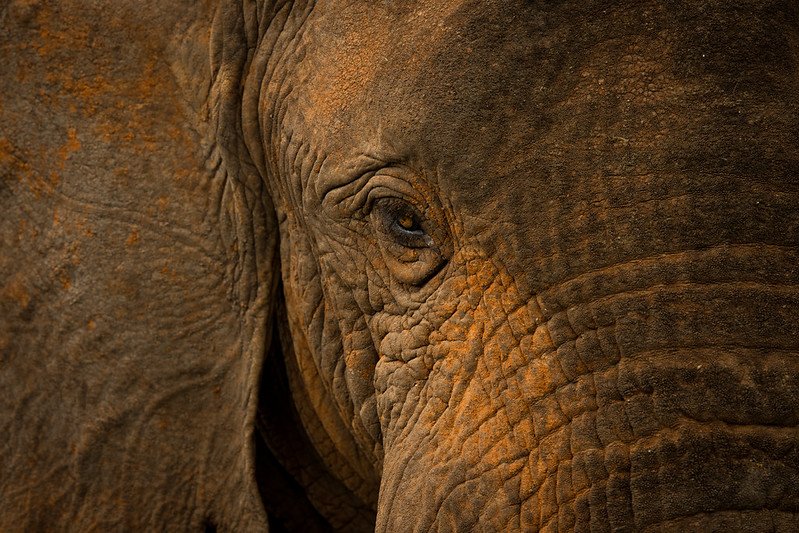
Big Five Game Drives in Akagera National Park
A Big Five game drive here is possible because of a wildlife recovery that has run for over fifteen years. Akagera lost its lions to poisoning after livestock conflict, with the last one recorded around 2001, and its rhinos to poaching by 2007. Lions were brought back from South Africa in 2015, eastern black rhinos followed in 2017 and southern white rhinos in 2021.
Drives run from around half past six in the morning until late morning, then from midday to about five in the afternoon. The park gates open at six and close at six. Wildlife numbers have climbed past twelve thousand animals, and the difference between driving here now and driving here fifteen years ago is hard to overstate.
Be clear headed about sightings. Lion have bred well and are seen regularly on the northern plains. Elephant herds move between woodland and water. Rhino are under close monitoring and depend on where the trackers have them. Leopard is the difficult one, largely nocturnal and seen by a small proportion of visitors, and the park itself says plainly that sightings can never be guaranteed because water, grazing, recent fire and season all pull animals around.
Guides who work Akagera daily know where the prides have been feeding that week. Guided game drives can be booked at park reception even if you drove yourself in, and on a first visit that hour of local knowledge is worth more than an extra hour of driving.
The Southern Sector: Lakes, Woodland and the Giraffe Area
Most visitors enter through the southern Mutumba Gate and start their game drive among the lakes. This is the busier, greener half of the park, and the driving is easier here.
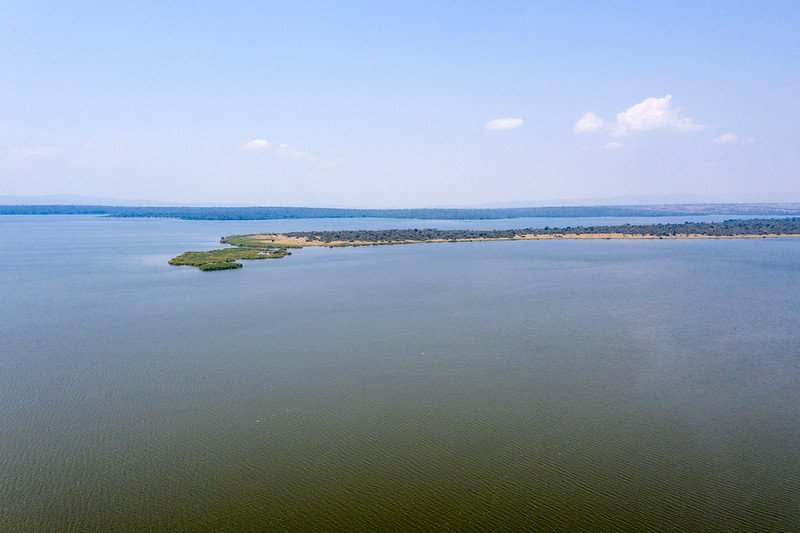
The lake circuit takes in Ihema, Shakani, Birengero and Gishanju, a chain of water fringed with papyrus and fig. Hippo pods are everywhere, along with waterbuck, bushbuck, impala, olive baboon and vervet monkeys. Crocodiles bask on the banks. Elephant come down to drink in the late afternoon and the birding is constant, with fish eagles working the shoreline.
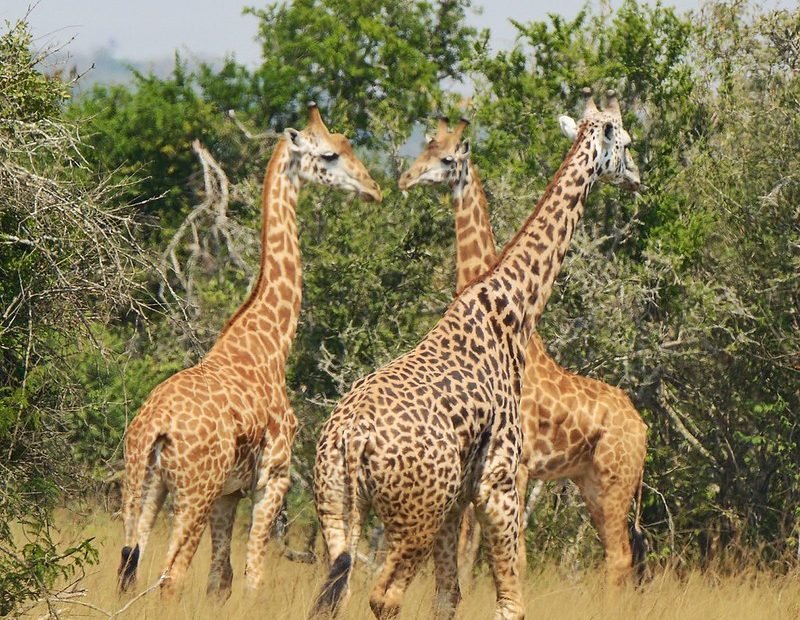
The Giraffe Area in the south is one of the spots the park flags as a genuine hotspot, and Masai giraffe are seen there frequently. Viewpoints and picnic sites are dotted along this circuit, and you are permitted out of the vehicle only at designated points.
Lodges cluster in this sector, so if you have one night this is where you will be. It is a good half of the park. It is not, though, where the lions live, and visitors who never leave the south often come away wondering what the fuss was about.
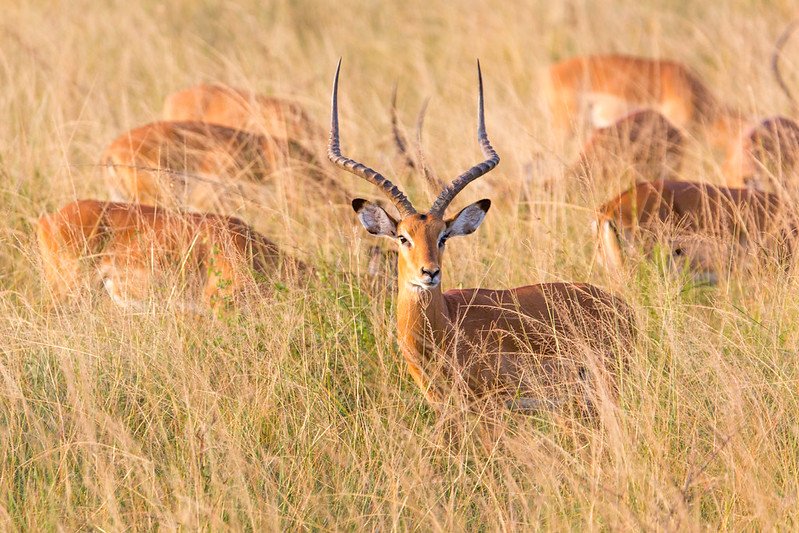
The Northern Plains: Kilala, Mohana and the Mutumba Hills
Drive north and the park changes character entirely. Past the Mutumba Hills the country opens into broad short grass plains at Kilala and Mohana, low ridges running to the horizon, and this is where a Rwanda safari game drive starts to look like the Serengeti footage people have in their heads.
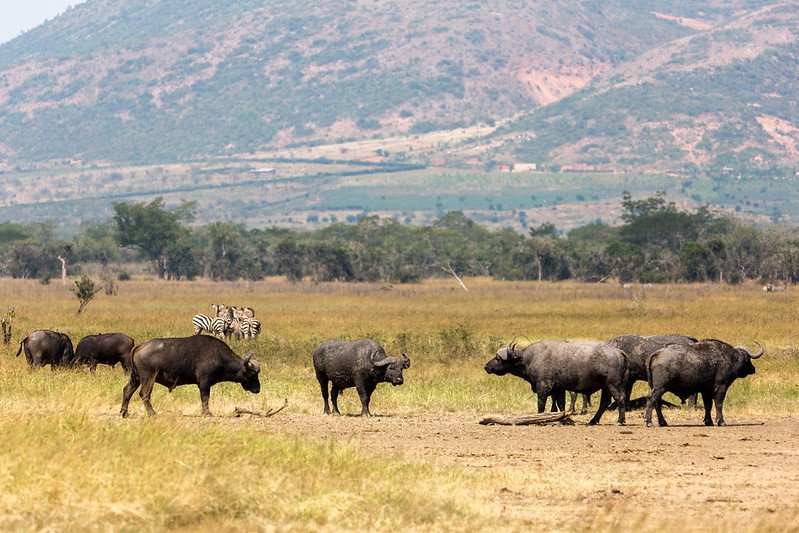
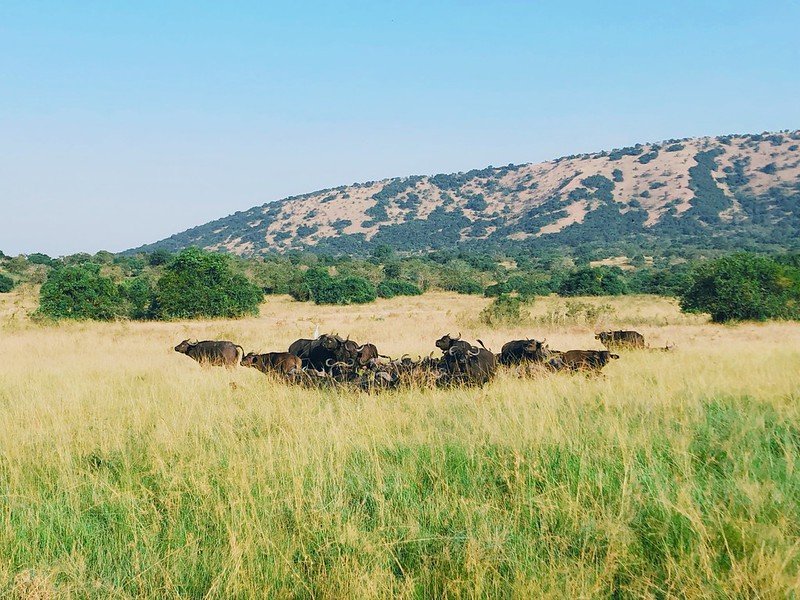
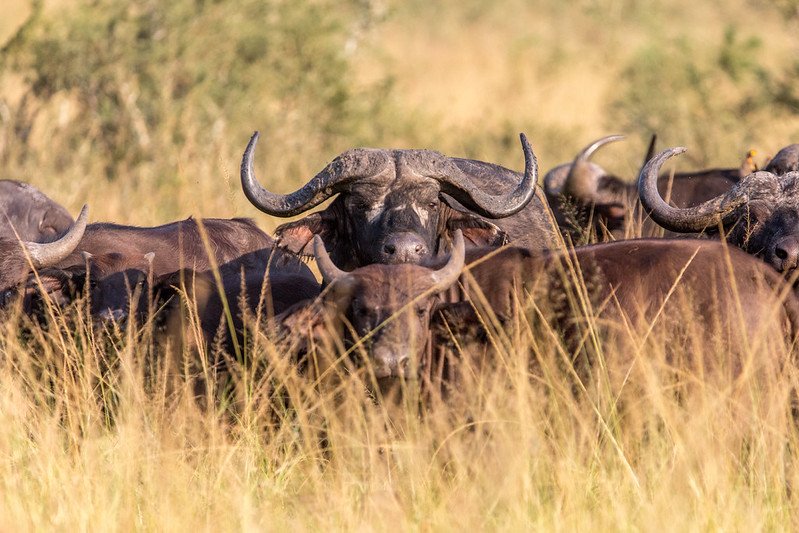
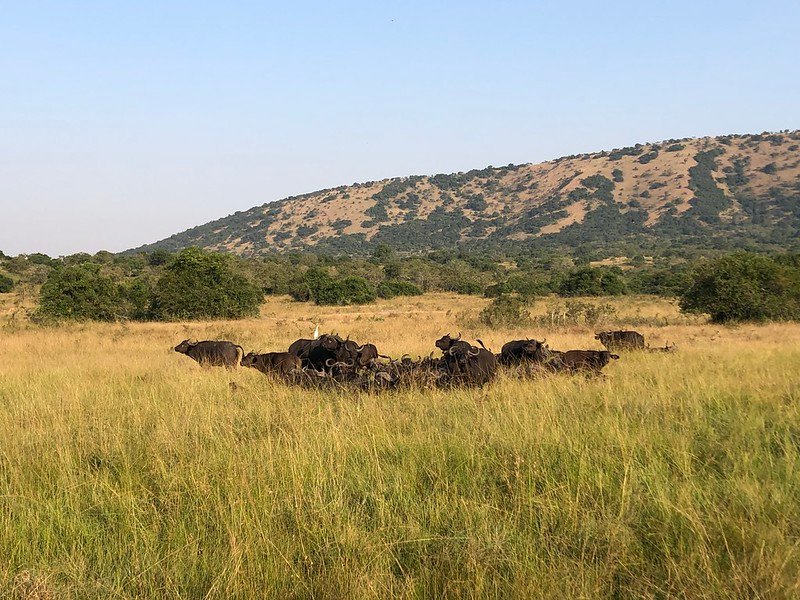
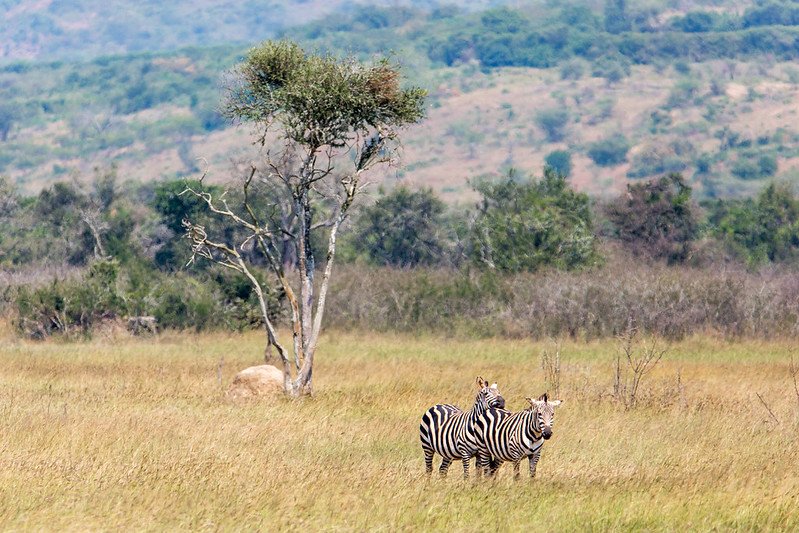
Large herds graze out here: zebra, defassa waterbuck, topi, eland and buffalo. Lions are found around Mutumba, Mihindi, Mohana and Kilala more than anywhere else in the park, and the open ground gives far better visibility for spotting them. Rhino are most reliably seen on guided drives in these central and northern zones. Towers of giraffe gather on Kilala at night for the safety of numbers.
The trade off is time and road quality. Reaching the northern gate from the south takes around six hours of driving with stops, and the stretch from Mutumba Hills towards Kitabili is genuinely rough going that needs your full attention. Tsetse flies are thick in places, so air conditioning earns its keep. These plains lie low and flood in the rains, which is why larger coaches are turned away from Kilala, Mohana and the Giraffe Area in the wet months.
If you have one full day, the honest advice is to commit to the north and accept the driving rather than lingering near the lodges.
Night Game Drive Safaris in Akagera
A night game drive runs from around half past five until roughly half past eight, mostly in the southern sector, in an open vehicle with a filtered spotlight. It is only available to guests staying inside the park, which is the clearest argument for booking a lodge or camp rather than day tripping from Kigali.
What appears after dark is a different cast. Bushbabies in the acacia, genets and civets crossing the track, white tailed mongoose, hyena moving with intent, nightjars sitting on the warm road, owls in the branches. Because leopard hunts at night, this is also the best chance the park offers of one, though the odds stay modest.
Vehicles carry around seven guests. It cools down quickly once the sun drops, so take a fleece regardless of how warm the afternoon felt.
There were once more than three hundred lions here. The last one was seen around 2001. They were flown back in fourteen years later and have been breeding on these plains ever since.
Guided Game Drives Versus Self Drive Safaris in Rwanda
Akagera is one of the few parks in the region where driving yourself is realistic, and both options work. Which suits you depends on what you want from the day.
Guided game drive. A guide who has been in the park that week knows where the prides, rhino and elephant herds have been. You sit higher, you spot more, and you learn what you are looking at. Best for first visits, for photographers and for anyone with limited time who cannot afford a wasted morning.
Self drive safari. Complete freedom over pace and route. Sit at a waterhole for an hour if you want to. Cheaper for families and groups, freeing up money for a boat safari. Entry is through the southern Mutumba Gate only, and you can still hire a park guide at reception to ride along.
If you drive yourself, a few practical points matter. A four wheel drive is the right vehicle, particularly in the wet months when the northern tracks turn heavy. There is no fuel inside the park, so arrive with a full tank. Take the safety briefing at reception seriously. Do not drive off road, do not get out of the vehicle except at campsites, picnic sites and reception, drive slowly, and keep an eye on the clock so you are not still deep in the north as the gates close.
What You Can Expect to See on an Akagera Game Drive
The species list here is longer than most people assume, and the mix of savannah, woodland, wetland and lake is why.
Predators. Lion on the northern plains, spotted hyena widely, leopard rarely and mostly at night, plus side striped jackal and serval. Wild dog disappeared from the park in the 1980s after disease and have not returned.
Large herbivores. Elephant, buffalo, Masai giraffe, zebra, hippo in very high numbers, plus black and white rhino under ranger monitoring in the central and northern zones.
Antelope. Topi, eland, defassa waterbuck, roan, impala, bushbuck, oribi, duiker and the secretive sitatunga in the swamp margins. Roan and sitatunga are the two most sought after by returning safari travellers.
Birds. Around 500 species. Grey crowned crane, lilac breasted roller, bateleur, Ross’s turaco, saddle billed stork and the shoebill in the papyrus, though the shoebill takes luck and usually a boat.
Combining Rwanda Game Drives With Kenya, Tanzania and Uganda
Akagera is compact and genuinely uncrowded, which is its real appeal. You are unlikely to find a dozen vehicles clustered around one sighting the way you might in high season on the Mara. What it does not deliver is scale, and travellers whose main goal is big cat density or the wildebeest migration should treat Akagera as a complement rather than a substitute.
That is straightforward to arrange from Rwanda. The East Africa Tourist Visa covers Rwanda, Uganda and Kenya on one document. Kigali connects easily to Nairobi for the Maasai Mara, Lake Nakuru and Amboseli, and to Kilimanjaro for the Serengeti, Ngorongoro, Tarangire and Lake Manyara. Overland into Uganda opens Queen Elizabeth and Murchison Falls, both of which offer game driving on a larger scale.
The pattern that works well is gorillas and Akagera in Rwanda, then a flight east for the volume of plains game. Nobody needs to choose between them.
Best Time for Game Drive Safaris in Rwanda
Akagera sits at low altitude, warm by day and cool at night year round, which makes it the most weather forgiving park in Rwanda. Season affects visibility rather than comfort.
June to September, long dry season. The strongest game viewing. Grass thins out, water sources shrink and animals concentrate around the lakes and remaining pans. Tracks are firm and the whole park drives easily, north included.
Mid December to February, short dry season. Similar conditions with fewer vehicles. Warm clear days and good general viewing across both sectors.
March to May, long rains. Grass grows tall and animals disperse, so spotting gets harder. The country turns green and photography light improves considerably. Four wheel drive becomes necessary and the low northern plains can flood.
October and November, short rains. Afternoon showers rather than sustained rain. Migrant birds arrive, the park is quiet, and viewing holds up reasonably between showers.
Early morning is better than any other hour in every season, particularly for lion, when disturbance is lowest and prides are still active.
Getting to Akagera for a Game Drive Safari
The southern gate sits roughly 110 kilometres east of Kigali, about two to two and a half hours on tarmac with a short dirt section at the end. That closeness is why Akagera slots neatly onto a gorilla trekking trip without eating days.
The northern gate takes three to four hours from the capital, and camps up there sometimes finish the transfer with a game drive and a short boat crossing. Scheduled and charter helicopter flights are available for anyone skipping the road.
Accommodation runs from campsites at Shakani, Mutumba and Mihindi through the Akagera Game Lodge and the tented Ruzizi and Karenge up to Wilderness Magashi on its private northern concession. Staying inside matters more here than in most parks, since night drives and walking safaris are restricted to overnight guests and early starts get you north before the heat. Two nights is the sweet spot; one leaves you stuck in the south.
The whole planning question in Akagera comes down to which sector you sleep in and how many nights you give it, and that is easy to get wrong from a distance. Intare Safaris runs this park regularly from its Rwanda base and also operates the Kenyan and Tanzanian circuits, so they can tell you honestly whether Akagera is enough for what you want or whether your trip needs a leg further east.
Send Intare Safaris your dates and what you are hoping to see, and they will be straight with you about the leopard odds, the state of the northern tracks that month, and whether two nights or three makes better sense.