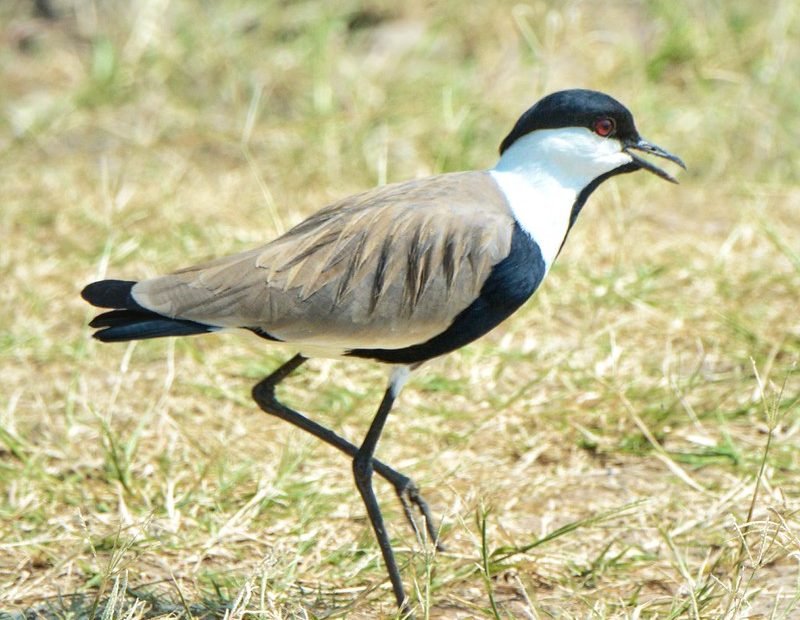
Birding in Rwanda produces around 700 recorded species in a country the size of Wales, including 29 Albertine Rift endemics found in a narrow band of Africa and nowhere else. The main birding safari destinations are Nyungwe Forest National Park for montane forest species, Akagera National Park for savannah and papyrus specialists, Rugezi Marsh for wetland rarities, and the wetlands around Kigali and Bugesera. Volcanoes and Gishwati Mukura add high altitude forest birds.
The reason a small country carries a list that size is geography. Rwanda sits at the centre of the Albertine Rift, where montane forest, bamboo, papyrus swamp, open savannah and a chain of lakes all occur within a few hours of one another. Very few birding destinations let you work five habitats in a week without a single internal flight.
Rwanda safaris to build birding into
Why Rwanda Punches Above Its Size for Birding Safaris
The Albertine Rift is a recognised Endemic Bird Area, and Rwanda holds a solid share of it. Twenty nine species restricted to those mountains occur here, alongside a set of Lake Victoria basin endemics in the east and a strong list of papyrus specialists in the wetlands.
Wetlands make up roughly a tenth of the country, and Rugezi, the Akanyaru wetlands and the Nyabarongo wetlands are all recognised as Important Bird Areas by BirdLife International. Rugezi is Rwanda’s only Ramsar site.
What this means practically is that a birding safari here is target driven rather than volume driven. Birders come for specific species, not for a big daily tally, and the itinerary is built around habitat rather than around parks. The grey crowned crane, Rwanda’s national bird, turns up on wetland margins across the country in small parties, and it never stops being worth stopping for.
Nyungwe Forest Birding Safaris and the Albertine Rift Endemics
Nyungwe is the core of any serious Rwanda birding trip. More than 300 species have been recorded across this montane rainforest of close to 1,000 square kilometres, with somewhere between 25 and 30 of them Albertine Rift endemics. It is widely rated the best montane forest birding in Africa.
The species that pull birders here include the red collared babbler, which Nyungwe is one of the few reliable places to look for, along with the Rwenzori turaco, great blue turaco, Grauer’s warbler, handsome francolin, Kivu ground thrush, Archer’s robin chat, Rwenzori batis and a run of sunbirds including the regal sunbird.
Karamba trail near Gisakura is the classic birding walk, running through an old mining and army camp site that has grown back into secondary bush and holds a different mix from the deep forest. Kamiranzovu is the wetland route, working the largest peat bog in the park. Uwinka gives access to old growth interior, and the canopy walkway puts you at eye level with species you would otherwise only hear.
Take a specialist birding guide rather than a general trail guide. The difference over one morning in Nyungwe is large enough to change the whole trip.
Nyungwe’s reception centres are far apart and the birding is different at each. Gisakura suits Karamba and the tea edge, Uwinka the interior and canopy walkway, Kitabi the eastern side. Where you sleep decides which birds you get, so plan the lodge around the target list rather than the other way round.
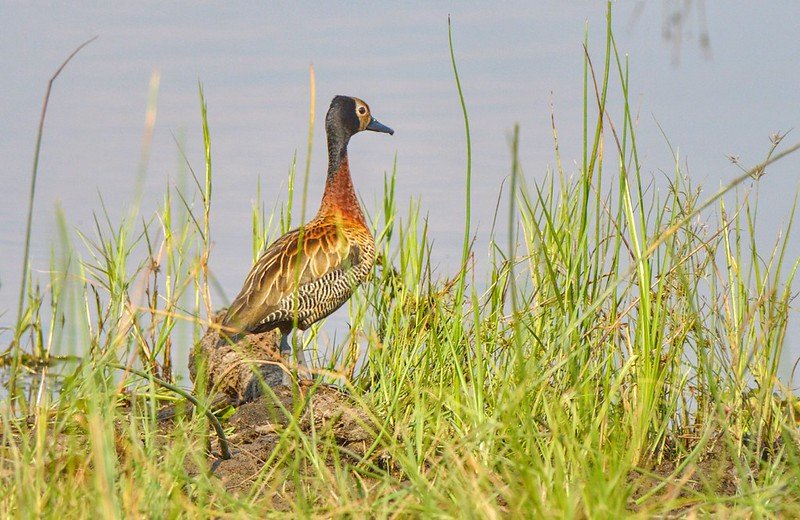
Akagera National Park Birding Safaris and the Shoebill Search
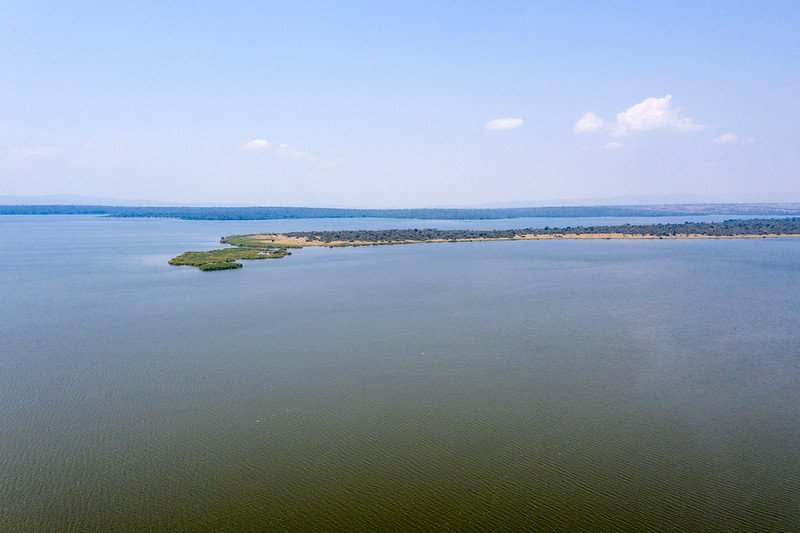
Birding in Akagera is a completely different exercise and produces the longest list in the country, with over 500 species recorded across savannah, woodland, lakeshore and papyrus swamp.
The shoebill is the bird most people arrive hoping for, that heavy grey prehistoric looking stork standing motionless in the papyrus waiting for lungfish. Sightings depend on water levels and luck, and the quieter channels on the northern lakes give the best odds. A boat is usually the way in, and guides who work the park daily know which channels have produced recently.
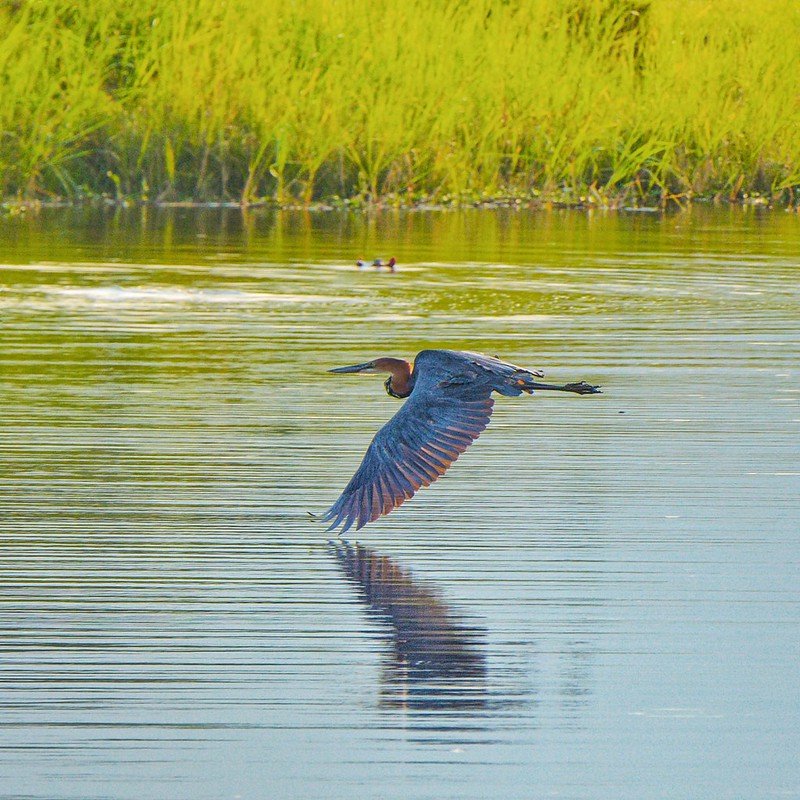
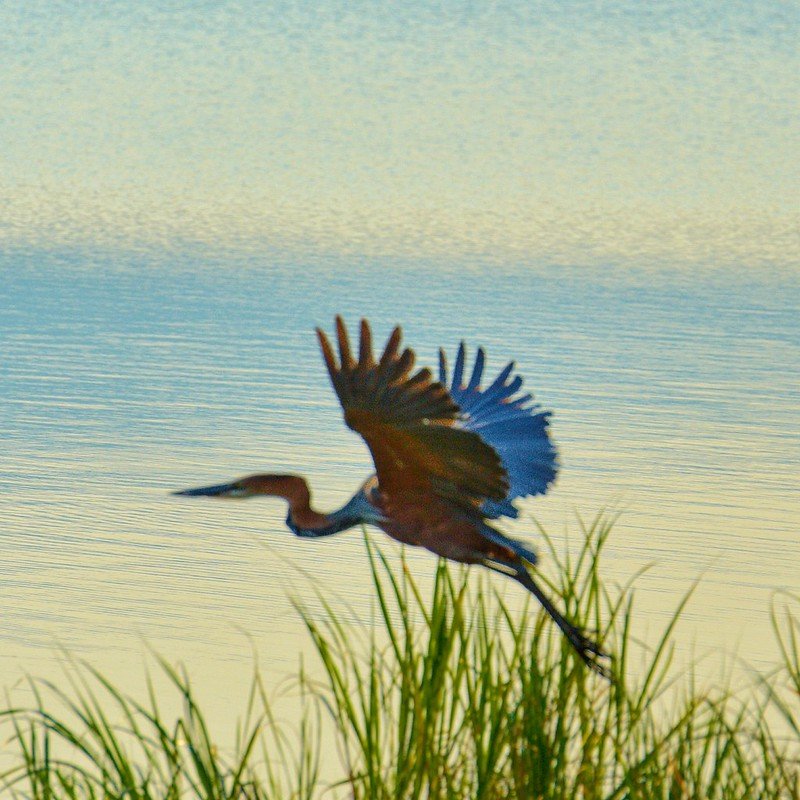
Beyond the shoebill, the papyrus holds a set of specialists worth the trip on their own. Papyrus gonolek, a striking black and red bird found almost only in papyrus. White winged swamp warbler, small and secretive. Carruthers’s cisticola, another papyrus bird rarely seen outside that habitat. Add goliath heron, saddle billed stork, African openbill, great white pelican, African jacana and malachite kingfisher along the shoreline.
The savannah and woodland carry an entirely separate cast, so a morning game drive here produces a serious bird list alongside the mammals. Grey crowned crane on the wetland margins, Ross’s turaco, bare faced go away bird, lilac breasted roller, bateleur, long crested eagle, augur buzzard and the red faced barbet in the acacia belt. Nightjar diversity around the lodges is exceptional, and the darkness this far from any city makes night birding genuinely productive.
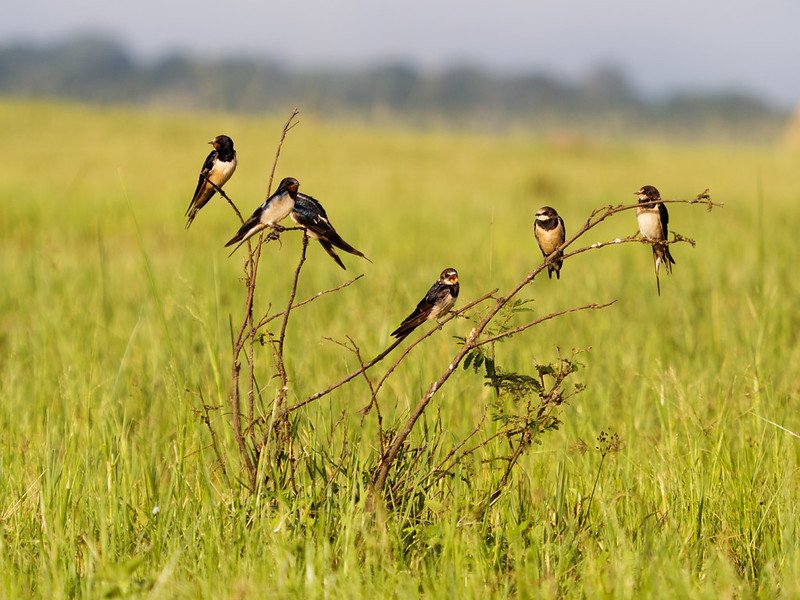
Volcanoes National Park Birding in the Virunga Bamboo
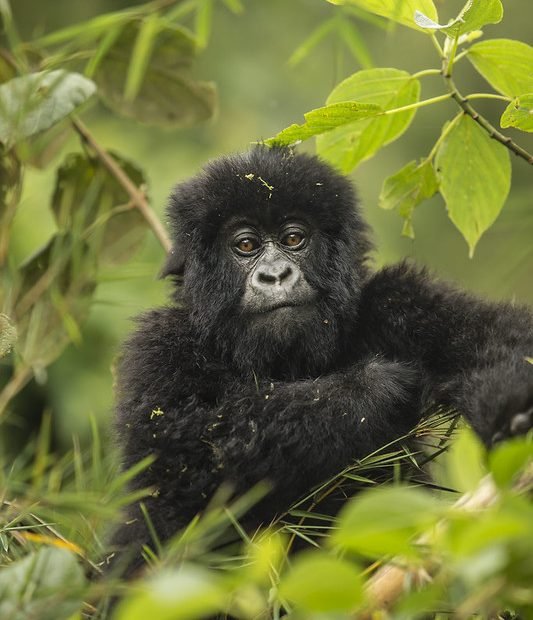
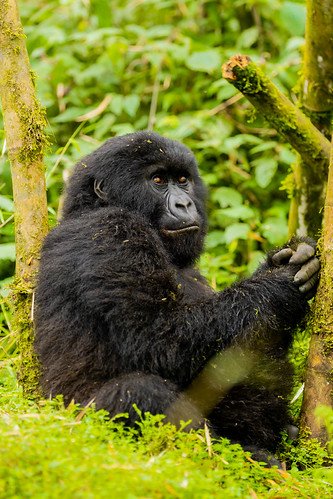
Volcanoes carries a shorter list, in the order of 180 to 200 species, but the endemic value is high and the birding fits neatly around gorilla and golden monkey trekking rather than needing its own days.
The bamboo and hagenia zones hold the interest. Rwenzori turaco, Rwenzori double collared sunbird, handsome francolin, dusky crimsonwing, Rwenzori batis and the archer’s ground robin are the birds to work for. The swamp near the base of Sabyinyo repays slow, patient looking.
Buhanga Eco Park near Musanze is a small patch of ancient forest just outside the park boundary, tied to the coronation rituals of Rwandan kings, and it makes a good short birding stop on an arrival afternoon when the light is going.
The practical move here is to add a dedicated birding morning to a Virunga stay rather than expecting a gorilla trek to double as one. Trekking guides know the mammals cold and the birds unevenly.
Gishwati Mukura Birding Tours on the Congo Nile Divide
Gishwati Mukura is the most underrated birding site in Rwanda, and it stays that way because so few visitors go. Around 232 species have been recorded in the Gishwati block and roughly 163 in Mukura, with a good run of Albertine Rift endemics among them.
The appeal is the habitat mix inside a very small area. Restored young forest, older growth, tea plantation edge and open ridge all sit within a short walk of the guesthouse, so you work several habitats in a morning without long transfers. Rwenzori turaco, regal sunbird, mountain yellow warbler, strange weaver and grey crowned crane in the wetter margins are among the targets.
Mukura, the smaller block, has no developed trails and remains largely closed to general visitors, though birders rate the forest highly and its separate species list reflects that. For now, practical birding means the Gishwati side, arranged through the community owned guesthouse in the park.
Morning light on the eastern slopes beats afternoon here, since the ridge position means cloud tends to build after midday.
Around seven hundred species, twenty nine of them found only along the Albertine Rift, inside a country you can drive across in a day. That ratio is what brings birders back.
Rugezi Marsh and Rwanda’s Wetland Birding Sites
Rugezi Marsh, in the northwest near Gicumbi, is Rwanda’s only Ramsar site and the country’s most important wetland for birds. It holds good populations of Grauer’s swamp warbler, grey crowned crane and papyrus canary, and there have been reports of the papyrus yellow warbler here.
At the southern end of the marsh, an area of open water called Lake Nyagafunzo can be worked by boat, which is the way to find white backed duck and lesser jacana alongside the commoner waterbirds. A boat morning here is one of the better wetland sessions in Rwanda and it fits well with a Volcanoes stay, since the marsh sits on the northern route.
The wetlands and lakes of Bugesera District, southeast of Kigali, are the most accessible birding area in the country, with something around 415 species recorded across a good spread of habitats. Papyrus gonolek, papyrus canary, white winged swamp warbler, white collared oliveback, lesser jacana and white backed duck are all findable here.
Lake Kivu in the west works as a rest stop that still produces birds, with large numbers of white breasted cormorants, pied kingfishers and osprey passing through on migration. Lake Muhazi in the east is another productive waterbird site on the road towards Akagera.
Birding in and Around Kigali
Kigali is a better birding city than its reputation suggests, and an arrival day or a departure morning need not be wasted.
Nyandungu Urban Wetland Eco Park. A restored wetland inside the city with boardwalks and marked trails, now the easiest birding site in Rwanda to reach. Good for papyrus species and a sensible first morning to calibrate your ear.
Nyarutarama Lake. Known locally as Lover’s Lake, beside the golf course. Produces white collared oliveback, African swamphen, grey headed bushshrike and, with luck, bat hawk and Narina trogon.
Umusambi Village. A conservation site working with rescued grey crowned cranes, birds that cannot be returned to the wild. Also good general birding on restored wetland ground.
Nyabarongo River and wetlands. An Important Bird Area within reach of the city, holding papyrus specialists including Carruthers’s cisticola and northern brown throated weaver.
Night Birding Safaris in Nyungwe
Night birding is the part of a Rwanda trip that most visitors never hear about, and Nyungwe is where it happens. Guided evening walks work the forest edge and trails after dark with torches, listening more than looking.
The targets are the Albertine owlet, one of the least known owls in Africa and a genuine prize, along with the red chested owlet and the Rwenzori nightjar. Tree hyrax scream in the canopy, which unnerves first timers, and the forest sounds nothing like it does by day.
Sessions need arranging in advance through the park rather than turning up, and they suit birders who already have the day list working. In Akagera, the equivalent is nightjar watching from the lodge tracks, which is easier and just as rewarding in its own way.
Best Time for a Birding Safari in Rwanda
Resident species are present all year, so the timing question is really about migrants, breeding activity and how much rain you are willing to walk in.
November to April. Palearctic and intra African migrants swell the lists considerably, which makes this the strongest window for a big trip total. It overlaps with the wetter months, so expect rain and carry cover for optics.
June to September, long dry season. Easiest walking, firmest forest trails and best conditions in Akagera, where short grass improves visibility. Fewer migrants, so a shorter list, but a more comfortable trip.
March to May, long rains. Hard going underfoot in Nyungwe, though breeding activity means more calling and more display, which helps enormously with forest species you would otherwise walk past.
October and November, short rains. Quite possibly the sweet spot. Migrants arriving, manageable weather, quiet parks and reasonable trail conditions. A sound choice for a first Rwanda birding trip.
Whatever the month, mornings do most of the work. Cloud builds over the western forests after midday and activity drops off sharply in the middle of the day everywhere.
Planning a Rwanda Birding Safari Route
Because the sites are close together, a birding route through Rwanda is mostly a question of order. A common shape runs Kigali wetlands on arrival, north to Rugezi Marsh and Volcanoes for the Virunga endemics, down the Lake Kivu shore with a stop at Gishwati Mukura, into Nyungwe for several days on the core Albertine list, then east to Akagera for papyrus and savannah.
Ten days covers that comfortably. A week means dropping either Rugezi or Gishwati. Anyone with only a few days should choose Nyungwe for endemics or Akagera for volume rather than trying to split the difference, since the two are at opposite ends of the country.
Most birders add a gorilla trek or a golden monkey morning without losing much momentum, because Volcanoes is on the route anyway. Bring your own binoculars, a scope if you are working wetlands, rain cover for optics and a regional field guide, since local availability is limited.
Getting the guide right matters more than anything else on a Rwanda birding trip, and so does sleeping in the right place for the species you are after. Intare Safaris is based in Rwanda, works these sites year round, and can put a proper birding guide with you rather than a general driver guide who happens to know some names.
Send Intare Safaris your target list and your dates, no matter how ambitious, and they will build a route around the birds instead of around the standard tourist circuit.